The End of Bespoke Warehouse Automation: Why Standardized Templates Are Replacing Custom Deployments Across Multi-Site Networks

The warehouse automation market is worth nearly $30 billion in 2026 and is projected to reach over $63 billion by 2030, growing at a compound annual rate of 16.2%, according to Mordor Intelligence. With that kind of capital pouring into distribution centers, the industry can no longer afford the approach that defined the last two decades: bespoke, multi-year integration projects that deliver a single facility at a time.
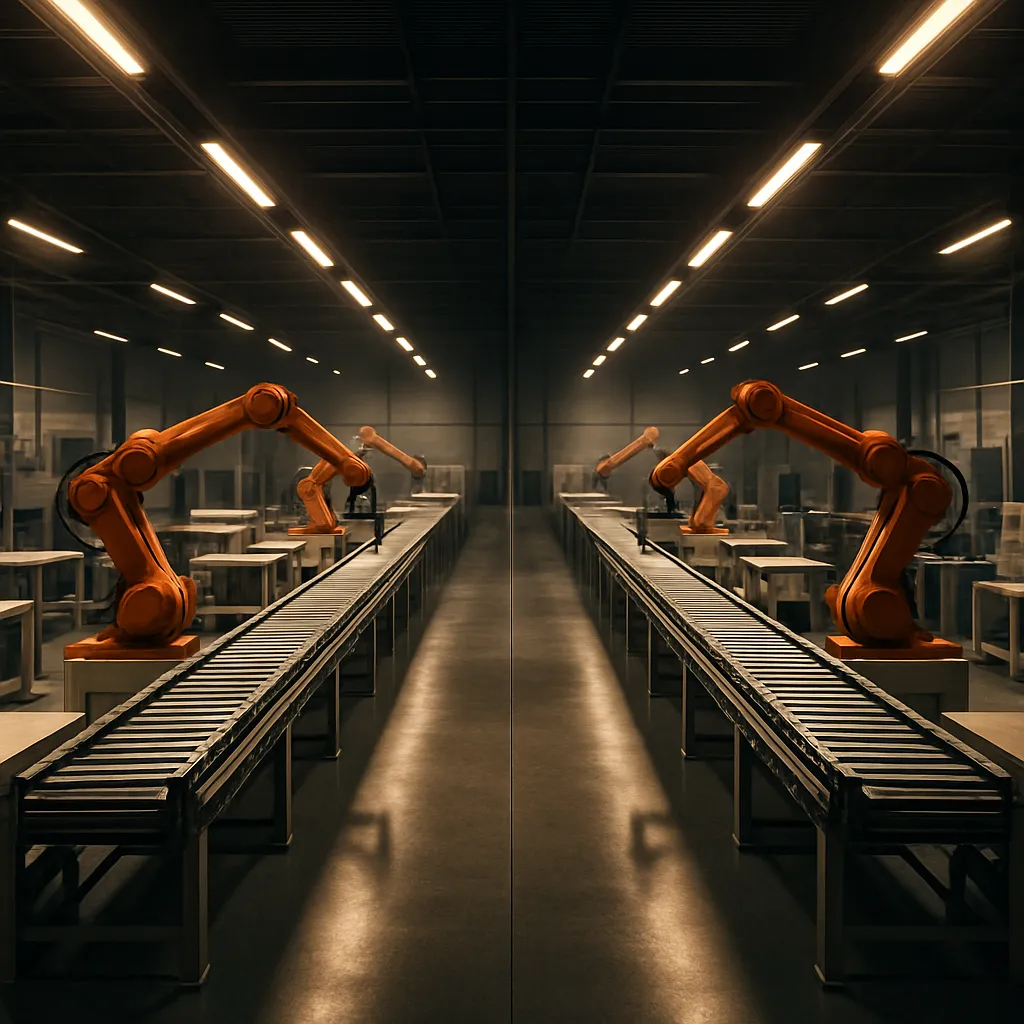
A strategic shift is underway. Instead of treating every warehouse as a one-of-a-kind engineering challenge, leading operators are building standardized automation templates—modular, replicable designs that can be deployed across entire networks in a fraction of the time. It's the difference between constructing a custom home from scratch for every location and assembling pre-engineered components that adapt to local requirements without reinventing the foundation.
The Hidden Cost of Custom Everything
Every company believes its operation is unique. Its order profiles are unique. Its fulfillment challenges are unique. And for years, that belief drove a default approach: hire a systems integrator, spend 18 to 48 months designing a bespoke solution, and hope the assumptions baked into the design still hold true by the time the system goes live.
Romain Moulin, CEO and co-founder of Exotec, put it bluntly during a recent presentation covered by Supply Chain Management Review: "We are in an industry which has been used to really offering a bespoke solution—designing a machine and software around the customer's needs. Which is very good for suiting the customer needs, but which is very bad for time, cost and reliability."
The risks compound across three dimensions:
- Performance uncertainty. Individual modules may be engineered precisely, but predicting how a fully customized system performs as a whole becomes increasingly difficult.
- Operational fragility. Highly tailored software depends on the specific engineers who built it. When those people move on—and in a tight labor market, they will—troubleshooting and optimization grind to a halt.
- Slow ramp-up. Complex bespoke systems take longer to stabilize, delaying the ROI that justified the investment in the first place.
Multiply those risks across a network of five, ten, or fifty facilities, and the math becomes untenable. If every warehouse is uniquely engineered, shifting inventory, balancing throughput, or rolling out upgrades becomes a facility-by-facility exercise instead of a network-wide operation.
The Lego Block Approach to Automation
Standardized doesn't mean one-size-fits-all. The emerging model is closer to what Moulin describes as a "Lego block" architecture: the hardware modules, software layers, and robotic elements are standardized, but their configuration is not.
"All of our solutions are different for all the customers, but they are made of the same building blocks," Moulin told SCMR. "You should not say you have one solution for your customer, but you listen to your customer and you reassemble your bricks together."
This composability is what unlocks replication. When a 3PL or major retailer proves a configuration works at one facility, that template—with adjustments for local volume, product mix, and building constraints—can be deployed at the next site in months rather than years.
The numbers support the shift. According to Global Trade Magazine, the warehouse automation technologies gaining the most traction in 2026—autonomous mobile robots, goods-to-person systems, pallet shuttles, and forklift-free facility designs—are all inherently modular. They're designed to scale by adding units, not by redesigning systems.
Replication as a Competitive Strategy
Moulin described how this philosophy scaled across a major sports retailer's distribution network. Rather than launching sequential four-year bespoke projects at each site, the company defined a template warehouse with variable robot fleet sizes and inventory configurations. The result: dramatically faster deployment timelines and reduced inventory levels across the network.
This isn't just about speed. Template-based deployment fundamentally changes how organizations evaluate automation risk. Moulin says his team now assesses project risk by looking at how much custom software labor is quoted: "It tells me exactly the risk associated with that project." The smaller the bespoke layer, the lower the ramp-up risk and the easier future upgrades become.
For 3PLs managing dozens of client accounts across multiple facilities, this approach is particularly transformative. Instead of maintaining a portfolio of unique automation configurations—each with its own support requirements, upgrade path, and failure modes—operators can standardize their core infrastructure and customize at the configuration layer. New client onboarding becomes a template deployment with parameter adjustments, not a ground-up engineering project.
Designing for Uncertainty, Not Forecasts
Perhaps the most compelling argument for standardized templates is resilience. Traditional automation projects are designed around detailed forecasts: B2B versus B2C mix, order profiles, lines per order, cartonization assumptions. But those forecasts are wrong—always.
Moulin offered the example of a cross-channel warehouse that shifted from 80% B2B and 20% B2C to the inverse within three years. A static automation system built for the original mix would need costly retooling. A template-based system using optimization algorithms instead of hard-coded workflows can adapt dynamically.
"If your warehouse cannot cope with that, you are really in danger," Moulin warned. "We won't program the solution to the problem. We will use mathematics to find the best solution at any given moment."
With autonomous mobile robots projected to deliver payback in under 24 months and ROI above 250% in live deployments, the financial case for flexible, modular automation is increasingly clear. But the strategic case—the ability to replicate proven configurations across an entire network without repeating the integration gauntlet—is what's driving the template revolution.
When Custom Still Makes Sense
Template-based automation isn't the answer for every facility. Highly specialized operations—cold chain facilities with unique temperature zone requirements, pharmaceutical warehouses with regulatory-driven workflows, or sites with extreme throughput demands—may still justify custom engineering.
The decision framework is straightforward: if the bespoke software layer quoted for a project is large relative to the total investment, the integration risk is high and a template approach should be evaluated. If the operation genuinely requires capabilities that don't exist in any modular configuration, custom development is warranted—but with eyes open about the long-term maintenance burden.
How CXTMS Integrates with Templated Warehouse Networks
Standardized automation templates don't eliminate complexity—they shift it from the facility level to the network level. Operators still need real-time visibility into how inventory flows across multiple templated sites, where bottlenecks emerge, and how to dynamically route orders to the facility best positioned to fulfill them.
CXTMS provides the network-level orchestration layer that complements templated warehouse operations. With multi-echelon inventory visibility, real-time freight tracking, and intelligent order routing, CXTMS connects your standardized facilities into a unified, responsive distribution network—ensuring that the speed gains from template deployment translate into end-to-end supply chain performance.
Ready to see how CXTMS connects your warehouse network? Request a demo today and discover how real-time visibility and intelligent routing can amplify the ROI of your automation investments.