Subscription and Rental Logistics: How Circular Commerce Models Are Demanding Entirely New Fulfillment Infrastructure

The traditional fulfillment center was designed for a simple flow: receive inventory, store it, pick it, pack it, ship it. Returns were an afterthought — a cost center tolerated but rarely optimized. But a new generation of circular commerce models is turning that linear logic inside out, and the logistics infrastructure required to support them looks nothing like what came before.
URBN's $60 Million Bet on Rental Fulfillment
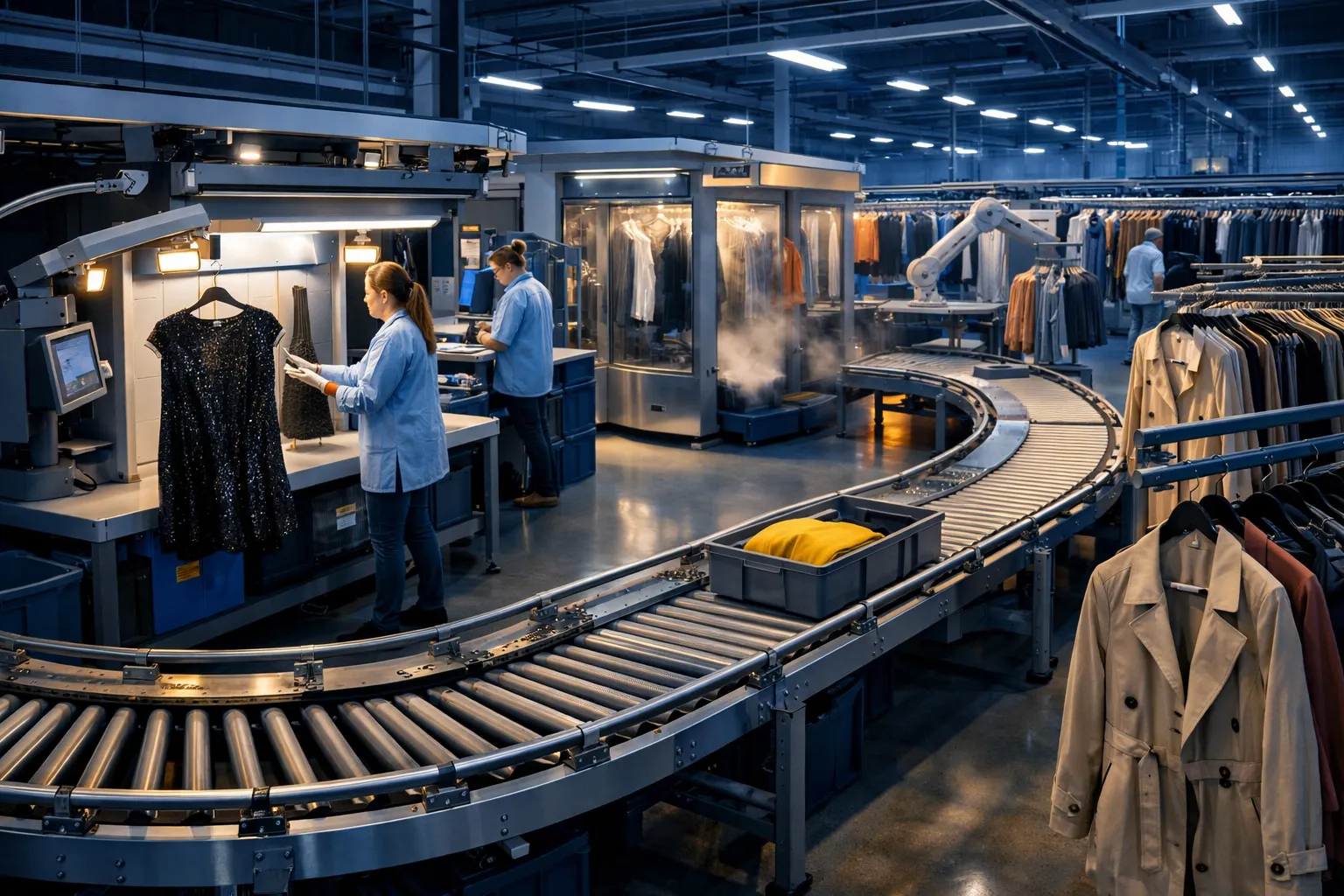
When Urban Outfitters Inc. announced in March 2026 that it was moving into the second phase of automation at its Nuuly rental fulfillment facility in the Kansas City area, the numbers told a compelling story. Nuuly's revenue grew 43% year-over-year in Q4, driven by a 40% increase in average active subscribers. The company is investing $60 million over five years to build out the facility, which began operations in February 2024.
With URBN allocating 40% of its fiscal year 2027 capital expenditures — approximately $154 million of a $385 million total — toward logistics investments across subscription and retail segments, the signal is clear: rental logistics isn't a side project. It's becoming core infrastructure.
Why Rental Logistics Is Not Just "Returns in Reverse"
Traditional e-commerce returns processing is a one-way recovery operation. A customer sends something back, you inspect it, restock or liquidate it, and move on. Rental logistics is fundamentally different because every single item is designed to cycle continuously through forward and reverse flows — sometimes dozens of times before retirement.
Consider what happens every time a rented garment comes back to a Nuuly facility:
- Intake and identification — scanning, matching to the subscriber record, logging condition
- Quality inspection — checking for damage, stains, missing components, wear patterns
- Cleaning and restoration — professional laundering, dry cleaning, spot treatment, pressing
- Repair and refurbishment — mending seams, replacing buttons, addressing minor damage
- Quality grading — determining if the item is rental-ready, needs deeper repair, or should be retired to resale
- Restocking and availability — returning the item to active inventory with updated condition data
This six-step loop happens for every item, every cycle. At scale, with thousands of subscribers each receiving six to eight items per month, the operational complexity dwarfs anything a traditional pick-and-pack fulfillment center was designed to handle.
The Market Is Growing Fast — and Logistics Can't Keep Up
The online clothing rental market alone is estimated at USD $2.01 billion in 2026, growing at a 6.35% CAGR toward $2.73 billion by 2031, according to Mordor Intelligence. But clothing is just the beginning. Furniture rental platforms like Fernish, electronics subscription services, and industrial equipment rental programs are all creating similar logistics challenges across different product categories.
The common thread: none of these models work with warehouse infrastructure designed for one-way product flows. Every circular commerce operator eventually discovers that their biggest bottleneck isn't customer acquisition — it's the fulfillment operation that has to process, restore, and recirculate inventory at speeds that match subscriber expectations.
Infrastructure Requirements That Traditional Warehouses Can't Meet
Circular commerce fulfillment centers need capabilities that most 3PLs simply don't offer:
Specialized Processing Zones
Unlike traditional warehouses organized around storage density and pick efficiency, rental fulfillment centers need dedicated zones for inspection, cleaning, repair, and quality grading. These zones require different environmental controls, equipment, and labor skills than standard warehousing.
Bidirectional Inventory Visibility
In traditional fulfillment, inventory flows in one direction — from receiving dock to shipping dock. In rental logistics, every SKU exists in multiple states simultaneously: in transit to a customer, with a customer, in return transit, in inspection, in cleaning, in repair, or available for the next rental. A standard WMS tracking "available" versus "allocated" inventory simply cannot model this complexity.
Sortation at the Item Level
URBN has specifically invested in sortation technology at its Nuuly facility. In rental operations, every returning item needs individual routing based on its condition, item type, cleaning requirements, and next-subscriber assignment. This is fundamentally different from the case-level or pallet-level sortation in traditional distribution.
Predictive Return Scheduling
Subscription models generate predictable return patterns. Unlike e-commerce returns, which are driven by customer dissatisfaction and are inherently unpredictable, rental returns follow subscription cycle timing. This predictability enables — and demands — precise labor and processing capacity planning.
Beyond Fashion: The Circular Logistics Playbook Expands
While fashion rental has been the proving ground, the infrastructure pattern is spreading rapidly:
- Furniture-as-a-service platforms require pickup logistics, professional cleaning, and damage assessment workflows that mirror garment rental but at parcel and freight scale
- Electronics subscription services need diagnostic testing, data wiping, firmware updates, and cosmetic refurbishment capabilities
- Industrial equipment rental demands calibration, safety inspection, and maintenance documentation that must travel with the asset through every rental cycle
- Reusable packaging networks — projected to grow toward $167 billion by 2034 — require container tracking, wash station logistics, and redistribution routing
Each of these verticals is learning the same lesson: you cannot bolt circular commerce onto linear fulfillment infrastructure. The warehouse itself must be redesigned.
The Technology Stack for Circular Fulfillment
Successful rental and subscription operators are converging on a technology stack that looks markedly different from traditional e-commerce fulfillment:
- Asset-level tracking with RFID or NFC tags that persist through cleaning and repair cycles
- Condition grading algorithms using computer vision to automate quality inspection
- Lifecycle management systems that track each item's rental count, repair history, and depreciation curve
- Dynamic routing engines that determine whether a returning item goes to cleaning, repair, resale, or recycling based on real-time condition data and demand signals
- Predictive maintenance scheduling that anticipates item retirement and triggers replacement procurement
What This Means for Supply Chain Visibility
Circular commerce creates a visibility challenge that extends far beyond the warehouse walls. When the same item cycles through forward shipping, customer use, return shipping, processing, and re-shipping — potentially across multiple facilities — the traditional shipment-tracking model breaks down.
What's needed is continuous asset visibility across the entire lifecycle: from initial procurement through every rental cycle to eventual retirement or resale. This requires integration between transportation management, warehouse execution, and product lifecycle systems that few organizations have achieved.
CXTMS provides the multi-lifecycle visibility infrastructure that circular commerce operators need to track assets across rental networks. From inbound procurement shipments through outbound rental deliveries and return logistics, CXTMS connects the transportation data layer that makes circular fulfillment operationally viable. Request a demo to see how our platform supports subscription and rental logistics visibility across your entire product lifecycle.