Warehouse Execution Systems Explained: Why WES Is the Missing Middleware Between WMS and Automation in 2026

Your warehouse management system knows where every pallet sits. Your conveyor system knows which direction to route a parcel. But who decides — in real time, second by second — which robot picks which order, when to release the next wave of work, and how to balance throughput across manual and automated zones simultaneously? That's the job of a Warehouse Execution System, and in 2026, it's the most important piece of warehouse software most operations don't have yet.
The Gap Nobody Talks About
Here's the uncomfortable truth about warehouse automation in 2026: most facilities have invested heavily in physical automation — autonomous mobile robots, goods-to-person systems, automated sortation — but are still relying on software stacks designed for manual warehouses to orchestrate it all.
The traditional warehouse technology stack has two layers. At the top sits the Warehouse Management System (WMS), managing inventory records, order processing, and resource planning. At the bottom sits the Warehouse Control System (WCS), handling the mechanical controls — turning on sensors, directing conveyor belts, communicating with PLCs. These two systems were built in different eras for different purposes, and the gap between them is where fulfillment performance goes to die.
A WMS operates in batch cycles. It knows what needs to ship today. A WCS operates in milliseconds. It knows which motor to activate next. But neither system is designed to answer the question that matters most in a modern automated DC: given everything happening right now across every zone, every robot, and every human picker, what is the optimal next task to release?
That's the WES layer — and it's been hiding in plain sight.
WES Defined: Real-Time Orchestration Across Humans, Robots, and Conveyors
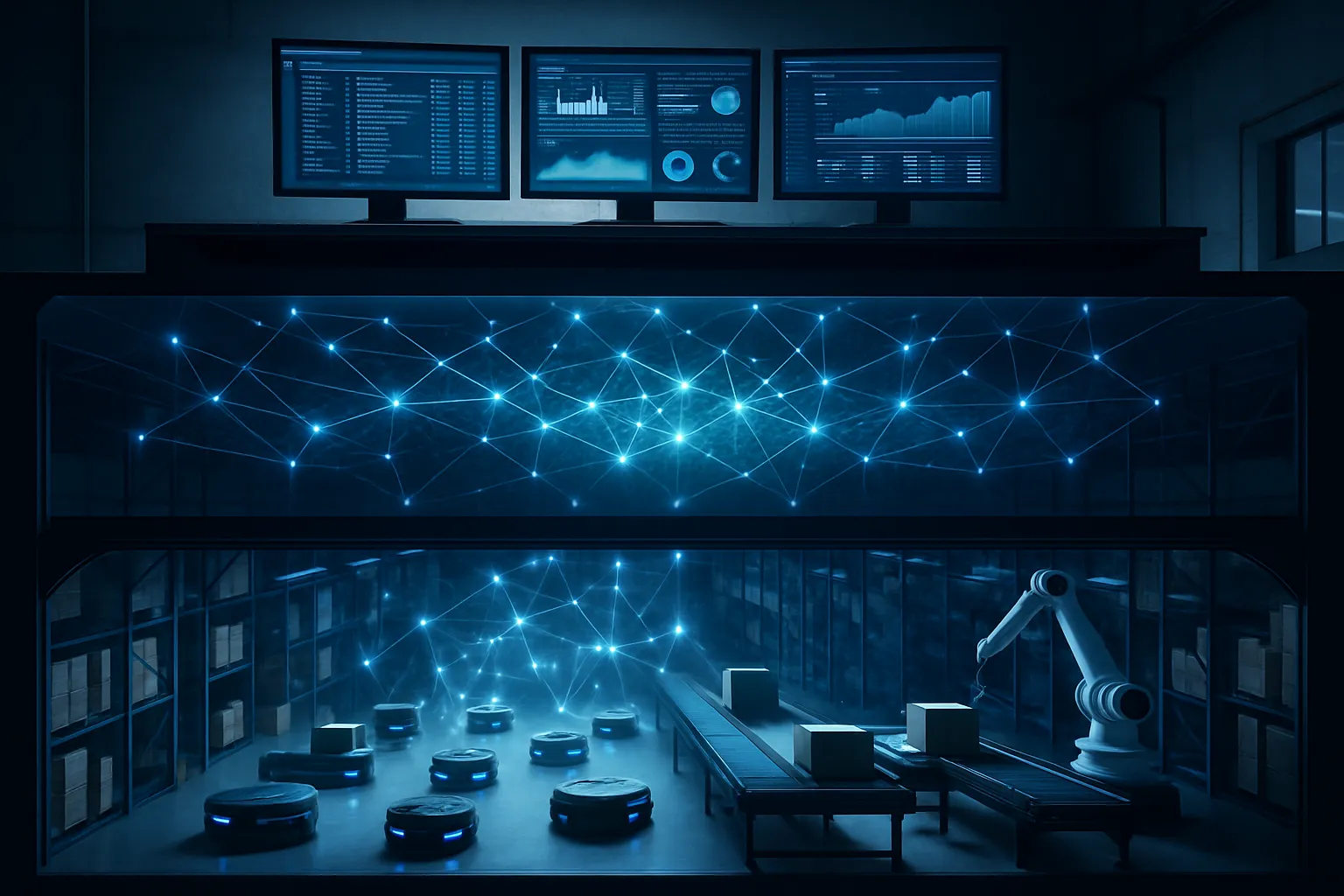
A Warehouse Execution System sits between the WMS and WCS as a real-time orchestration engine. Rather than replacing the WMS, a WES operates alongside it as a real-time execution and orchestration layer, continuously assessing order requirements and assigning tasks to different resources to optimize overall throughput.
Think of it as a traffic controller for your entire fulfillment operation. The WES receives orders from the WMS or ERP, then intelligently releases work to different resources — AMRs, conveyor systems, pick-to-light stations, and manual pickers — with constant feedback loops that prevent bottlenecks before they form.
As Art Eldred, VP at Vargo, explained to Modern Materials Handling: "If you are deploying automation with one process in mind, its use can end up being suboptimal because it wasn't integrated into an orchestrated fulfillment workflow."
The key capabilities that define a modern WES include:
- Intelligent order release: Instead of dumping all orders into the system at once, WES staggers work based on real-time capacity across zones
- Dynamic load balancing: Continuously redistributes tasks when a robot goes down, a zone gets backed up, or priority orders arrive
- Cross-system coordination: Manages handoffs between automated and manual zones seamlessly
- Real-time wave management: Replaces rigid wave-based picking with continuous, flow-optimized release strategies
- Feedback-driven optimization: Uses live data from automation systems to adjust task assignment on the fly
A $4.28 Billion Market You Can't Ignore
The numbers tell the story of why WES has moved from nice-to-have to operational necessity. According to Grand View Research, the global warehouse execution system market was valued at $1.64 billion in 2024 and is projected to reach $4.28 billion by 2030, growing at a compound annual growth rate of 18.0% from 2025 to 2030.
That growth trajectory tracks directly with warehouse automation adoption. More than a quarter of warehouses — 26% — are expected to be automated by 2027, up from just 14% a decade earlier, according to Interact Analysis projections cited by Modern Materials Handling. And a Honeywell survey found that 60% of warehouse professionals consider WES either essential or very important to their automation strategy.
The driver is clear: as DCs deploy heterogeneous automation — combining AMRs from one vendor, conveyor systems from another, and goods-to-person stations from a third — the need for a unified orchestration layer becomes unavoidable.
WES vs. WMS vs. WCS: The Technology Stack Explained
Understanding where each system fits is critical for making the right investment:
| Layer | System | Primary Function | Time Horizon |
|---|---|---|---|
| Strategic | WMS | Inventory management, order processing, resource planning | Hours to days |
| Tactical | WES | Real-time task orchestration, load balancing, order release | Seconds to minutes |
| Operational | WCS | Machine-level control, PLC communication, sensor management | Milliseconds |
The confusion in the market is understandable. WMS vendors have been adding WES-like capabilities to their platforms, while WCS vendors have been building upward toward execution functionality. As Supply Chain Dive reported, finding a vendor that does all three layers well remains the hard part — some WMS vendors struggle with real-time control, while some WCS vendors haven't perfected inventory management.
The emerging consensus: best-in-class operations are choosing purpose-built WES platforms that integrate with their existing WMS rather than relying on their WMS vendor to bolt on execution capabilities.
When You Need a WES: The Complexity Threshold
Not every warehouse needs a WES. If your operation is purely manual with conventional racking and pick carts, your WMS handles execution just fine. But you've crossed the complexity threshold when:
- You're running multiple automation systems from different vendors that need to work in concert
- Order volumes exceed what batch processing can handle and you need continuous flow optimization
- Your automated and manual zones create handoff bottlenecks where work piles up at transition points
- You can't predict daily demand patterns and need dynamic task assignment that adapts in real time
- Peak season scaling requires you to flex between automation-heavy and labor-heavy fulfillment strategies
The agentic AI trend is accelerating this. Next-generation WES platforms are incorporating AI-driven decision-making where the system doesn't just follow rules but actively learns optimal task assignment patterns. When an AMR detects an obstruction, an AI-powered WES can instantly recalculate paths for the entire fleet and adjust picking priorities — without human intervention.
Integration Patterns That Work
For operations evaluating WES adoption, the integration architecture matters as much as the software itself. The most successful deployments follow a clear pattern:
ERP → WMS → WES → WCS/Automation
The WMS remains the system of record for inventory and orders. The WES becomes the real-time brain that decides how work flows. The WCS handles machine-level execution. This layered approach preserves your WMS investment while adding the orchestration intelligence your automation demands.
The critical requirement is bidirectional communication. The WES must receive orders from the WMS and feed real-time status back so inventory records stay accurate. It must send tasks to automation systems and receive feedback on completion, delays, and exceptions.
How CXTMS Warehouse Visibility Integrates with WES-Orchestrated Operations
At CXTMS, our supply chain visibility platform extends the value of WES by connecting warehouse execution data to the broader logistics network. When your WES optimizes internal fulfillment flow, CXTMS ensures that upstream inbound freight visibility and downstream delivery tracking create a seamless end-to-end picture.
Our platform integrates with leading WES and WMS systems to provide:
- Inbound visibility that feeds WES systems with accurate arrival predictions for labor and resource planning
- Cross-dock optimization that leverages WES task data to streamline transfer operations
- Outbound delivery tracking that picks up where WES execution ends and carrier fulfillment begins
The warehouse isn't an island — it's a node in your supply chain network. The best WES implementations are the ones connected to real-time freight visibility.
Ready to connect your warehouse execution data to end-to-end supply chain visibility? Request a CXTMS demo today and see how real-time freight tracking integrates with your warehouse technology stack.