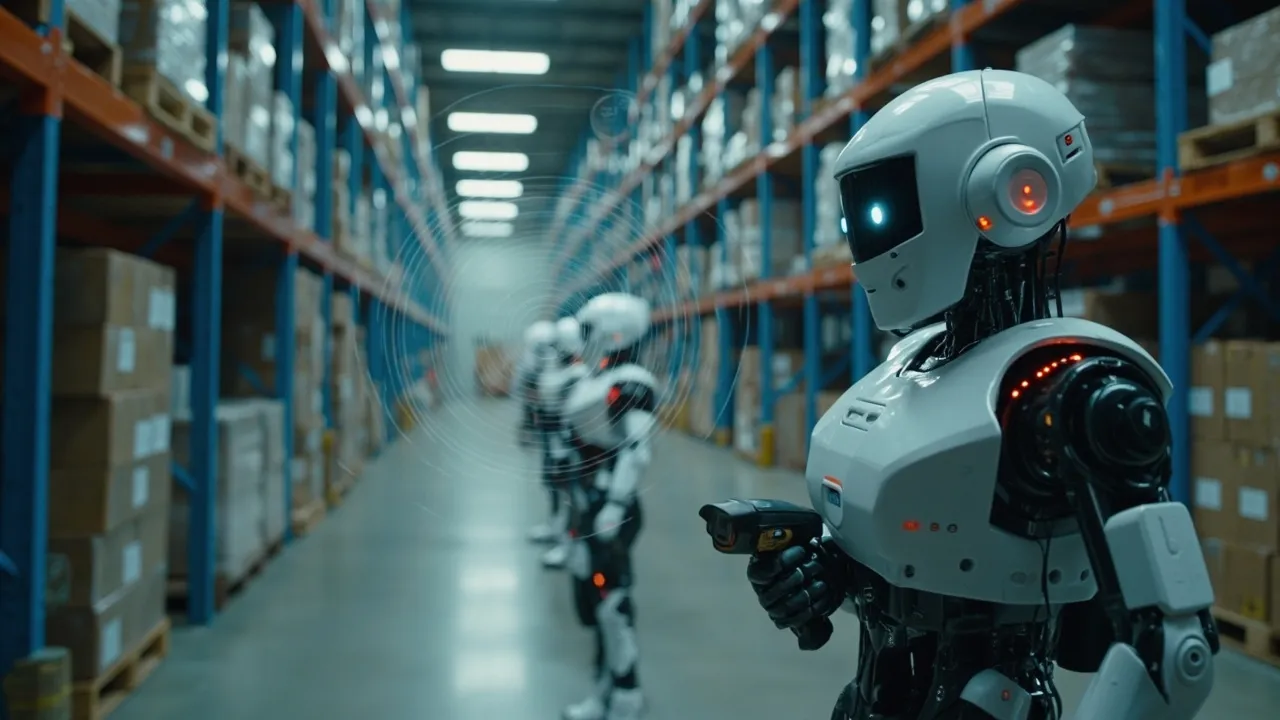
EPG AURA Launches at IntraLogisteX: Why AI-Native Supply Chain Execution Environments Are Replacing Traditional WMS Architectures

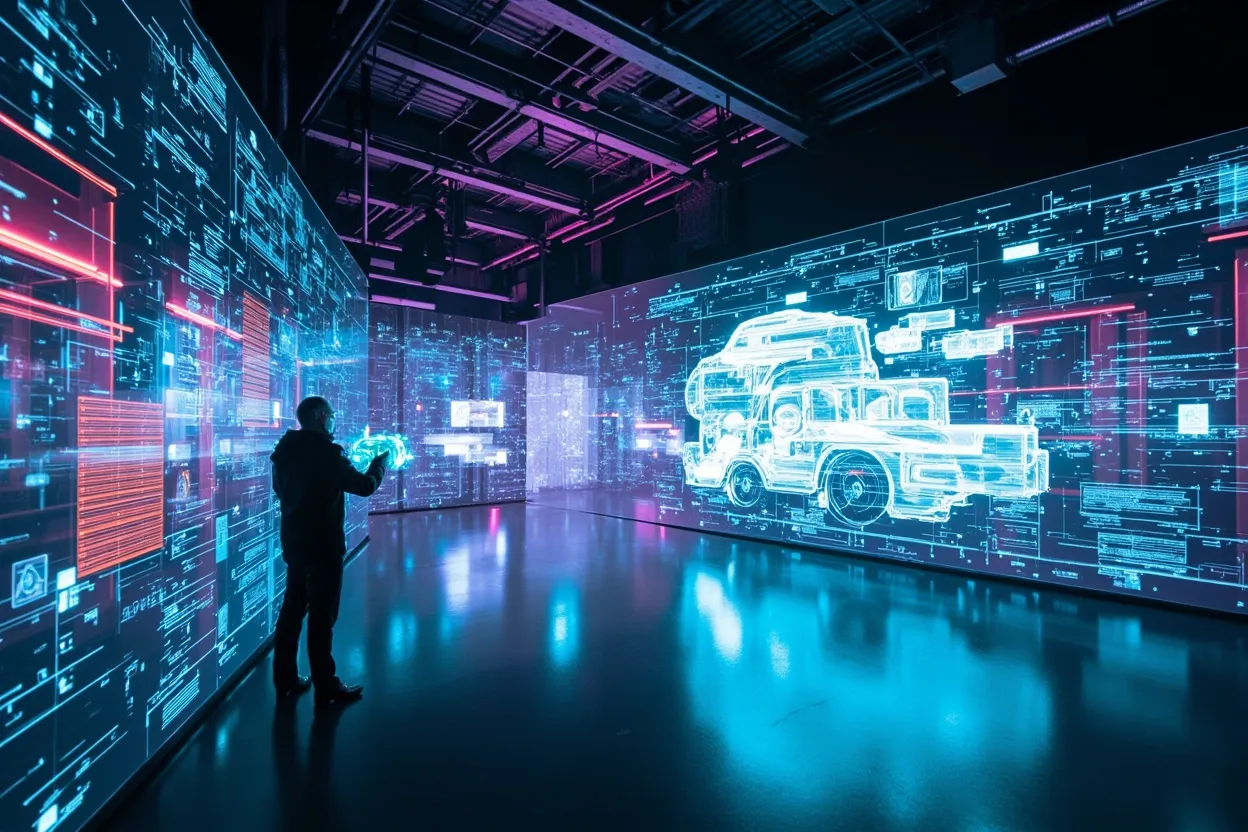
The warehouse management system market is projected to reach $4.77 billion in 2026, growing at a 17.98% CAGR according to Mordor Intelligence. But behind that growth figure lies a deeper architectural question that most market reports miss: are we witnessing incremental improvements to legacy platforms, or a fundamental redesign of how supply chain execution software thinks?
EPG answered that question definitively at IntraLogisteX 2026 in March, launching EPG AURA — what the company calls an AI-native supply chain execution environment. It's a term worth unpacking, because the distinction between "AI-augmented" and "AI-native" isn't marketing semantics. It represents the most significant architectural shift in warehouse technology since the move from on-premises to cloud.
From Software Vendor to AI-Powered Supply Chain Architect
EPG's evolution tells the broader industry story in miniature. For years, the Ehrhardt Partner Group operated as a traditional supply chain software vendor — building WMS, voice picking, and warehouse execution tools that customers deployed as discrete systems. The February 2026 announcement of AURA marked a strategic pivot: EPG now positions itself as an architect of AI-powered supply chains, not merely a system supplier.
What makes this shift meaningful is the approach to intelligence. Traditional WMS platforms treat AI as an add-on — a reporting layer, a forecasting module, or a recommendation engine bolted onto fundamentally rules-based execution logic. AURA embeds machine learning directly into the execution layer itself. The platform is designed to support generative and agentic AI processes across logistics operations, identifying interdependencies, evaluating actions, and preparing operational decisions within governance parameters.
That last phrase — "within governance parameters" — matters. This isn't autonomous AI making unchecked decisions. It's contextual intelligence operating inside defined guardrails, which is exactly what enterprise logistics requires.
What Makes AI-Native Different from AI-Augmented
The distinction is architectural, not cosmetic. In a traditional AI-augmented WMS, the core execution engine runs on deterministic rules: if inventory drops below threshold X, trigger replenishment order Y. AI modules sit alongside that engine, analyzing data and generating recommendations that a human operator then decides whether to implement.
An AI-native execution environment flips this model. Intelligence isn't a separate layer — it's woven into the execution fabric. The system continuously perceives operational processes, interprets information semantically, and prepares decisions in context. Real events from the physical warehouse connect with digital process data and become immediately actionable without the traditional handoff between "analytics" and "execution."
Consider the practical difference. A traditional WMS with AI add-ons might flag that picking productivity in Zone C has dropped 15% over the past hour and suggest a labor rebalance. An AI-native platform recognizes the productivity drop, correlates it with an inbound shipment that's creating staging congestion in the adjacent zone, predicts the cascading impact on outbound dock scheduling, and prepares a coordinated response across slotting, labor allocation, and dock appointment timing — all before a warehouse manager opens a dashboard.
The IntraLogisteX 2026 Signal: Industry Consensus Shifting
EPG wasn't alone in signaling this direction. The broader IntraLogisteX 2026 show floor reflected what Logistics Manager described as a move "away from wholesale systems replacement and towards modular improvement on top of existing infrastructure." Lucas Systems argued for extending existing warehouse environments through a more dynamic execution layer rather than replacing core platforms outright.
This is the key tension in the market right now. Companies with massive investments in legacy WMS platforms — SAP EWM, Oracle WMS Cloud, Manhattan Active — aren't going to rip and replace overnight. But the competitive pressure to embed intelligence deeper into execution is accelerating.
MHI's Top Supply Chain Trends for 2026 reinforced this urgency. MHI CEO John Paxton noted that "AI is no longer a luxury — it's a necessity," with AI now "embedded across supply chain functions" for demand forecasting, supplier evaluation, and real-time decision-making. The 2026 MHI Annual Industry Report, previewed at MODEX, moves beyond trend identification to offer what Logistics Management reported as "practical examples and a playbook approach to help companies apply automation and AI in their supply chains."
Meanwhile, 60% of warehouses reported plans to increase automation budgets by 20% in 2026, with investment focus shifting from sub-$1M pilots to enterprise-scale deployments. The money is following the architecture shift.
The Convergence of Orchestration and Execution
Another IntraLogisteX exhibitor, Logistics Reply, built its presence around GaliLEA — an AI copilot capability embedded within a microservices ecosystem. Optioryx focused on task-level economics: walking-distance reduction, better slotting, improved cartonization, and faster onboarding. As the Logistics Manager review observed, "This was not AI as spectacle. It was AI as selective optimization, applied to labour productivity, packing performance, and transport efficiency."
This convergence of orchestration platforms with execution systems represents a new software category. Traditional market segmentation drew clear lines between WMS (execution), WES (equipment orchestration), and analytics (intelligence). AI-native platforms like AURA blur those boundaries by treating intelligence, orchestration, and execution as a single integrated capability.
For the WMS market's projected growth trajectory to hold, vendors will need to demonstrate that their platforms can evolve beyond rules-based execution. The vendors that embed intelligence into their architectural DNA — rather than layering it on top — will capture disproportionate share of that $4.77 billion market.
When Should Shippers Consider AI-Native Execution?
Not every operation needs an AI-native execution environment today. The evaluation framework depends on operational complexity:
- High SKU variability with seasonal demand shifts: Traditional WMS rules struggle to optimize dynamically across thousands of SKU-location combinations. AI-native platforms excel here.
- Multi-automation environments: If you're running AMRs, conveyor systems, and manual processes in the same facility, orchestration-level intelligence becomes critical.
- Labor constraint sensitivity: Operations where workforce availability fluctuates significantly benefit from systems that can autonomously rebalance execution plans.
- High dock-to-stock velocity requirements: When speed from receiving to pick-face matters, the latency of human-mediated analytics handoffs becomes a competitive disadvantage.
For operations running straightforward, stable workflows with limited automation, a well-configured traditional WMS still delivers strong value. The migration path to AI-native isn't a cliff — it's a gradient, and platforms offering modular AI enhancement (like Lucas Systems' approach) provide intermediate steps.
The Bottom Line for Supply Chain Leaders
EPG AURA's launch represents a category-defining moment, not because of any single feature, but because it crystallizes an architectural direction the entire industry is moving toward. The question isn't whether AI-native execution will replace traditional WMS — it's how quickly the transition accelerates and which vendors lead it.
For shippers evaluating warehouse technology investments, the key takeaway is to assess whether your current platform treats AI as an accessory or as architecture. That distinction will determine your operational ceiling for the next decade.
Managing complex freight operations while your warehouse technology evolves? CXTMS provides the transportation management backbone that connects your execution environment — whether traditional WMS or AI-native — with carrier networks, rate optimization, and real-time shipment visibility. Request a demo to see how CXTMS integrates with your supply chain execution stack.