Ecommerce Warehouse Tech Is Getting More Modular: Why FlexBins, Pallet Shuttles, and Inventory Drones Matter


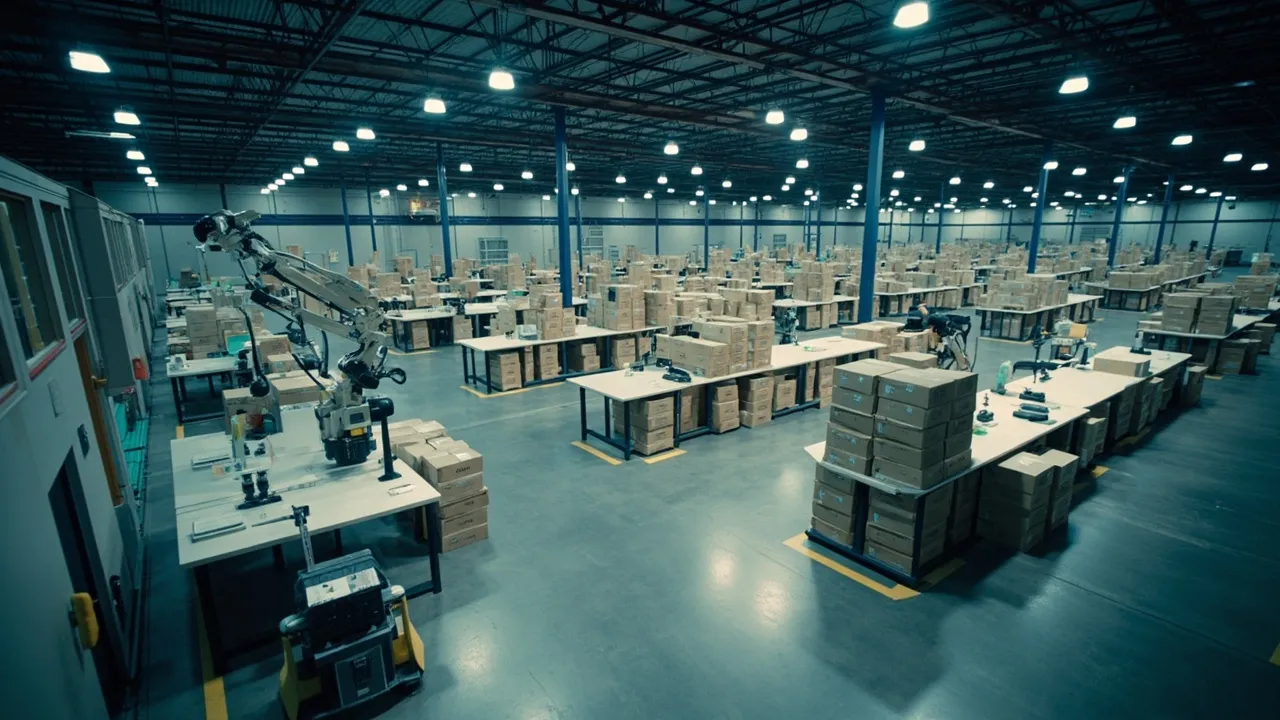
The more important shift in 2026 is smaller, more modular, and more practical: tools that add capacity, accuracy, or density without forcing operators to rebuild the entire facility around one monolithic automation bet. The latest ecommerce technology roundup from Inbound Logistics makes that pattern clear. New systems range from bin-to-container picking and four-way pallet shuttles to flexible storage bins, autonomous inventory audits, cube storage, overhead conveyors, parcel visibility tools, and item-level IoT sensors.
That variety matters. Ecommerce warehouses are under pressure from more SKUs, more order profiles, tighter delivery promises, and labor constraints. The winning investments fit into existing workflows, expand gradually, and connect to the data layer that controls inventory, cutoffs, and transportation execution.
The common thread is modular capacity
Look at the systems highlighted in Inbound Logistics and the theme is not “robots replace warehouses.” It is modular capacity.
Exotec’s Skypod system, for example, is designed to remove the hard separation between picking and packing zones. Inbound Logistics reports that each workstation can process up to 600 bins per hour and match orders with the right fulfillment container at the workstation. That is not just speed. It is a different way to think about flow: bring the inventory and the correct container together at the point of work, then reduce handoffs.
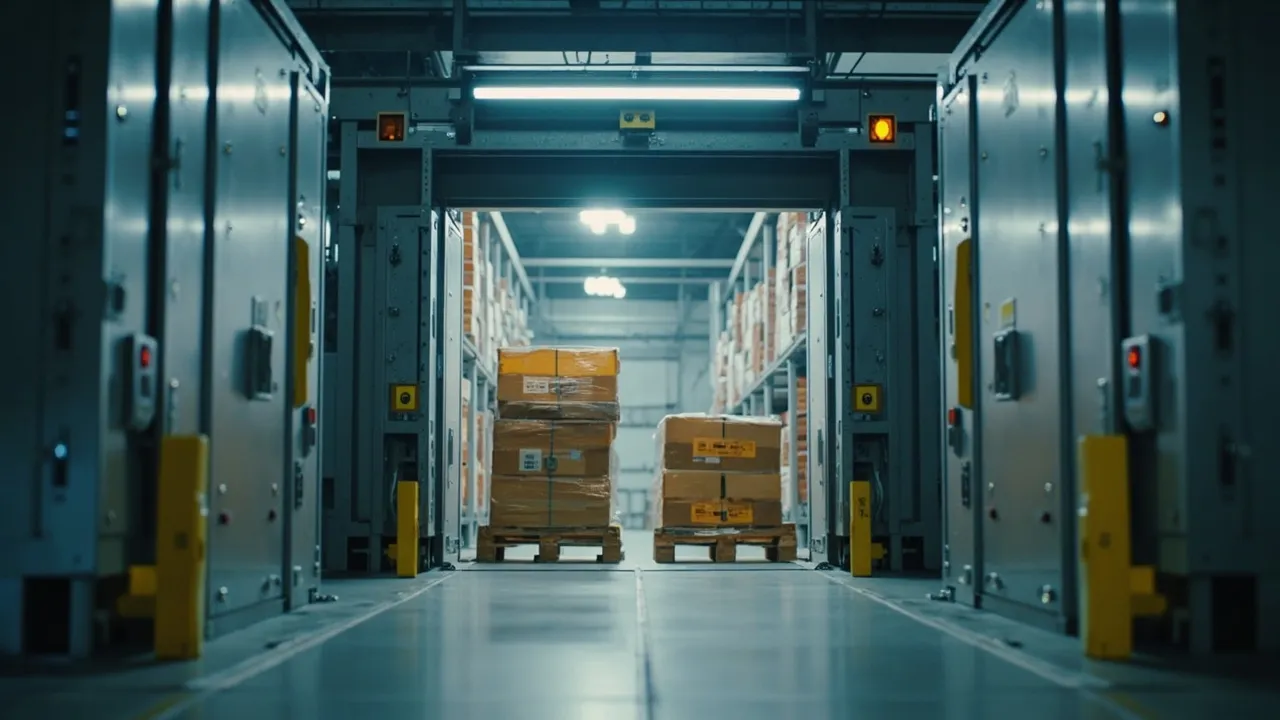
Swisslog’s AgileStore points in the same direction at pallet scale. The four-way roaming pallet shuttle is built for high-density automated storage and retrieval, moving across aisles and levels through integrated lifts rather than staying locked into traditional bi-directional shuttle paths. Modern Materials Handling also covered the launch at MODEX 2026, noting Swisslog’s emphasis on a modular way to use space more efficiently and adapt to changing demand.
AutoStore FlexBins show the same logic for SKU variety. Multiple bin heights allow operators to handle a broader range of products, from bulky grocery packs to oversized spare parts and apparel. The point is not simply storing more. It is expanding what can run through an existing grid without sending awkward SKUs into a separate manual exception process.
Then there is Corvus One, the autonomous inventory management system from Corvus Robotics. Inbound Logistics reports that the system syncs inventory audit data directly with warehouse management systems and, at Dermalogica’s main distribution center in Carson, California, images the warehouse 52 times per year. That represents a 600% increase in inventory imaging frequency. For ecommerce operations, that kind of audit cadence can be more valuable than another dashboard because it attacks a root cause of service failure: inventory that exists in the system but not in the expected location.
Why ecommerce needs flexibility more than spectacle
Warehouse automation has a long history of impressive demos that struggle in messy daily operations. Ecommerce is especially unforgiving because the mix keeps changing. One week the problem is small-item velocity. The next it is oversized items, returns, promotional bundles, marketplace orders, or late inventory arriving just before a customer promise window closes.
That is why modularity is more than a design preference. It is a risk-control strategy.
A four-way pallet shuttle helps when pallet density is the constraint. Flexible bins help when SKU dimensions keep breaking the storage model. Bin-to-container picking helps when labor needs to work at higher throughput without adding unnecessary touches. Autonomous drones and imaging systems help when cycle counts cannot keep pace with real inventory movement. Overhead conveyors, such as Ferag’s ferag.skyfall system, add another example: Inbound Logistics says it processes around 1,500 items per hour while combining conveying, buffering, sorting, order picking, and consignment.
These targeted capabilities solve specific bottlenecks without asking a warehouse to become a fully automated “dark” facility overnight.
Fully lights-out operations remain more myth than mainstream. In a SupplyChainBrain discussion on warehouse automation, Sarah Hollinger of Hy-Tek Intralogistics described the dark warehouse concept as “a bit of a farce,” noting that even highly automated facilities still rely on people for higher-level work. She also cited a survey finding that 94% of operational leaders expect to deploy robots within the next two years. The direction is clear, but the practical path is still hybrid.
Inventory accuracy is now a customer promise issue
Inventory accuracy used to be treated as a warehouse KPI. In ecommerce, it is a revenue, service, and transportation issue.
If the system thinks a unit is available but the warehouse cannot find it, the failure cascades quickly. The order misses the cutoff. A substitute shipment may need to be sourced from another node. Transportation cost rises. Customer service gets involved. The promise date changes. In the worst cases, inventory gets reordered even though it is already somewhere inside the network.
That is why high-frequency autonomous audits deserve attention. Imaging a facility 52 times per year is not just a better count schedule. It gives operators more chances to catch slotting errors, misplaced inventory, and systemic drift before they become order failures. When those updates sync with the WMS, the warehouse can correct the physical operation and the digital record together.
The same principle applies to item-level sensing. Inbound Logistics notes that Wiliot’s Gen3 IoT Pixel is roughly the size of a postage stamp and can broadcast encrypted Bluetooth Low Energy signals that help track location, temperature, humidity, and movement across networks. Not every ecommerce operation needs item-level sensing everywhere. But for high-value, temperature-sensitive, or high-velocity goods, better signal quality can prevent expensive downstream surprises.
Fulfillment gains only matter if transportation updates too
Here is the part many automation plans miss: faster fulfillment is not automatically better logistics.
If a warehouse can pick faster but the carrier cutoff table is stale, service does not improve. If inventory is more accurate but available-to-promise logic does not update, customers still see bad dates. If a modular storage system increases capacity but transportation planning does not know which node can ship which SKU by which time, the operation leaves value on the floor.
That is why WMS and TMS integration is no longer a “phase two” nice-to-have. Modular fulfillment tools create more real-time decisions. Which orders should be released now? Which node should fulfill them? Which carrier can still make the promise window? Which shipment should move parcel, LTL, or consolidated linehaul? Which exceptions should trigger customer communication before service fails?
Warehouse technology creates options. Transportation systems decide whether those options turn into margin and service.
The CXTMS takeaway
The lesson from this new wave of ecommerce warehouse technology is not that every operator needs every tool. It is that fulfillment networks are becoming more modular because demand is too variable for rigid infrastructure.
CXTMS helps logistics teams connect those warehouse improvements to transportation execution: carrier selection, cutoff management, shipment visibility, exception workflows, cost controls, and promise-date performance. When a warehouse adds more accurate inventory audits, faster pick flow, or denser pallet storage, the transportation plan should react automatically—not days later in a spreadsheet.
FlexBins, pallet shuttles, inventory drones, and item-level sensors are useful because they make the warehouse more adaptive. The next step is making the transportation layer just as adaptive. Schedule a CXTMS demo to see how connected logistics execution turns modular fulfillment capacity into better service and lower operating friction.