Cold Chain Capacity Is Rising Again: Why 7.76 Billion Cubic Feet Still May Not Be Enough

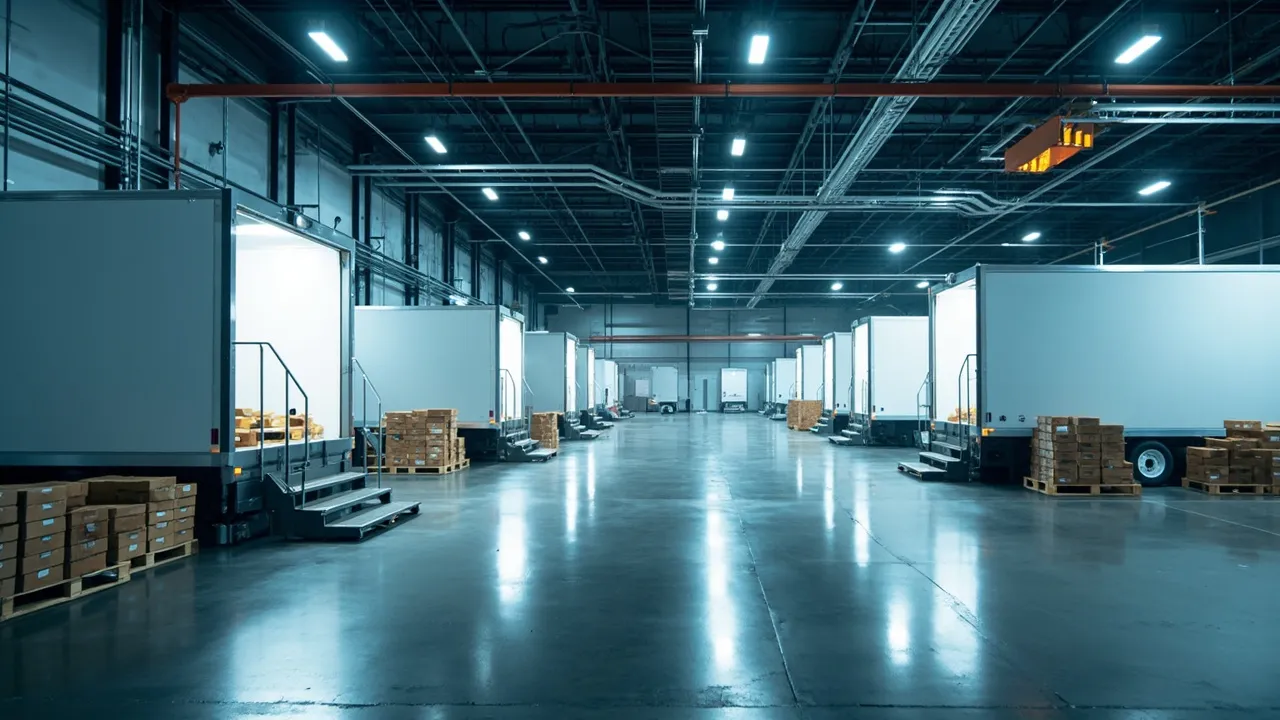
Cold chain capacity is growing again, but shippers should not confuse more cubic feet with more usable resilience.
The latest Global Cold Chain Alliance signal, reported by Food Logistics, says the Global Top 25 temperature-controlled warehousing and logistics operators now manage 7.76 billion cubic feet of space. That is a 6.3% increase from 2025. In a market where food, beverage, pharmaceutical, and specialty retail networks all need tighter temperature control, that headline sounds reassuring.
It is reassuring only up to a point.
Cold chain capacity is not interchangeable like dry warehouse space. A frozen food pallet in the wrong region, a biologic shipment without validated lane controls, or produce delayed at a congested dock can still create a service failure even if the global market technically added millions of cubic feet. The issue is not whether the industry is building. It is whether the right capacity exists in the right node, with the right labor, power, compliance controls, transportation links, and appointment discipline.
Growth is real, but constraints are local
The 7.76-billion-cubic-foot figure matters because it confirms that major operators are still investing. Cold chain demand has been lifted by ecommerce grocery, fresh prepared foods, biologics, specialty pharmaceuticals, meal kits, and cross-border food trade. More capacity gives shippers more options during seasonal peaks and regional disruptions.
But the 6.3% growth rate also needs context. Food Logistics noted that growth decelerated from the prior year's 8.3% expansion, with higher interest rates and tighter market conditions making operators more selective about development. That is exactly how cold chain bottlenecks form. Capacity does not expand evenly across ports, inland consumption zones, airport pharma lanes, food production clusters, and border markets. Operators build where they can earn acceptable returns. Shippers need capacity where demand, inventory, customs flow, and customer promises collide.
A national average does not unload a truck in Atlanta, validate a frozen seafood lane through Los Angeles, or recover a delayed vaccine shipment near a regional airport. Cold chain risk is intensely local.
The demand side is getting more demanding
Temperature-controlled logistics is also becoming less forgiving. Inbound Logistics reported that the global cold chain logistics market was estimated at $341 billion in 2024, and highlighted two demand pressures that should make every shipper pay attention: improved refrigeration could help address a portion of the 1.3 billion tons of food wasted globally each year, and IQVIA expects half of new medicines launched over the next five years to require cold storage, up from 37% for launches between 2013 and 2017.
That combination changes the planning standard. Fresh food networks need speed, traceability, and narrow dwell windows. Pharmaceutical networks need documented temperature integrity, lane qualification, validated packaging, and exception response. Retail and foodservice networks increasingly need cold chain operations that behave like high-velocity fulfillment, not static reserve storage.
This is why added cubic feet do not automatically translate into lower risk. A building can have space but not the right temperature zones. It can have freezer capacity but not enough blast-freeze throughput. It can support storage but not rapid cross-dock flow. It can be compliant for one product category but unsuitable for another. The constraint may be dock doors, trained labor, ammonia refrigeration maintenance, yard flow, available reefer trailers, or the data systems required to prove custody and temperature control.
Energy, labor, and compliance make cold space expensive space
Cold chain warehousing is expensive for reasons that dry warehousing is not. Refrigeration systems consume large amounts of power. Facilities need specialized maintenance. Workers operate in difficult environments that require training, protective equipment, and productivity planning. Food safety, pharmaceutical quality, and customer audit requirements add documentation burdens that cannot be hand-waved away during a capacity crunch.
SupplyChainBrain has framed the challenge bluntly: other than energy, labor is the largest expense for cold storage distribution facilities. The same analysis pointed to temperature abuse, dwell time, congestion, and warehouse layout as practical sources of waste and spoilage. Those problems are not solved by signing a contract for more square footage. They are solved by controlling the handoffs.
Every handoff in the cold chain is a risk event: production to storage, storage to dock, dock to reefer trailer, trailer to cross-dock, cross-dock to final delivery. If appointment windows slip, if a trailer waits in the yard too long, if freight is staged in the wrong temperature zone, or if a carrier misses a recovery plan, the physical product can degrade while systems still show the shipment as simply "in transit."
That gap between status and condition is where cold chain failures hide.
A better planning framework for shippers
Shippers should treat the GCCA capacity increase as an opportunity to upgrade their network design, not as permission to relax.
Start with facility redundancy. Identify which products, customers, and lanes depend on a single cold storage node. If that facility loses power, reaches capacity, fails an audit, or cannot provide appointments, what is the alternate plan? Redundancy should be specific by temperature band and product class, not a generic list of 3PL contacts.
Second, qualify lanes before peak season. A cold chain lane is more than an origin, destination, and rate. It includes packaging method, pre-cool procedure, reefer set point, carrier capability, dwell tolerance, sensor requirements, cross-dock rules, and escalation contacts. If the first time a team tests an alternate lane is during a service failure, the plan is not a plan.
Third, monitor dwell time as a temperature risk metric. Cold chain dwell is not just inventory aging. It is exposure. Track dwell at production sites, cold storage facilities, ports, airports, border crossings, yards, and customer docks. Look for patterns by carrier, facility, SKU family, and appointment type.
Fourth, build exception escalation around product value and risk, not shipment noise. A temperature excursion on a low-value frozen product may need one response; a deviation on a biologic shipment may need immediate quality review, quarantine, and customer notification. The TMS workflow should know the difference.
Finally, connect capacity decisions to transportation execution. The cheapest cold storage location can become the most expensive choice if it adds miles, misses delivery windows, increases reefer fuel burn, or forces split shipments. Cold chain planning has to combine storage, transportation, compliance, and service data in one operating view.
The CXTMS takeaway
The industry has more cold chain space than it did a year ago. Good. It will need it.
But 7.76 billion cubic feet does not eliminate the hard parts of temperature-controlled logistics. Shippers still need to know which facilities are usable, which lanes are qualified, which shipments are dwelling too long, which exceptions matter, and which recovery options protect product integrity without blowing up cost.
CXTMS helps logistics teams manage those decisions in one execution layer: facility visibility, carrier performance, appointment status, exception workflows, lane analytics, and cost controls. Cold chain resilience is not built by hoping the market has enough cubic feet. It is built by seeing risk early enough to act.
If your temperature-controlled network is growing more complex, schedule a CXTMS demo to see how better transportation management can turn cold chain capacity into operational control.