Warehouse Retention in 2026 Starts With the Building, Not Just the Hiring Plan

Warehouse labor strategy too often starts with headcount targets and ends with another hiring scramble.
That is backward.
In 2026, retention starts with the building itself. If the warehouse is dim, loud, physically punishing, and awkward to work in, the hiring plan is just a revolving door with a recruiting budget attached.
Operators are finally being forced to take it seriously because the labor market still has teeth. Modern Materials Handling reported that 74% of companies in transportation and logistics are dealing with talent shortages, citing ManpowerGroup data. The same report notes that in December 2025 alone, about 166,000 workers quit jobs in transportation, warehousing, and utilities, which works out to roughly a 27% voluntary annual turnover rate, based on U.S. Bureau of Labor Statistics data.
That is not an HR inconvenience. That is an operating model problem.
The warehouse environment is now an operations lever
The smart takeaway from MMH's reporting is that lighting, temperature, noise, ergonomics, flooring, and even basics like water access are no longer perks. They directly affect whether workers stay, how safely they perform, and how productive each shift actually is.
This matters because warehouse work is still physically repetitive, even in more automated sites. Pickers walk miles. Packers repeat the same motions for hours. Dock teams work around noise, forklifts, heavy loads, and time pressure. If the facility adds strain instead of reducing it, turnover should not be treated like a mystery.
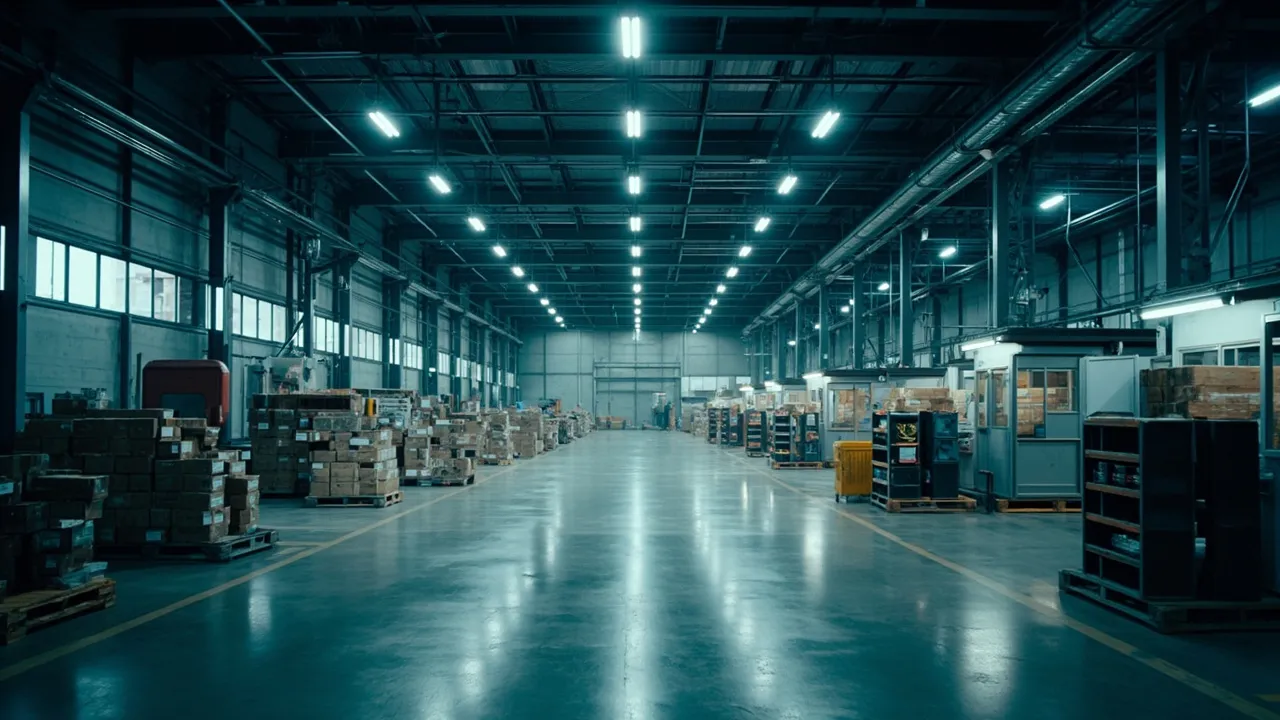
The same MMH report includes a dead-simple benchmark that many older buildings still miss: modern warehouse lighting is typically designed around about 240 lux and a color temperature near 5,000 Kelvin, which delivers clearer, daylight-like visibility. That helps workers read labels, spot damage, move safely through aisles, and simply not feel like they are working inside a tired cave.
MMH also notes that LEDs can use up to 80% less energy than older metal halide or fluorescent fixtures and can operate for more than 100,000 hours. That is the kind of upgrade operators usually justify on utility savings. Fine. But the retention angle is just as important. Better visibility reduces fatigue, makes training easier, and signals that the site is being run like a serious workplace instead of a neglected cost center.
Retention and productivity rise together, or not at all
The lazy way to talk about retention is to frame it as culture. The useful way is to frame it as friction.
If workers are constantly bending, reaching, twisting, lifting from bad heights, or navigating cluttered aisles, the building is taxing them every minute. That shows up in injuries, slower throughput, higher absenteeism, and faster burnout.
This is where ergonomics stops being soft language and becomes real warehouse economics. Better station height, anti-fatigue flooring, lower noise exposure, safer travel paths, and tighter workstation design reduce wasted motion. They also make it easier for less-experienced workers to become competent faster. In a labor market where churn is expensive, that is a serious advantage.
There is a management implication here too. Logistics Management's 2026 Salary & Compensation Study found the average annual salary for logistics professionals rose to $126,400 in 2026, up from $120,600 the year before, as roles expanded in scope and accountability. That does not directly measure warehouse turnover, but it does show the broader point: supply chain leaders are being paid more because their jobs are harder, more operationally exposed, and more strategic.
Translation: if leaders are carrying more responsibility, they should stop treating warehouse environment decisions like minor facilities issues. They belong in the core operating plan.
A bad building also makes automation underperform
A lot of operators still talk about automation and labor as if they are separate strategies. That is dumb.
Inbound Logistics argues that warehouse resilience depends on workforce readiness, not technology alone. Its point is simple and correct: automation only pays off when the workforce is trained to operate, monitor, troubleshoot, and support it consistently. The article goes further and says the cost of automation downtime often exceeds the labor savings that justified the investment in the first place.
That is the bridge between retention and building design.
If you want a warehouse to be automation-ready, the site still needs to be human-ready. Workers need clear lines of sight, safer traffic patterns, accessible equipment, sensible temperatures, lower fatigue, and workstations designed for mixed manual-and-automated flows. Otherwise the operation creates a double failure: people leave faster, and the automation becomes harder to support.
In other words, the best automation strategy in the world will not save a building that people hate working in.
What operators should evaluate right now
Warehouse leaders do not need another vague speech about employee experience. They need a scorecard.
Here is the practical version:
- Lighting: Are work areas bright enough for accurate picking, scanning, and inspection, or are workers compensating for poor visibility?
- Ergonomics: Do pack, pick, and replenishment stations reduce bending, reaching, and repetitive strain?
- Temperature and airflow: Can workers sustain output through the full shift without the building fighting them?
- Noise: Are conveyors, forklifts, fans, and dock areas creating avoidable stress and communication problems?
- Flooring and walking paths: Do surfaces reduce fatigue and support safe movement for people and machines?
- Water, break areas, and recovery spaces: Does the building treat physical recovery like part of throughput, or as an afterthought?
- Automation compatibility: Can workers safely interact with robotics, conveyors, and system touchpoints without friction or confusion?
If several of those answers are bad, retention is not your root problem. Facility design is.
Why this matters more in 2026
The old assumption was that warehouse labor could always be replaced if the site paid enough. That assumption has aged badly.
Operators are now dealing with persistent talent shortages, high quit rates, heavier performance expectations, and more technology inside the same four walls. That means the warehouse itself has become part of the labor offer. Buildings now communicate whether the company respects the work, understands the physical reality of the job, and is serious about long-term productivity.
The winners will not be the warehouses with the flashiest hiring campaigns. They will be the ones that make it easier for people to do hard work safely, consistently, and without getting ground down by the environment.
That is not cosmetic. That is strategy.
Where CXTMS fits
CXTMS helps logistics teams connect warehouse execution with the transportation outcomes leadership actually cares about: throughput, exception rates, service consistency, and cost control. When retention problems create dock delays, picking slowdowns, missed cutoffs, and labor-driven execution variability, those issues do not stay inside the building. They spill into the network.
Better facility design will not fix every warehouse problem, but it gives operators a stronger labor base to build on, and cleaner execution data to act on. Pair that with better operational visibility, and retention becomes something you can manage instead of something you keep complaining about.
Want better visibility into how warehouse execution affects transportation performance and customer service? Book a CXTMS demo and see how the platform helps teams turn operational friction into measurable improvement.
If your team wants fewer surprises and tighter execution across freight, warehousing, and customer commitments, see how CXTMS helps logistics operators turn visibility into action.