Air Cargo Is Still the Shock Absorber, but the New Playbook Is Ocean-Air via Los Angeles

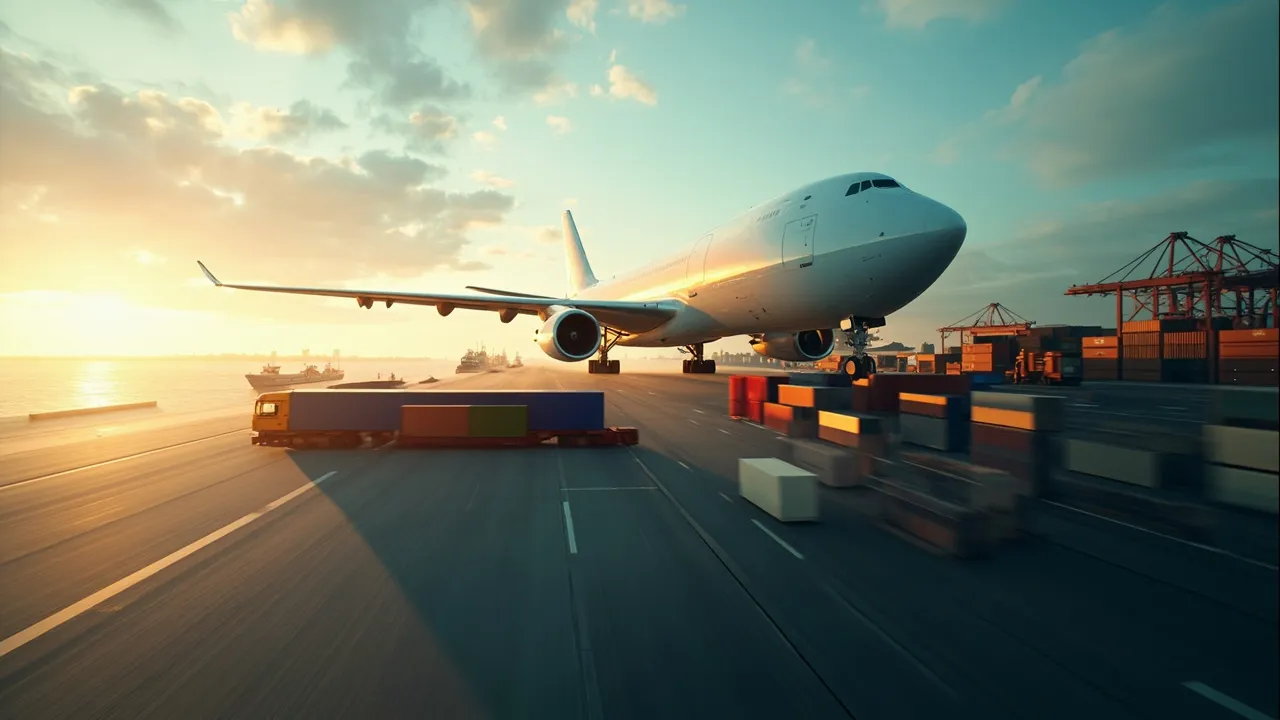
Air cargo still does what it always does when global trade gets weird: it absorbs the shock. But in 2026 the response is getting more creative, and a lot more tactical.
The old playbook was simple. If time mattered, shippers paid for direct air. If cost mattered, they stuck with ocean and accepted the delay. That binary is breaking down. Trade volatility, Middle East disruption, and stubbornly high air rates are forcing importers to build hybrid routings that split the difference on speed and cost.
One of the clearest examples is the emerging ocean-air pattern from Asia to Europe via Los Angeles. It sounds strange until you look at the math. Then it looks like exactly the kind of workaround freight markets invent when the obvious routes stop making sense.
Air cargo is still growing, just more carefully
According to Logistics Management, citing IATA, global air cargo volumes are projected to rise 2.4% in 2026 to 71.6 million tonnes, while cargo revenues are expected to increase 2.1% to $158 billion from $155 billion in 2025. That is not explosive growth, but it is a strong signal that air remains essential even as markets normalize from the post-pandemic roller coaster.
The same report makes the deeper point. Air freight has been acting as the release valve for tariff deadlines, e-commerce surges, semiconductor demand, and sudden lane shifts. In other words, air is no longer just a premium mode. It is the system's emergency flexibility layer.
That matters because when disruption hits, shippers do not ask whether air is expensive. They ask whether stockouts, line stoppages, or missed customer commitments would be even more expensive.
The Middle East disruption changed the routing conversation
That flexibility is now being stress-tested by geopolitical reality. Reuters reported on April 10 that air cargo capacity into the Middle East had shrunk by more than 50% year over year over the prior two weeks, based on WorldACD data. Reuters also reported that long-term air cargo contract rates from Vietnam to Europe had nearly doubled from pre-war levels to $6.27 per kilogram.
Those are not background numbers. They are routing-decision numbers.
When capacity falls that hard and rates move that fast, direct air becomes harder to justify outside the most urgent or highest-margin cargo. At the same time, ocean-only options are getting less attractive when key waterways remain congested or unreliable. So shippers are doing what smart operators always do under pressure: they are improvising a middle path.
Reuters described companies moving goods from Asia to Europe by combining ocean and air through Los Angeles rather than relying on direct uplift through traditional hubs. The logic is brutally practical. Shipping part of the journey by sea keeps costs below direct air. Flying the transatlantic leg avoids the painfully slow detours that come with all-ocean routings around disruption zones.
It is not elegant. It is just useful. Freight people love that kind of ugly solution.
Why Los Angeles works in an ocean-air strategy
Los Angeles is not attractive here because it is trendy. It is attractive because it is dense with optionality.
The Southern California gateway gives shippers access to major ocean capacity, deep drayage and transload infrastructure, dense warehousing, and frequent passenger and cargo flights with onward lift to Europe. Reuters noted that rates from Los Angeles to Paris were up only 8%, partly because airlines were adding more passenger flights and opening more belly capacity for cargo.
That is the key detail. If one leg of the move is inflating dramatically while another remains comparatively stable, hybrid routing stops being a niche exception and starts becoming a procurement strategy.
For shippers moving electronics, consumer goods, industrial components, or replenishment inventory that cannot wait for a full ocean detour but does not justify top-of-market direct air, Los Angeles becomes a pressure-relief valve.
This is not a universal fix
Now for the part people like to ignore: ocean-air is not magic.
Every transfer point adds handling risk, schedule risk, and coordination overhead. Containers have to hit the right port windows. Cargo has to be deconsolidated or transloaded on time. Air bookings need to be aligned with inbound vessel timing. Customs, airport cutoffs, warehouse labor, and trucking availability all start to matter more because the whole model depends on smooth handoffs.
And if too many shippers pile into the same workaround, the workaround gets expensive fast.
That means ocean-air via Los Angeles works best for freight that sits in the uncomfortable middle, cargo too urgent for ocean and too cost-sensitive for direct air. If the shipment is truly mission critical, direct air may still be the right call. If the shipment can tolerate delay, ocean still wins on cost. The hybrid model is for the messy middle, which, frankly, is where a lot of real freight lives.
What logistics teams should decide before they are forced to decide
The right response is not to improvise every shipment from scratch. It is to define decision rules now.
1. Segment freight by urgency and margin
Do not treat all late freight like emergency freight. Split shipments into buckets based on revenue impact, customer promise dates, production dependency, and gross margin. That tells you which loads deserve direct air, which can ride ocean, and which belong in a blended ocean-air program.
2. Price the full routing, not just the air leg
The trap is comparing a direct air quote to an ocean rate and calling it analysis. Real routing decisions need total landed transport cost, including drayage, transload handling, storage, rebooking risk, and potential dwell at the gateway. The cheapest quote often turns into the dumbest decision.
3. Protect the handoffs
Hybrid routing fails at the seams. Visibility around vessel ETA changes, warehouse slotting, customs release, and airport tender timing matters more than mode theory. If your team cannot manage event-level exceptions cleanly, the strategy breaks down when volume spikes.
4. Keep alternate gateways warm
Los Angeles is useful now, but no workaround stays pristine forever. Build fallback options before you need them. The market punishes anyone who discovers contingency planning after the disruption already got expensive.
The real lesson for 2026
Air cargo is still the shock absorber of global trade. That has not changed. What has changed is how shippers use it.
Instead of paying for end-to-end direct air every time a lane gets ugly, more companies are building modular routings that combine ocean economics with air-speed recovery. The Los Angeles ocean-air pattern is the clearest sign yet that the market is getting more surgical, not less.
That is the new playbook. Not air versus ocean, but which blend of speed, cost, and risk buys the least-bad outcome.
In 2026, that is what good logistics strategy looks like.
Want tighter control over multimodal planning, exception handling, and landed-cost decisions when trade lanes get chaotic? Book a CXTMS demo to see how CXTMS helps logistics teams execute faster when the market stops behaving.