Robot Orders Are Flat, but Cobots Are Surging: What Q1 2026 Says About Practical Automation


North American robot demand did not explode in the first quarter of 2026. That is the headline many logistics leaders will notice first. But the better signal is underneath it: robot buying is becoming less dependent on automotive megaprojects and more tied to practical, workflow-specific automation.
According to A3 data reported by Modern Materials Handling, companies in North America ordered 9,055 robots in Q1 2026, valued at $543 million. Unit orders were down just 0.1% year over year, while revenue fell 6.4%. On the surface, that looks like a market pausing after years of automation enthusiasm.
It is not that simple. Automotive OEM robot orders fell 35.1% in units and 48.2% in revenue. That drag was large enough to flatten the total market even as several non-automotive sectors accelerated. Life sciences, pharma, and biomedical orders rose 54.1%. Semiconductor and electronics orders increased 31.7%. Plastics and rubber climbed 25.2%. Food and consumer goods rose 16%.
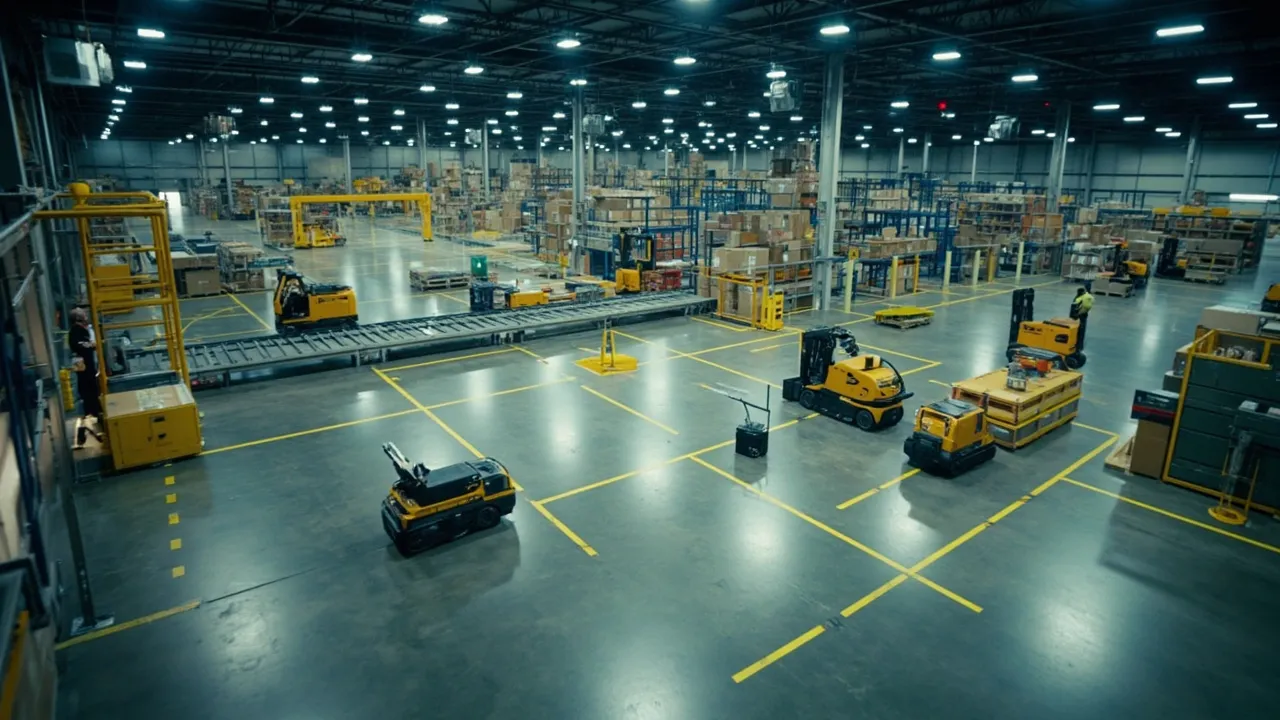
For warehouse and logistics teams, that mix matters more than the top-line number. Automation is no longer just a story about large manufacturers installing fenced robot cells around repetitive production lines. The growth is moving toward environments that look a lot more like logistics: variable products, labor constraints, safety requirements, compliance pressure, and workflows where automation must fit around people rather than replace the whole operation.
Cobots Are the Clearest Signal
Collaborative robots were the standout category. A3 reported 1,637 cobot orders in Q1 2026, up 55.6% from the same period last year. Revenue tied to collaborative robot orders rose 78.2% to $69.8 million. Cobots accounted for 18.1% of all robot units ordered during the quarter.
That is the important part. A flat robot market with a 55.6% jump in collaborative robot units is not a contradiction. It is a rotation.
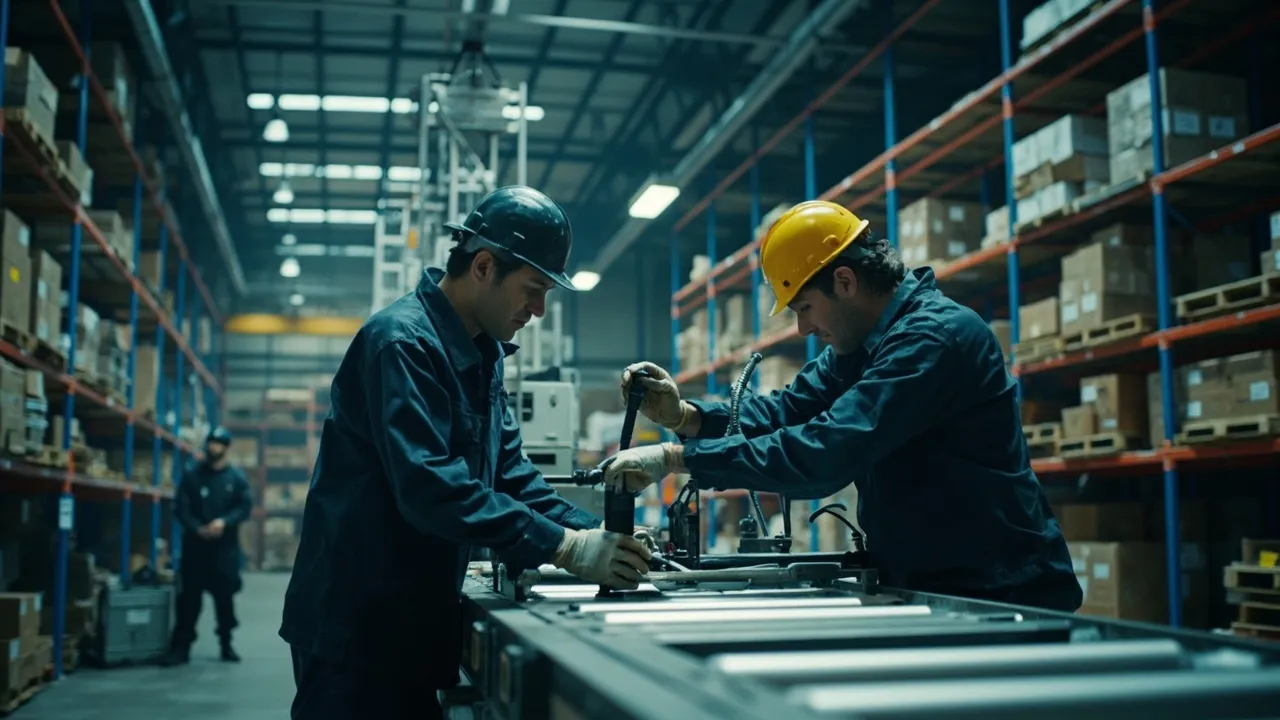
Cobots are attractive because they tend to solve narrower problems with less infrastructure disruption. They can assist with machine tending, kitting, inspection, palletizing, depalletizing, tote handling, packing support, and repetitive lift-or-place tasks. In a distribution center, that makes them useful in the messy middle between fully manual work and a lights-out automation fantasy.
The fantasy is still expensive. Real operations are constrained by SKU churn, seasonal peaks, building layouts, union rules, safety reviews, and integration debt. A cobot that improves one workstation, reduces ergonomic strain, or stabilizes throughput on a known bottleneck can be easier to justify than a facility-wide automation rebuild.
Practical Automation Beats Replacement Theater
The 2026 Intralogistics Robotics Study from Logistics Management points in the same direction. The study surveyed 166 warehouse, distribution, and manufacturing professionals involved in robotic automation decisions. It found that 52% are already running robots, while another 32% plan to within three years. Among deployers, 74% said they hit their business goals.
That is encouraging, but not a blank check. The report also notes that satisfaction around cost and time-to-value is more complicated, and that 47% of companies planning their first robotics initiative have not moved past the education stage. In other words: the appetite is real, but the buying process is cautious.
That caution is healthy. Logistics operations have been burned before by automation projects that looked elegant in a demo and painful in a live facility. The best automation programs usually start with boring discipline: process mapping, baseline productivity data, exception rates, labor availability, safety incidents, maintenance coverage, and integration requirements.
Cobots fit that discipline because they encourage smaller bets. A logistics operator can pilot one process, measure it, tune the human-machine workflow, and expand only after the economics are proven. That is much better than treating automation as a capital project whose success depends on everything working perfectly on day one.
Why the Sector Shift Matters for Logistics
The industries showing growth in Q1 2026 also tell logistics teams what kind of automation is winning. Life sciences and pharma are not low-complexity environments. They involve traceability, compliance, clean handling, and high consequence for error. Semiconductor and electronics operations require precision and controlled processes. Food and consumer goods deal with demand variability, packaging complexity, and throughput pressure.
Those are not identical to freight forwarding, warehousing, or distribution, but they rhyme. Logistics teams face the same operational pattern: too many exceptions for rigid automation, too much volume volatility for pure manual labor, and too little margin for experimental moonshots.
That is why cobot adoption should be read as a practical automation signal. The market is rewarding tools that can be inserted into existing workflows, supervised by human operators, and scaled by use case. For a warehouse, that could mean cobots helping with repetitive palletizing at outbound doors, assisting value-added services, supporting quality checks, or smoothing labor peaks during promotion cycles.
The TMS Connection: Automation Needs Better Execution Data
Warehouse automation does not stop at the dock door. If a cobot improves packing throughput but transportation planning does not adjust carrier cutoffs, trailer appointments, or shipment consolidation logic, the benefit leaks away downstream.
This is where transportation management becomes part of the automation business case. Faster picking and packing should feed better dock scheduling. More consistent palletizing should improve load planning. More predictable outbound flow should reduce detention, missed pickups, and emergency tenders. But none of that happens automatically unless warehouse events, order status, carrier schedules, and exception workflows are connected.
The smartest logistics teams will treat cobots as execution nodes, not isolated machines. Each deployment should answer three questions:
- What operational constraint is this robot removing?
- What data will prove that the constraint actually improved?
- What transportation decisions should change when the improvement occurs?
That last question is often missed. It is also where value compounds.
A Sensible Playbook for 2026
The Q1 robot data does not say every warehouse should rush into robotics. It says the market is becoming more selective. Big automation programs still have a place, but the growth signal is pointing toward smaller, safer, workflow-specific tools with measurable payback.
For logistics leaders, the playbook is straightforward:
- Start with bottlenecks, not technology categories.
- Prioritize processes with repeatable motion, high ergonomic risk, or chronic labor gaps.
- Pilot cobots where the work can be measured before and after deployment.
- Include maintenance, safety, and supervisor adoption in the business case.
- Connect automation gains to transportation execution, not just warehouse productivity dashboards.
Flat robot orders are not a warning that automation is fading. They are a warning that vague automation is fading. The market is moving toward practical deployments that help people do high-volume work more safely and consistently.
CXTMS helps logistics teams turn those operational improvements into transportation outcomes by connecting shipment visibility, carrier decisions, dock events, and exception workflows in one execution layer. If your warehouse automation roadmap is starting to affect outbound reliability, schedule a CXTMS demo and see how better transportation orchestration can keep the gains from getting trapped inside the facility.