Cube Storage vs. Shuttle Systems vs. AMRs: The 2026 Warehouse Automation Technology Showdown

The warehouse robotics market is on track to hit $10.96 billion in 2026, growing at a 17.5% CAGR toward $24.55 billion by 2031, according to Mordor Intelligence. At the same time, the autonomous mobile robot (AMR) segment alone is projected to reach $5.18 billion this year, up from $4.49 billion in 2025.
With this kind of capital flowing into warehouse automation, operations leaders face a critical decision: which storage and retrieval architecture actually fits their operation?
The three dominant contenders—cube storage, shuttle systems, and autonomous mobile robots—each excel in different scenarios. Choosing wrong means overspending on capability you don't need or underinvesting where it matters most.
Here's the 2026 technology showdown.
Cube Storage: Maximum Density, Minimum Footprint
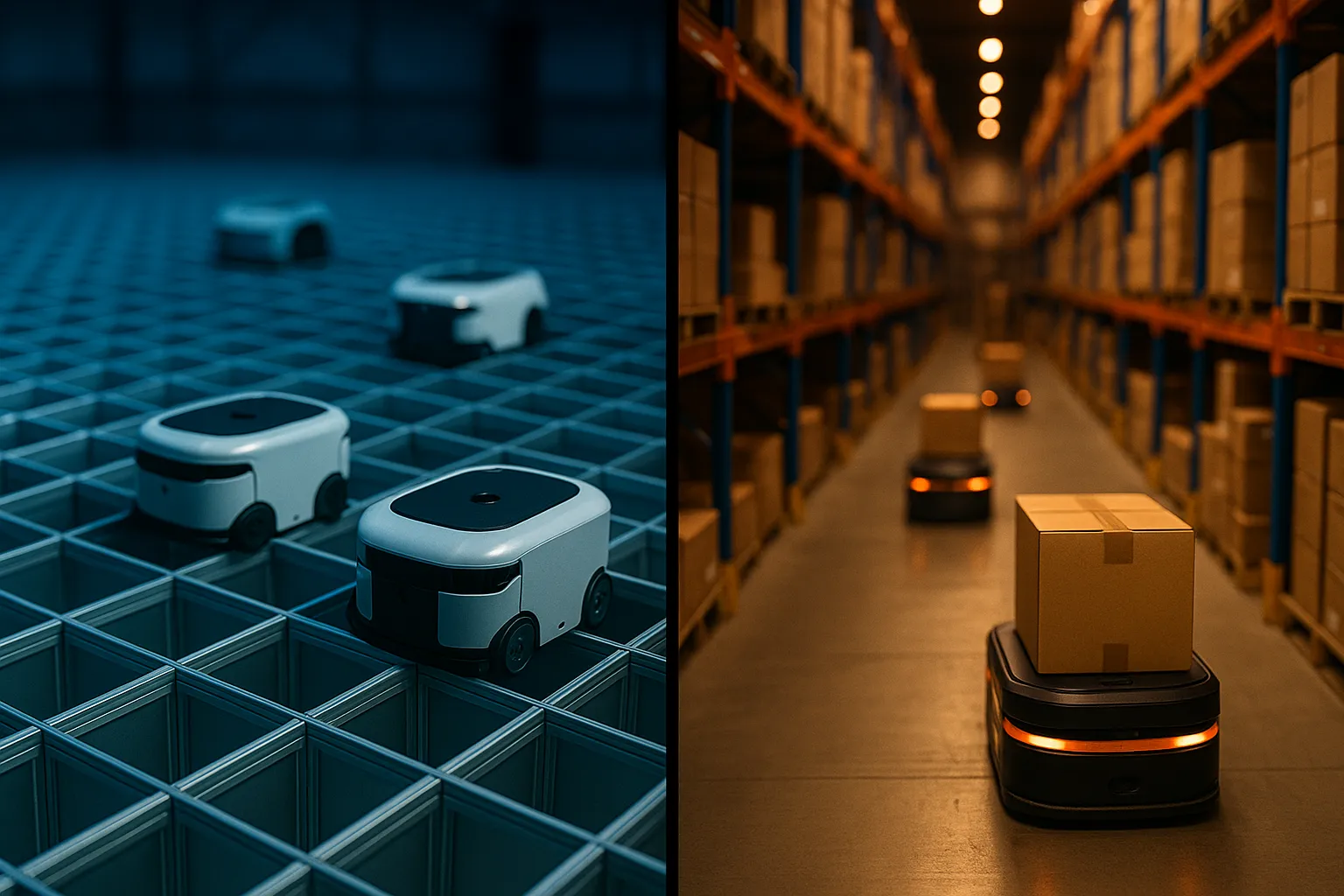
Cube storage systems like AutoStore use a grid-based architecture where bins are stacked in a dense aluminum framework, with robots traveling on top of the grid to retrieve and deliver bins to workstations.
How it works: Robots navigate the grid surface, dig down through stacked bins to reach the target bin, and deliver it to a pick port. Bins accessed more frequently naturally migrate toward the top of the stack.
Key metrics:
- Storage density: Up to 4x more storage per square foot than traditional shelving
- Footprint reduction: Typically 60–75% less floor space than manual operations
- Throughput: 150–650 bins per hour per port depending on configuration
- Scalability: Add robots incrementally to increase throughput without changing the grid
Best for: Operations with high SKU counts, limited floor space, and moderate throughput requirements. E-commerce fulfillment centers, spare parts distribution, and pharmaceutical operations are ideal fits.
The catch: Deep-stacked bins mean retrieval times can spike for infrequently accessed items buried at the bottom. Systems also require careful bin sizing—if your product mix includes oversized items, cube storage may not accommodate them without a parallel system.
Emerging challengers like Attabotics and Gebhardt's Upstream system are addressing some of these limitations with vertical lift designs and hybrid shuttle-cube architectures, signaling that this category is far from settled.
Shuttle Systems: Throughput Champions
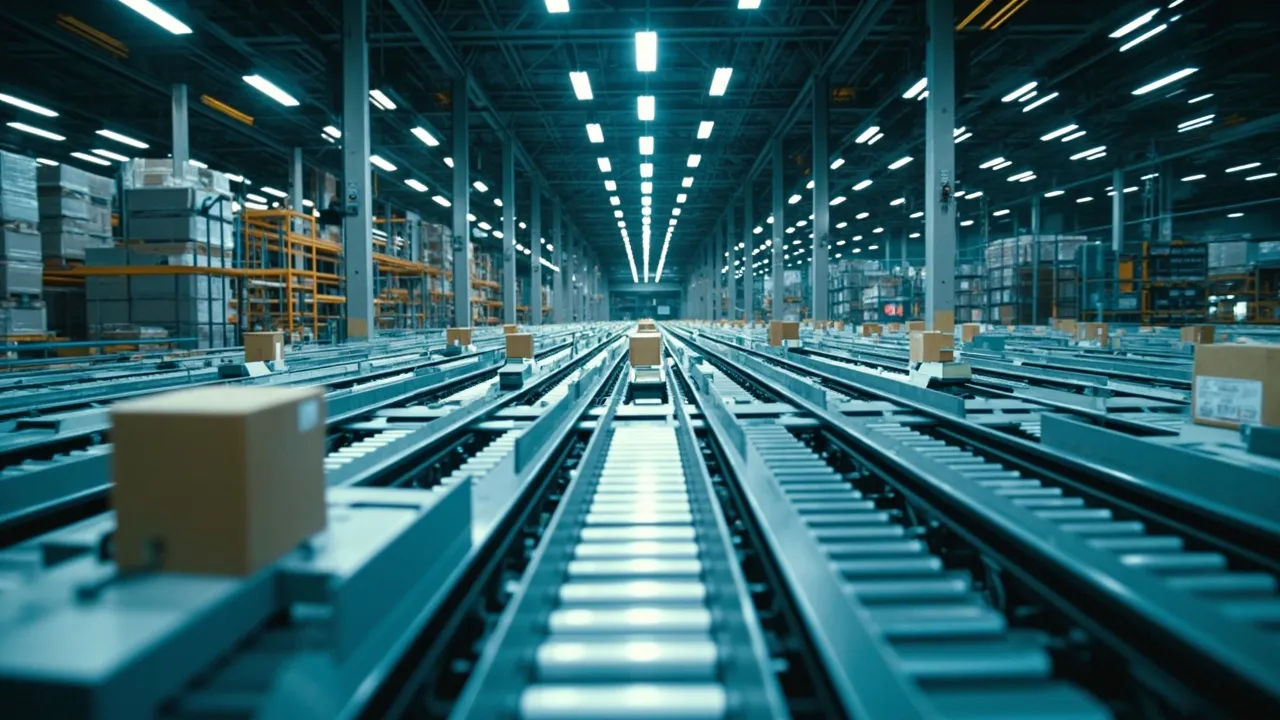
Shuttle-based AS/RS systems use dedicated vehicles that travel horizontally within racking levels, combined with vertical lifts to move loads between levels. Think of them as high-speed elevators paired with rail-guided carts.
How it works: Each racking level has one or more shuttles that retrieve totes or cartons and deliver them to a lift, which transfers them to a conveyor system feeding pick stations.
Key metrics:
- Throughput: 1,000–2,500+ totes per hour per aisle, significantly outpacing cube storage
- Storage density: High, though not as extreme as cube storage due to aisle and lift requirements
- Reliability: Mechanically complex with more maintenance touchpoints than grid-based systems
- Speed: Sub-60-second cycle times for single-deep retrieval
Best for: High-volume operations requiring sustained throughput—grocery e-commerce, omnichannel retail fulfillment, and distribution centers processing 50,000+ order lines per day.
The catch: Shuttle systems carry higher upfront costs, require more complex integration, and are less flexible once installed. Adding capacity often means adding entire aisles rather than incremental units. Shuttles are mechanically more complex, require higher cost maintenance, and are more prone to single points of failure compared to grid-based alternatives.
AMRs: Flexibility First
Autonomous mobile robots navigate freely through existing warehouse environments without fixed infrastructure. They work alongside human pickers or operate autonomously, adapting to changing layouts and demand patterns in real-time.
How it works: AMRs use onboard sensors, cameras, and AI navigation to move goods between locations. Depending on the variant, they can carry shelving units to pickers (goods-to-person), guide workers through pick paths (collaborative), or transport loads between zones.
Key metrics:
- Deployment speed: Operational in weeks, not months
- Infrastructure changes: Minimal—no racking modifications, rails, or grids required
- Scalability: Add or redeploy robots on demand; seasonal flex is straightforward
- Cost: Lower upfront investment; many vendors offer Robotics-as-a-Service (RaaS) models
Best for: Operations that need flexibility—seasonal peaks, rapidly changing product mixes, multi-client 3PL environments, and brownfield warehouses where fixed automation isn't feasible.
The catch: AMRs sacrifice storage density for flexibility. They operate within existing racking, which means they don't compress your footprint the way cube or shuttle systems do. Throughput per robot is also lower, so high-volume operations may need large fleets—Amazon deploys over 200,000 AMRs across its network for a reason.
The Trade-Off Triangle: Density vs. Throughput vs. Flexibility
No single technology wins on all three dimensions. Here's how they stack up:
| Factor | Cube Storage | Shuttle Systems | AMRs |
|---|---|---|---|
| Storage Density | ★★★★★ | ★★★★ | ★★ |
| Throughput | ★★★ | ★★★★★ | ★★ |
| Flexibility | ★★ | ★ | ★★★★★ |
| Upfront Cost | Medium-High | High | Low-Medium |
| Time to Deploy | 6–12 months | 12–18 months | 4–8 weeks |
| Maintenance Complexity | Low | High | Medium |
| Scalability Model | Add robots | Add aisles | Add robots |
The right choice depends on your operation's primary constraint. Space-constrained urban fulfillment centers lean toward cube storage. High-throughput distribution centers processing tens of thousands of lines daily need shuttle systems. Operations requiring rapid deployment, seasonal flex, or multi-site standardization benefit most from AMRs.
When Each Technology Wins: Use Cases by Industry
Cube storage wins when you're operating in expensive real estate markets and can't expand your footprint. A 50,000-square-foot facility with cube storage can match the capacity of a 150,000-square-foot manual warehouse.
Shuttle systems win when sustained throughput is non-negotiable. Grocery fulfillment, same-day delivery operations, and high-velocity retail DCs need the raw speed that only shuttle systems consistently deliver.
AMRs win when your operation changes frequently. 3PLs onboarding new clients, brands with seasonal SKU rotations, and companies transitioning from manual to automated operations gain the most from AMR flexibility and lower commitment.
Hybrid deployments are growing. Many sophisticated operations now combine technologies—cube storage for slow-moving long-tail SKUs, shuttle systems for high-velocity items, and AMRs for cross-docking and zone transport. MHI's ASRS roadmap increasingly reflects this converged architecture approach.
How CXTMS Integrates Regardless of Automation Platform
The automation technology in your warehouse matters—but visibility across your supply chain matters more. Whether you're running AutoStore grids, Dematic shuttle systems, or a fleet of Locus robots, CXTMS provides the transportation management layer that connects your automated warehouse to carriers, customers, and trading partners.
CXTMS integrates with warehouse execution systems (WES) and warehouse management systems (WMS) across all three automation architectures, ensuring that inventory visibility, order fulfillment data, and shipment status flow seamlessly from the pick face to the customer's door.
Ready to see how CXTMS connects your warehouse automation to your entire supply chain? Request a demo today and discover unified visibility across every node in your logistics network.