Coupang and NVIDIA Build an AI Factory for E-Commerce Logistics: What the DGX SuperPOD Model Means for Fulfillment Speed

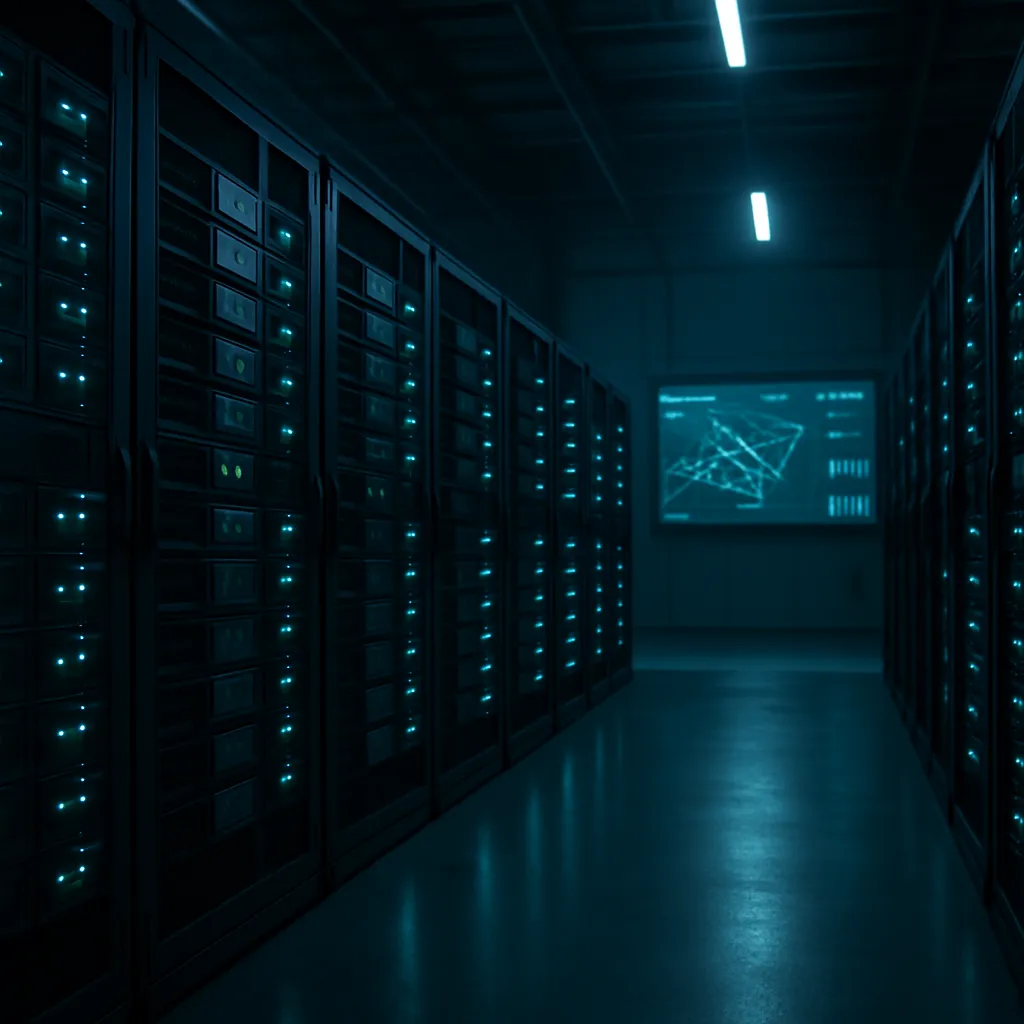
The idea of an "AI factory" sounds like marketing jargon until you see what it actually produces. At GTC 2026 on March 18, Coupang unveiled exactly that — a purpose-built AI compute infrastructure, powered by NVIDIA DGX SuperPOD, that has already pushed GPU utilization from 65% to 95% and is reshaping how the company predicts demand, packs orders, and routes deliveries across its global network.
This isn't a pilot program or a press-release partnership. It's a structural investment in dedicated AI infrastructure that's delivering measurable operational results — and it offers a blueprint for how logistics companies of every size should be thinking about AI compute in 2026.
The GTC 2026 Announcement: Coupang's AI Factory Explained
Coupang, the South Korean e-commerce giant that processes millions of orders daily, announced its collaboration with NVIDIA at the NVIDIA AI Conference & Expo. The centerpiece is Coupang Intelligent Cloud (CIC), a proprietary AI platform launched in July 2025 that pairs with NVIDIA DGX SuperPOD to create what the company calls a self-service AI ecosystem.
The architecture enables Coupang's engineering teams — spread across Seoul, Seattle, and Mountain View — to rapidly test, train, and deploy machine learning models without waiting in queue for shared compute resources. Think of it as giving every logistics engineer their own AI workbench, backed by enterprise-grade GPU infrastructure.
Coupang is also supporting NVIDIA as a launch partner for Dynamo, the open-source software framework for agentic inference that promises to deliver unprecedented scale and efficiency for AI model deployment.
Inside the Stack: CIC + DGX SuperPOD Architecture
The technical foundation matters here because it explains why the results are so dramatic. NVIDIA's DGX SuperPOD is not a single server — it's a clustered AI supercomputer designed for complex, diverse AI workloads like building large language models, running real-time optimization, and processing massive data streams simultaneously.
When paired with Coupang's CIC platform, the system creates a unified environment where data scientists can move from hypothesis to production model in days rather than weeks. The self-service model eliminates the traditional bottleneck where engineering teams compete for limited GPU time on shared clusters.
The headline metric: GPU utilization jumped from 65% to 95%. In compute economics, that 30-percentage-point improvement means Coupang is extracting nearly 50% more productive work from the same hardware investment. That's not incremental optimization — it's a step-change in AI infrastructure ROI.
How the AI Factory Powers Fulfillment Operations
Coupang currently deploys AI models across virtually every stage of its logistics operation:
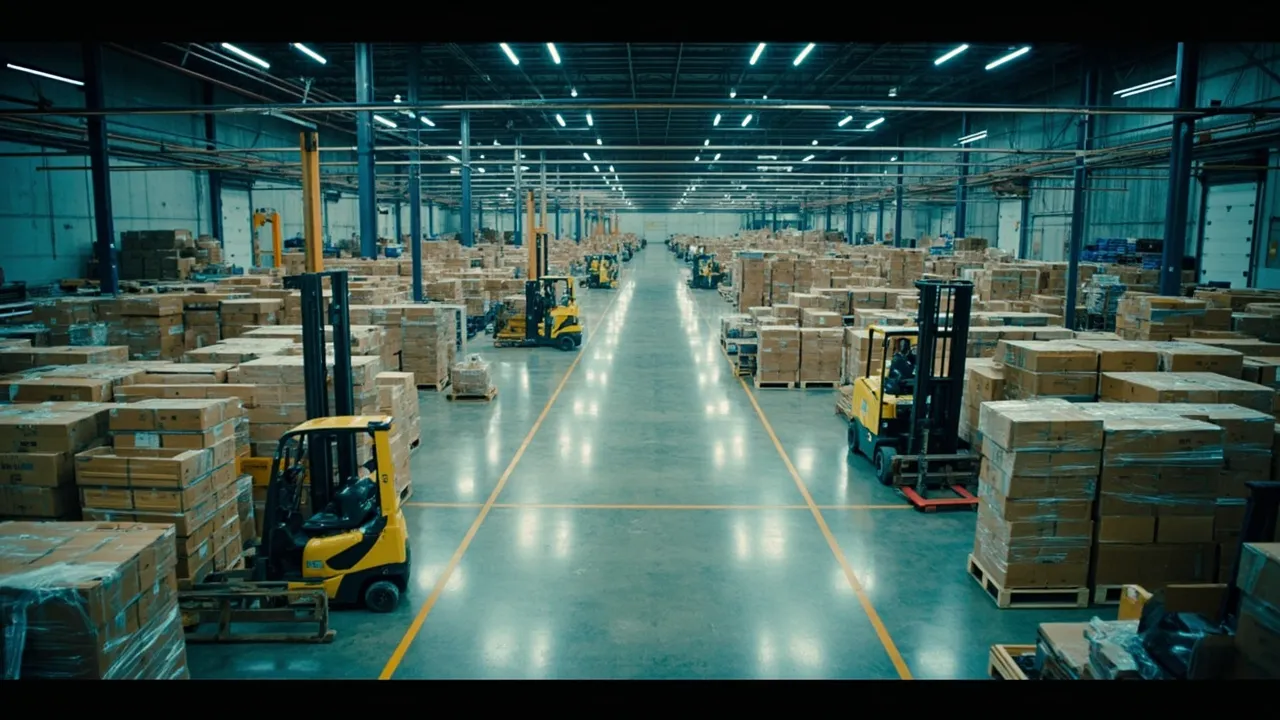
- Demand prediction: Forecasting which products will sell, where, and when — enabling pre-positioning of inventory across fulfillment centers before orders are placed.
- Bin packing optimization: Determining the most efficient way to pack items into boxes and bins, reducing wasted space and shipping costs.
- Delivery route planning: Real-time optimization of last-mile delivery routes across dense urban environments in South Korea.
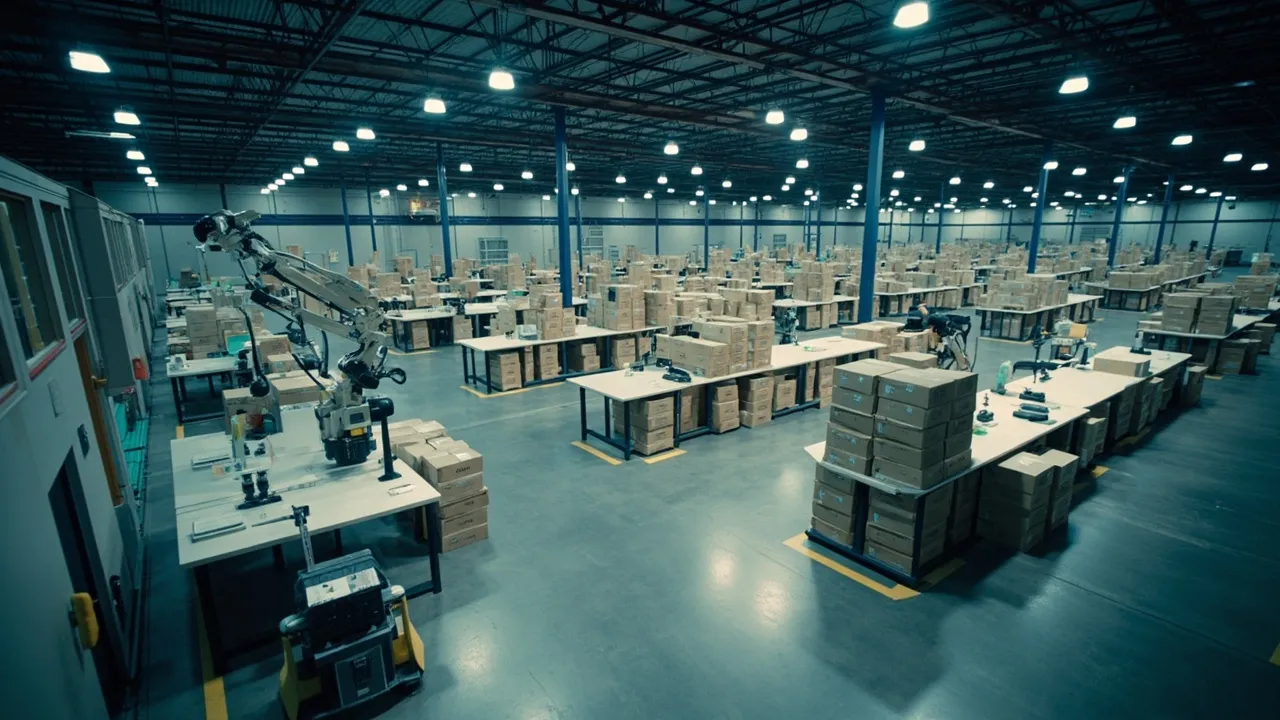
- Fulfillment center scheduling: Coordinating labor, equipment, and throughput across warehouse operations.
The AI factory model accelerates all of these simultaneously. According to Coupang, AI models created with CIC have significantly improved fulfillment center scheduling and bin packing, with the GPU utilization gains translating directly into faster model iteration cycles.
Rocket Delivery at Scale: The Proof Is in the Numbers
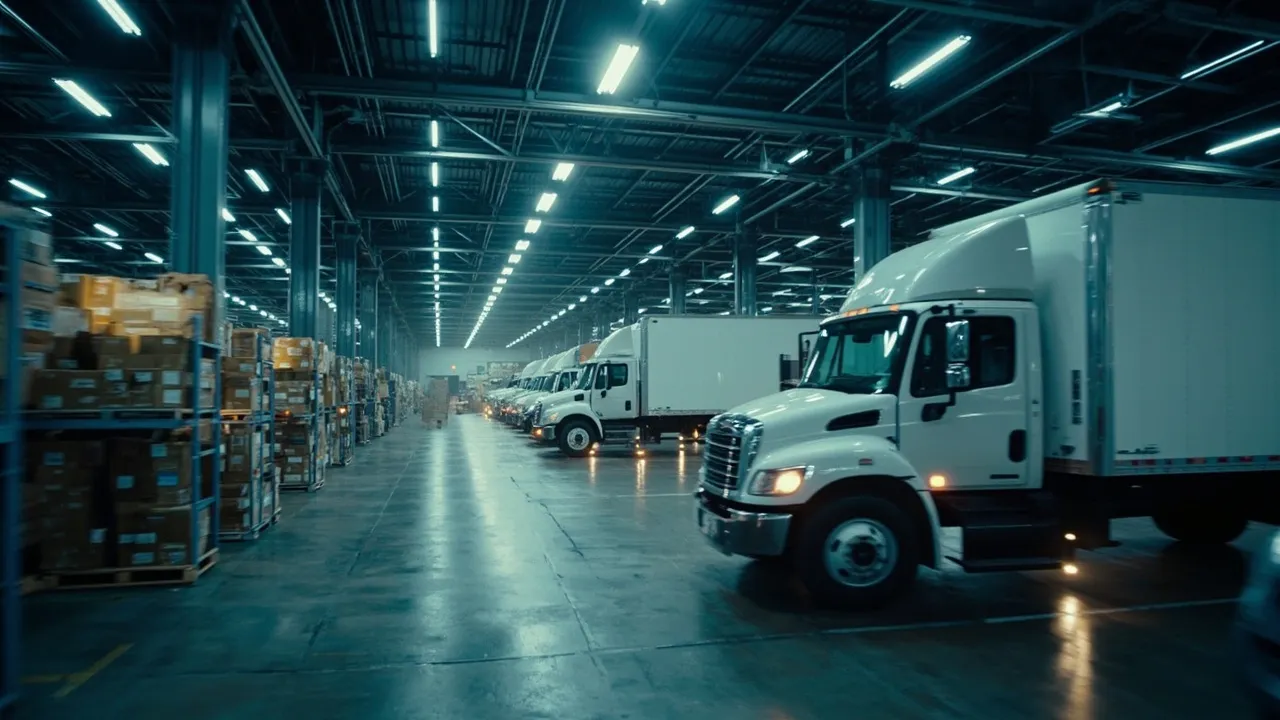
Coupang's "Rocket Delivery" service has achieved what most Western e-commerce companies still treat as aspirational: 99.6% of orders delivered within 24 hours, with same-day and dawn delivery available to the majority of its customer base. Average delivery time for Rocket orders runs approximately 6.5 hours from order to doorstep.
These numbers aren't achievable through human planning alone. They require AI systems that can dynamically adjust inventory placement, predict demand spikes at the neighborhood level, and recalculate delivery routes in real time as orders flow in. The AI factory provides the compute infrastructure to train and continuously improve these models at a pace that keeps up with Coupang's growth.
The Template for Logistics AI Infrastructure Investment
Coupang's approach matters beyond its own operations because it establishes a pattern that the broader logistics industry will need to follow. According to Gartner, worldwide AI spending is forecast to reach $2.52 trillion in 2026, a 44% increase year-over-year. Much of that investment is flowing into infrastructure — the compute layer that makes AI models possible.
For logistics companies, the lesson is clear: AI isn't just a software purchase. It's an infrastructure commitment. The companies seeing the biggest returns are those building dedicated AI compute environments rather than bolting machine learning onto existing IT systems.
A SupplyChainBrain analysis found that 96% of transportation leaders consider continued AI investment a top long-term priority, with nearly 60% strongly agreeing it's a core investment pillar for senior leadership. But there's a gap between intention and execution. Most logistics companies are still running AI workloads on general-purpose cloud instances rather than purpose-built AI infrastructure.
The AI factory model — dedicated GPU clusters, self-service platforms, rapid iteration cycles — represents the next maturity level. It's the difference between experimenting with AI and operationalizing it.
What Mid-Market Shippers Can Learn
You don't need Coupang's scale or NVIDIA's hardware to apply the AI factory principles. The core insight is about infrastructure architecture, not budget size:
- Dedicate compute resources to logistics AI rather than sharing them across departments. Contention kills iteration speed.
- Build self-service platforms that let domain experts — the people who understand freight, warehousing, and routing — work directly with AI tools without waiting for data science teams.
- Measure GPU utilization and model iteration speed, not just model accuracy. The fastest-learning organization wins.
- Start with high-impact use cases: bin packing, route optimization, and demand forecasting deliver measurable ROI within months, not years.
Modern TMS platforms like CXTMS are already integrating AI-driven optimization into core workflows — from intelligent carrier selection to predictive shipment planning. The question isn't whether to invest in AI for logistics, but whether your infrastructure can keep up with the models your business needs.
The Bottom Line
Coupang and NVIDIA's AI factory collaboration isn't just a technology showcase — it's a signal that logistics AI is moving from the application layer to the infrastructure layer. The companies that build dedicated AI compute environments will iterate faster, optimize deeper, and deliver better than those still treating AI as a feature checkbox.
For shippers navigating 2026's complex freight environment, the message is straightforward: your AI strategy needs an infrastructure strategy. Whether that means dedicated cloud GPU instances, partnerships with AI infrastructure providers, or platforms like CXTMS that embed AI optimization natively, the era of bolting machine learning onto legacy systems is ending.
Ready to bring AI-powered optimization to your logistics operations? Request a CXTMS demo and see how intelligent carrier selection, predictive routing, and automated freight planning can transform your supply chain performance.