DHL Expands White-Glove Data Center Logistics to 7 Million Square Feet: How AI Infrastructure Demand Is Creating a Specialized Freight Category

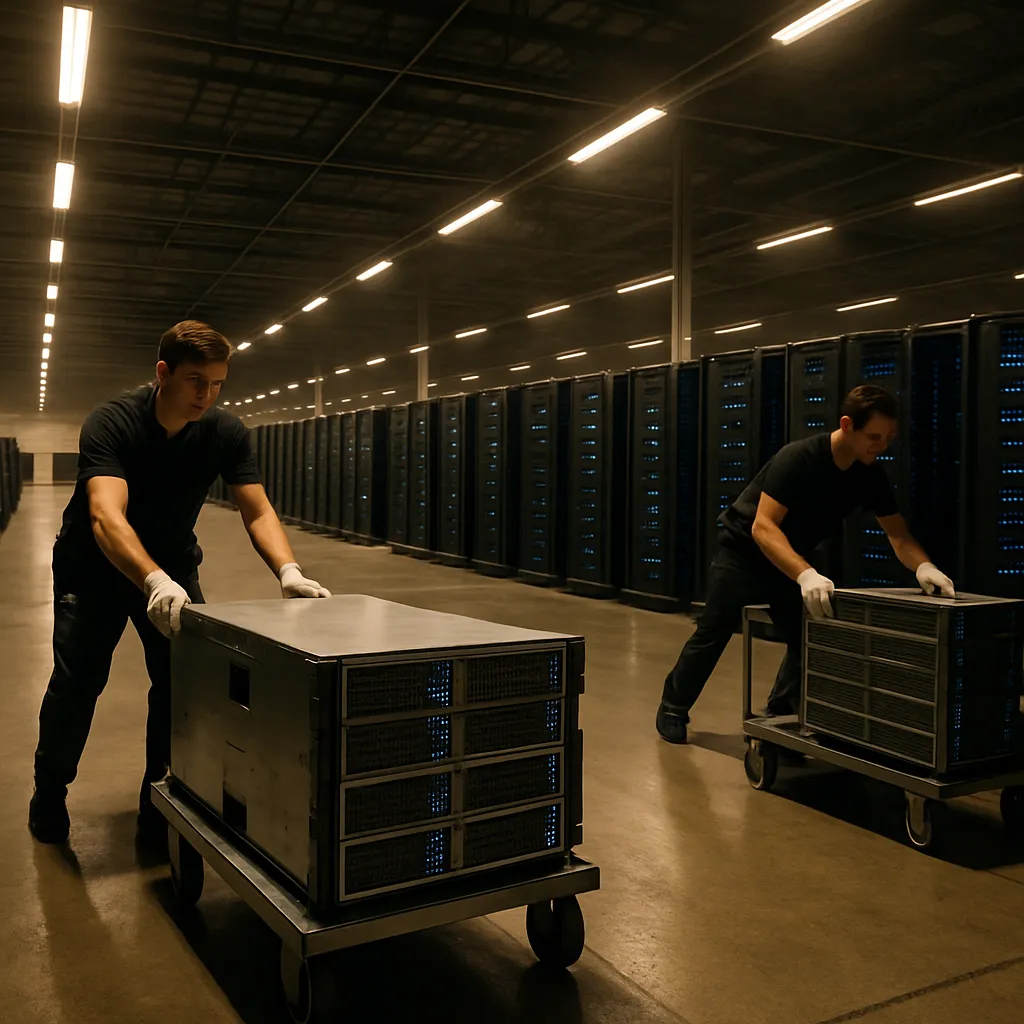
When a single GPU server rack costs upward of $300,000 and a mishandled power distribution unit can delay a hyperscale data center build by weeks, traditional warehousing and freight handling simply won't cut it. That's why DHL Supply Chain just announced one of the most significant infrastructure expansions in its history — and it signals something bigger than one company's growth. Data center logistics is emerging as an entirely new specialized freight category, and the shippers and 3PLs that recognize it early will capture a massive opportunity.
On March 19, 2026, DHL revealed plans to deploy 10 dedicated warehouse sites totaling more than 7 million square feet of capacity across North America, all purpose-built for hyperscale and colocation data center operators. These aren't generic distribution centers repurposed for tech equipment. They're white-glove facilities designed from the ground up for rack configuration, precision handling, and specialized last-mile transport of some of the most expensive and fragile cargo moving through supply chains today.
The AI CapEx Tsunami Fueling the Boom
The scale of investment pouring into AI infrastructure is staggering. According to IEEE ComSoc and CreditSights analysis, the "Big Five" hyperscalers — Amazon, Alphabet, Microsoft, Meta, and Oracle — are projected to spend over $602 billion in capital expenditures in 2026, a 36% increase over 2025. Roughly 75% of that spend, or approximately $450 billion, is directly tied to AI infrastructure: servers, GPUs, networking equipment, and the data centers that house them.
Dell'Oro Group projects that total global data center capex will reach $1.7 trillion by 2030, with accelerated servers for AI training accounting for approximately two-thirds of total infrastructure spending by the end of the decade. North America, home to more than 40% of the world's data centers, is ground zero for this construction wave.
Every dollar of that CapEx creates freight demand. Servers need to be shipped. Cooling systems need to be transported. Power modules, networking switches, cable trays, and rack enclosures all need to move from manufacturers and distribution points to active construction sites — often on compressed timelines with zero tolerance for damage.
What "White-Glove" Actually Means in Data Center Logistics
The term "white-glove" gets thrown around loosely in logistics, but in the context of data center construction, it carries precise operational meaning. DHL's announcement outlines three core capabilities that define this emerging service category:
Precision handling. Servers, GPU clusters, and power distribution units are extraordinarily sensitive to shock, vibration, and static discharge. White-glove handling ensures these components move under tightly controlled conditions — climate-monitored environments, anti-static packaging, and specialized lift equipment — to prevent the kind of damage that triggers costly project delays.
Off-site rack configuration. Rather than assembling and testing server racks inside a live construction zone, DHL's dedicated facilities move that critical integration work into secure warehouse environments. This reduces on-site complexity, eliminates coordination conflicts with general construction contractors, and lowers the risk of installation delays caused by environmental contamination from dust, debris, or humidity.
Specialized warehouse-to-site transport. Moving oversized or sensitive server equipment through congested metro areas, active construction zones, or remote greenfield locations requires purpose-built transport solutions. Standard LTL or truckload carriers aren't equipped for the air-ride suspension, GPS-monitored climate control, and white-glove delivery protocols these shipments demand.
As Hendrik Venter, Global CEO of DHL Supply Chain, stated in the announcement: "Our expanded North America footprint is purpose-built to match that pace — from high-security warehousing and configuration services to white-glove handling and 24/7 service-logistics readiness."
A $34 Billion Market Emerging at Speed
The data center logistics market is growing fast enough to warrant its own category in supply chain planning. According to Mordor Intelligence, the global data center logistics market is expected to reach $22.68 billion in 2025 and grow at a CAGR of 8.97% to hit $34.84 billion by 2030.
That growth rate reflects more than just volume increases. It captures the premium pricing that specialized handling commands. When a single truckload of GPU servers carries $2–5 million in cargo value, shippers willingly pay premium rates for guaranteed handling protocols, real-time monitoring, and dedicated transport assets. This is high-margin freight that rewards operational excellence over price competition.
For 3PLs, this represents a strategic inflection point. The companies that invest in purpose-built infrastructure and specialized training — as DHL is doing with its 7-million-square-foot expansion — will lock in long-term contracts with hyperscale operators who prize reliability and security above all else. Those that try to serve this market with repurposed general warehousing will quickly find themselves outcompeted.
Why Hyperscalers Need Purpose-Built Logistics Partners
Data center construction timelines have compressed dramatically. What once took 18–24 months from groundbreaking to operational capacity now targets 12 months or less for some hyperscale builds. Every day of delay carries enormous opportunity cost — a single day of downtime on a hyperscale facility can represent millions in lost cloud computing revenue.
This compression creates three logistics challenges that generic supply chain solutions can't address:
-
Synchronized multi-vendor delivery. A single data center build involves dozens of equipment vendors shipping components that must arrive in precise construction sequences. A rack system that arrives before the floor is ready creates storage problems. Cooling units that arrive late hold up everything downstream.
-
Security and chain-of-custody requirements. GPU servers and networking equipment are high-value targets. Hyperscale operators require end-to-end chain-of-custody documentation, secure staging areas, and background-checked personnel — standards that go far beyond typical warehouse security.
-
Global supply chain integration. Components sourced from Taiwan, assembled in Mexico, and deployed in Virginia require multimodal logistics coordination across customs regimes, ocean freight, and domestic trucking — with white-glove handling maintained throughout.
Implications for Shippers and 3PLs
DHL's expansion is a signal, not an anomaly. As AI infrastructure spending accelerates, every major 3PL will face a strategic choice: invest in vertical-specific logistics capabilities or cede this high-margin freight category to specialists.
For shippers involved in data center construction — whether as equipment manufacturers, IT distributors, or general contractors — the message is clear: your logistics partner selection now directly impacts project timelines and equipment integrity. Standard freight procurement approaches built around rate-per-mile optimization miss the point entirely when cargo value per truck exceeds $1 million.
The rise of data center logistics as a distinct category also reinforces a broader trend in supply chain management: vertical specialization is replacing horizontal scale as the primary competitive advantage in 3PL services. The era of one-size-fits-all warehousing and transportation is giving way to purpose-built solutions for industries with unique handling, security, and timing requirements.
How CXTMS Supports Specialized Freight Coordination
For organizations managing complex, high-value freight movements — whether for data center builds, semiconductor supply chains, or other specialized verticals — CXTMS provides the visibility and coordination tools that white-glove logistics demands. From real-time shipment monitoring and carrier performance scoring to multi-vendor delivery sequencing and compliance documentation, purpose-built TMS platforms turn specialized freight from a risk center into a competitive advantage.
Ready to see how CXTMS can streamline your specialized freight operations? Request a demo and discover how our platform helps shippers and 3PLs manage high-value, time-sensitive cargo with the precision that data center logistics requires.