Geodis Opens First Americas Cold-Chain Facility for Healthcare: What the 3PL Cold-Chain Expansion Wave Means for Pharma Shippers

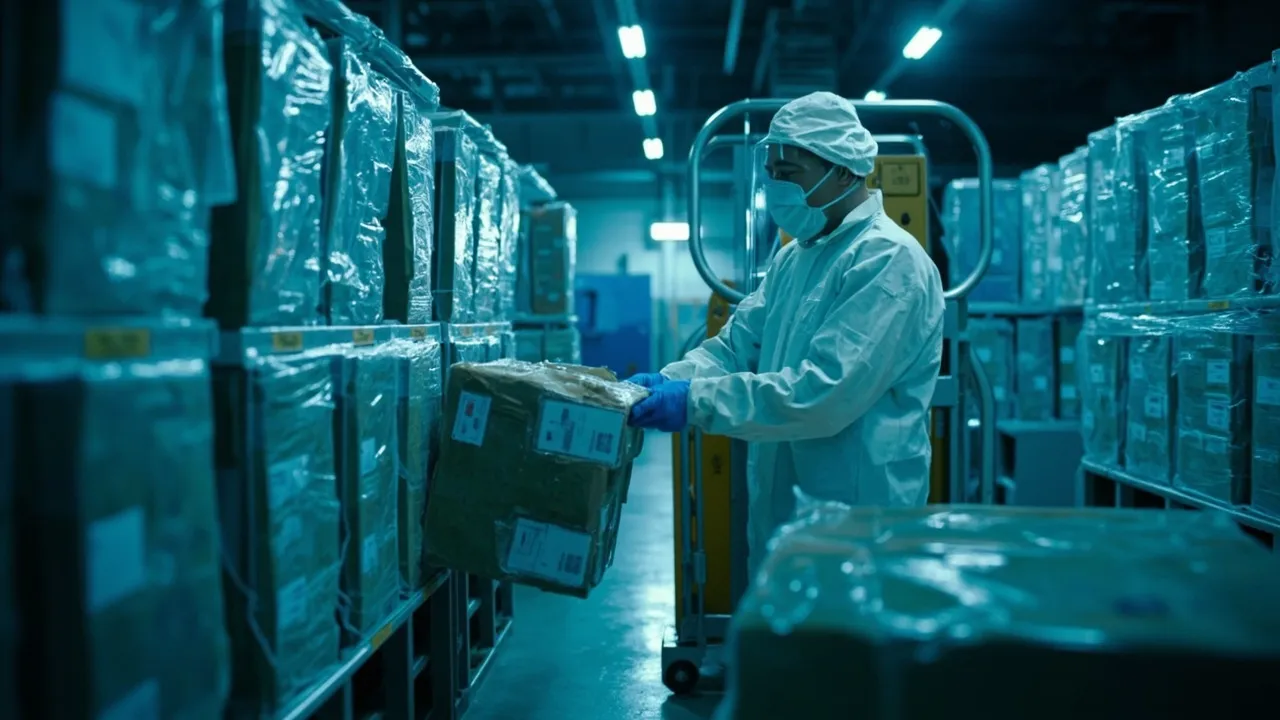
When Geodis quietly fired the starting gun on its first dedicated healthcare cold-chain facility in the Americas last month, it was easy to miss. The announcement dropped on a Tuesday, sandwiched between earnings calls and tariff headlines. But make no mistake — it's one of the more significant moves in 3PL healthcare logistics this year.
The facility, located at Chicago O'Hare, is a cold-chain cross-dock built specifically for pharmaceutical air and ocean imports and exports. It operates as a node within Geodis's broader freight forwarding network, meaning temperature-sensitive freight moving through it gets integrated handling rather than being passed off to a separate handler at the transfer point. For pharma shippers accustomed to watching their biologics sit on tarmacs or change hands multiple times during a cross-dock, that continuity matters.
Why the Cold-Chain 3PL Buildout Is Accelerating Now
This isn't Geodis acting alone. The Chicago facility is the latest in a string of healthcare cold-chain investments from major 3PLs that collectively signal something the industry has been dancing around for two years: the cold-chain healthcare logistics market is too large and too fast-growing to leave to generalist warehouse operators.
Grand View Research puts the healthcare cold-chain 3PL market at a 7.6% compound annual growth rate, projecting it to reach $4.65 billion by 2030. Meanwhile, cold chain already represents 27% of total warehousing investments in 2026 — up from roughly 19% five years ago — driven by demand across biopharmaceuticals, vaccines, and the sprawling GLP-1 drug category that has rewired pharmaceutical supply chains.
The GLP-1 effect deserves its own paragraph. Drugs like semaglutide and tirzepatide require refrigerated storage at 2–8°C throughout transit. They're heavy. They're temperature-sensitive. They're being prescribed at volumes that would have seemed implausible five years ago. A 3PL that can offer one or two temperature bands is suddenly in a different competitive position than one that can offer the full range — ambient, refrigerated, and frozen — and integrate those capabilities into a single network.
The Network Advantage: Why Dedicated Nodes Beat Generalist Warehousing
The old model for pharma shippers was largely carrier-managed: ship via a freight forwarder, hand off to an airline's cargo division, hope the cold chain held at the transfer. Temperature excursions happened in gaps — during tarmac delays, during customs holds, during cross-docks where the next carrier hadn't yet taken custody but the previous carrier had already walked away.
The 3PL buildout changes the geometry of that problem. Geodis's approach with its Chicago facility is illustrative: the cross-dock is within its forwarding network, which means a single operating system tracks the freight from pickup through the cold-chain node to final delivery. The handoff friction that creates temperature excursion risk is reduced because the entity managing the node is the same one managing the inbound and outbound legs.
DHL took a parallel approach with its February 2026 expansion of the Brussels-Cincinnati airfreight cold-chain corridor — a 45,000 square meter pharma-only zone at BRUcargo supporting that lane. The point isn't the corridor itself; it's that DHL is treating this as network infrastructure rather than a one-off facility decision. For shippers moving high-value biologics, that network depth — the ability to guarantee chain-of-custody across multiple temperature bands and multiple legs — is the actual product.
What This Means for Shippers Evaluating 3PL Partnerships
Three dynamics are converging for pharma and healthcare shippers evaluating their cold-chain logistics options:
1. Choice is expanding — but so is complexity. More 3PLs are building dedicated healthcare cold-chain capacity. GXO, DHL, and others are all expanding. That sounds like good news for shippers, and in many ways it is. But the evaluation criteria are more demanding than for standard freight. Temperature validation data, GDP compliance documentation, IATA-certified handling staff, and real-time monitoring integration are table stakes — and not every 3PL offering "healthcare warehousing" has them.
2. Integration with forwarding networks is increasingly a differentiator. The Geodis model — cold-chain cross-dock embedded within a forwarding network — is being replicated across the industry. Shippers who are tendering temperature-sensitive freight need to evaluate not just the warehouse capability but how well it connects to the inbound and outbound carrier networks. A world-class cold room is worth less if the freight sits for 18 hours during the handoff to the next carrier.
3. Geographic footprint is maturing but still uneven. The 3PL cold-chain expansion is real, but coverage remains concentrated. North America, Europe, and key Asia-Pacific hubs have seen significant new capacity. Shippers running lanes into emerging markets — Sub-Saharan Africa, Southeast Asia outside Singapore, portions of Latin America — still face structural cold-chain gaps that no amount of 3PL investment in Chicago or Brussels fully addresses.
The Bottom Line for Freight Operations Teams
Geodis's Chicago facility is a data point in a larger story: 3PLs are making a multi-year bet that healthcare cold-chain logistics will be a premium-growth segment, and they're building network infrastructure accordingly. For pharma shippers, that means more options, better-integrated handling, and — eventually — more competitive pricing as dedicated capacity grows.
The immediate implication is more practical: if you're still routing temperature-sensitive freight through generalist handlers or multi-handler carrier arrangements, the economics and risk profiles are shifting under you. The 3PLs building dedicated healthcare cold-chain networks are doing so because shippers with high-value, temperature-sensitive freight are moving toward them. The question isn't whether to revisit your cold-chain logistics strategy — it's whether you can afford to wait.
Ready to see how CXTMS handles temperature-sensitive freight visibility across your network? Schedule a demo to explore how CXTMS integrates with your 3PL partners and keeps your cold-chain shipments on track from pickup to delivery.