Ocean Shipping Recovery After Hormuz Will Be Measured in Network Weeks, Not Headlines

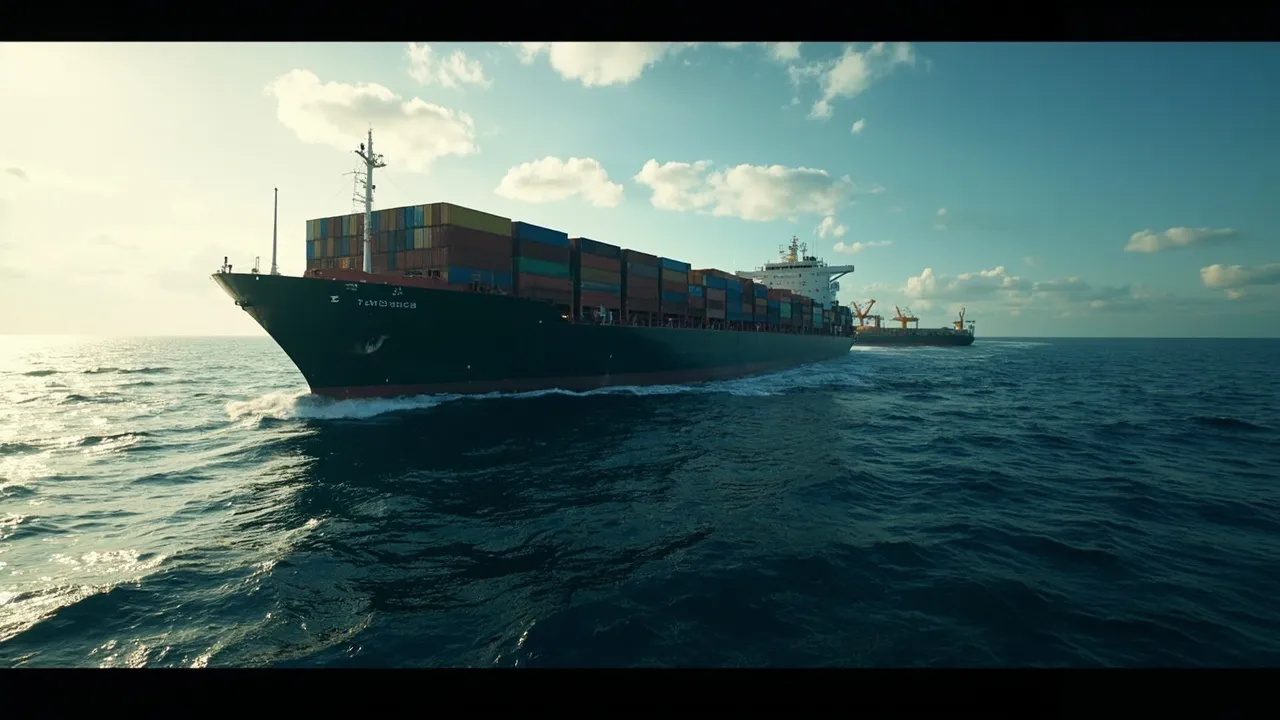
A ceasefire headline can move faster than a vessel network.
That is the reality for shippers watching the Strait of Hormuz situation. Even when a geopolitical agreement appears to reduce immediate risk, ocean freight does not snap back into place overnight. Crews, port calls, feeder schedules, transshipment routings, bunker plans, contracts, and customer commitments all have to be rebuilt in sequence.
That is why the better question is not whether the waterway is reopening. The better question is how long the freight network needs before service, cost, and schedule reliability become usable again.
Supply Chain Dive reported that the U.S. and Iran reached an agreement tied to reopening the Strait of Hormuz, but ocean supply chain networks may not fully recover until mid-September 2026, citing a Xeneta report. The same report said roughly 10% of global container shipping capacity had been affected by the blockade.
That is not a niche disruption. It is a network event.
Rates moved before reliability returned
The price signal has already been severe. According to the Supply Chain Dive coverage of Xeneta data, ocean spot rates from the Far East to the U.S. West Coast rose 192% from late February to June 19. Rates from the Far East to the U.S. East Coast rose 158% over the same period.
Those numbers matter because they show how quickly uncertainty becomes a transportation budget problem. A shipper may not move cargo through the Persian Gulf at all and still feel the effect through capacity displacement, carrier surcharge behavior, early peak season pressure, and booking scarcity on major east-west lanes.
The rate increase also reflects frontloading. Shippers pulled imports forward ahead of expected bunker fuel surcharges, tariff-related cost changes, and fears over available vessel space. Once enough companies do that at once, demand becomes its own disruption. Ships fill weeks ahead. Spot premiums rise. Finance teams receive new freight forecasts that no longer resemble the annual plan.
The recovery, therefore, is not only about reopening a waterway. It is about clearing the commercial backlog created by everyone trying to protect inventory at the same time.
The recovery has three practical stages
The first stage is extraction. Ships and crews stranded inside the Persian Gulf have to move safely. That process depends on security, insurance confidence, minesweeping progress, carrier risk appetite, and local port readiness. Even if transits increase, the first operational priority is not perfect schedule integrity. It is getting assets and people out of constrained positions.
The second stage is regional restoration. Feeder and short-sea services into Persian Gulf ports need to restart with enough predictability for shippers to plan. This is where the recovery can look deceptively uneven. One carrier may restart a lane. Another may keep using transshipment. One port pair may stabilize while another remains irregular. That makes blanket routing guidance dangerous.
The third stage is long-haul normalization. Major Asia-North America and Asia-Europe services need enough vessel availability, schedule confidence, and cargo balance to settle down. This is the part that takes network weeks. A ship delayed in one rotation does not just miss one sailing. It can affect blank sailings, port congestion, equipment repositioning, feeder connections, and downstream truck and rail appointments.
That is why mid-September is a plausible recovery marker rather than an alarmist one. Ocean networks recover through loops, not press releases.
Fuel and surcharge math need active monitoring
Supply Chain Dive noted that marine bunker fuel and oil prices dropped around 20% in mid-June, which could ease fuel pressure surcharges. But shippers should be careful about assuming lower fuel prices immediately translate into lower freight bills.
Carrier surcharges tend to lag. Contract structures differ. Some fees are attached to emergency risk or routing complexity, not only bunker cost. Meanwhile, spot rates can keep rising if vessels remain full, even while fuel pressure softens.
That creates a messy planning window. Procurement may see one signal from fuel markets, another from spot indexes, another from carrier advisories, and another from customer demand. The only practical response is to track surcharges at shipment and lane level, not as generic market noise.
Logistics Management offered a useful parallel from the broader freight market: FedEx reported quarterly revenue of $25.0 billion, up 13% annually, while pointing to geopolitical unrest in the Middle East and global trade policy changes as part of the operating environment. Ocean disruption does not stay neatly inside ocean procurement.
Shippers need a network-week planning checklist
The next few weeks should be managed like a structured recovery program, not a daily scramble.
Start with surcharge visibility. Track every emergency, fuel, war-risk, congestion, and transshipment-related charge by carrier, lane, customer, and shipment. If finance cannot see the difference between base freight and disruption cost, margin analysis will be late and arguments with customers will be weaker.
Then widen booking lead times selectively. Do not apply the same buffer to every lane. Use booking history, carrier reliability, port-pair exposure, and customer criticality to decide where lead time actually needs to expand. Blindly booking early can create cancellation fees and inventory distortion. Booking too late can leave high-priority cargo stranded.
Transshipment options also need review. Supply Chain Dive reported that increased use of transshipment services into the Gulf can add transit time while insulating long-haul networks from future disruption. That tradeoff is often worth considering, but it must be explicit. A slower route that protects predictability may beat a faster route that keeps collapsing.
Finally, update freight forecasts weekly. Rate volatility of 192% and 158% on major Far East-U.S. lanes is not something a quarterly forecast can absorb gracefully. Transportation, procurement, finance, and customer teams need one shared view of expected spend, service risk, and recovery assumptions.
Recovery is a visibility problem
The hard part is converting volatility into decisions: which shipments to prioritize, which customers to notify, which lanes need backup, which surcharges should be challenged, and which forecasts need to change before the invoice arrives.
That requires shipment-level data connected to carrier milestones, costs, documents, purchase orders, and customer commitments. Inbox-based exception management may work for one delayed sailing. It does not work when a maritime chokepoint shifts network behavior for months.
CXTMS helps teams manage the recovery window
CXTMS gives logistics teams the operating layer they need when ocean disruption moves from headline risk to execution risk. Teams can connect milestones, carrier updates, accessorials, documents, landed cost, and customer commitments in one workflow, then act before delays and surcharges become surprises.
The Strait of Hormuz recovery will not be measured in one announcement. It will be measured in booking availability, transshipment reliability, surcharge exposure, invoice accuracy, and customer promise performance over the next several network weeks.
Ready to turn disruption signals into transportation decisions? Schedule a CXTMS demo and see how CXTMS helps teams protect service, cost, and customer commitments when freight networks are under pressure.