HMM Pauses Ten 13,000-TEU Ship Orders: A Capacity Signal Ocean Shippers Should Track

Ocean shippers cannot plan the next contract cycle by watching today's spot rate alone. A vessel decision made now can reshape the capacity available years later.
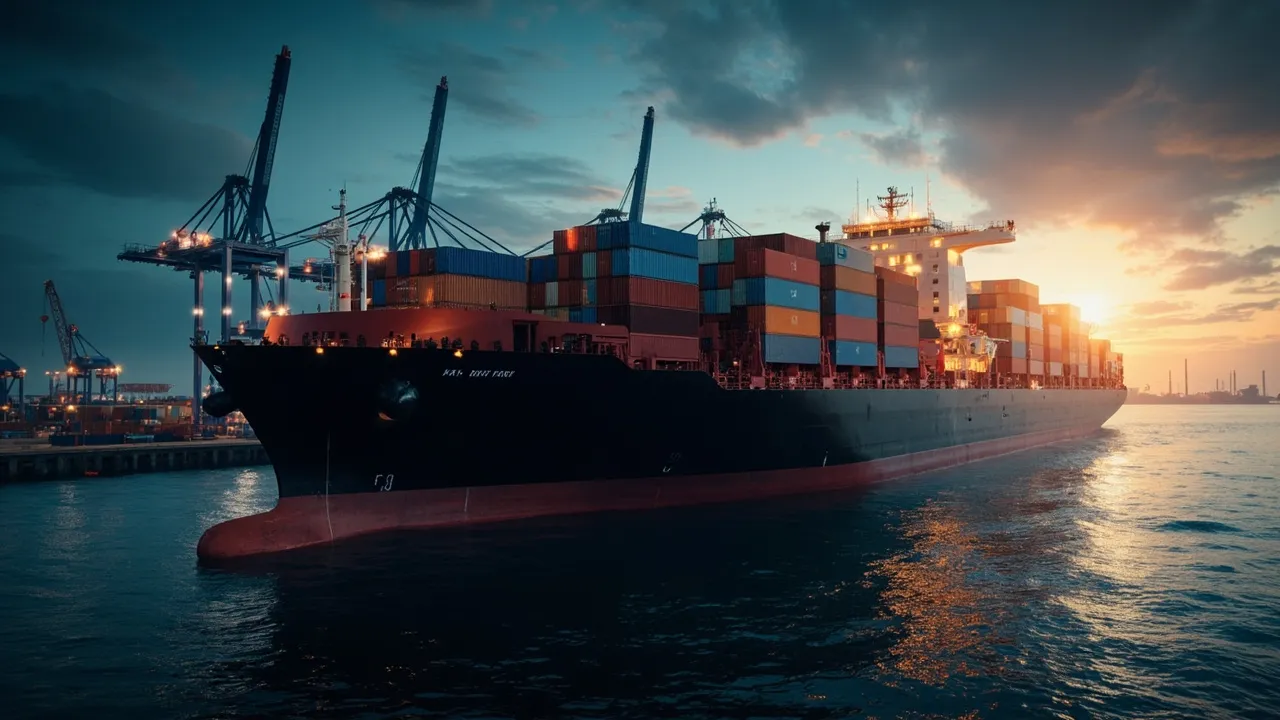
HMM has paused finalizing orders for at least ten planned 13,000-TEU LNG dual-fuel container ships. The vessels had been scheduled for ordering in the second half of 2026. Instead, the South Korean carrier is directing more attention toward energy transportation assets, including tankers, gas carriers, and LNG carriers.
The move does not mean that container capacity will suddenly tighten next month. It does mean procurement teams should treat the newbuild pipeline as a leading indicator—and test what fewer deliveries could mean for future sourcing rounds.
One pause equals 130,000 TEU of potential capacity
Ten ships at 13,000 TEU each represent 130,000 TEU of nominal carrying capacity. That is not the same as 130,000 TEU of immediately usable weekly capacity: vessels rotate through multi-port services, spend time sailing and undergo maintenance. Their actual effect also depends on the trades where they would be deployed and whether they replace older ships or expand the fleet.
Still, the scale matters. FreightWaves reports that HMM operates roughly 1.01 million to 1.03 million TEU of capacity. The paused ships' nominal capacity is therefore equivalent to roughly 13% of that current base. It is a meaningful strategic option to leave uncommitted.
HMM's decision also sits inside a mixed outlook. The carrier warned that newbuild deliveries could create oversupply, while geopolitical costs and U.S. trade policy add uncertainty. At the same time, a July forecast cited by FreightWaves projected HMM's second-quarter revenue at $2.21 billion, up 25% year over year, and operating profit at $291.8 million, up 80.4%.
That combination is instructive: strong near-term earnings do not automatically justify more ships. A carrier may enjoy today's market while remaining cautious about the supply-demand balance when a shipyard can actually deliver new tonnage.
Spot rates and ship orders run on different clocks
Current trans-Pacific prices show why the two clocks must remain separate. Since the Iran crisis began on February 28, FreightWaves says Far East-to-U.S. West Coast spot rates rose 231% to $6,225 per FEU, while East Coast rates rose 234% to $8,846. Those are powerful budget signals—but they reflect immediate disruption, frontloading, carrier actions, and available sailings.
The same report says rates were already softening gradually as demand cooled. That is normal spot-market behavior: prices can rise quickly and retreat as bookings, blank sailings, bunker costs, and routing conditions change.
Newbuild supply moves much more slowly. A carrier must negotiate specifications, secure a shipyard slot, finance the vessel, build it, and deploy it into a network. Reuters offered a useful timeline in February when it reported that eight large ships ordered by Maersk were scheduled for delivery in 2029 and 2030. A 2026 order decision can therefore affect capacity near the end of the decade, not the next tender.
Shippers need both views:
- Market view: current spot prices, blank sailings, service changes, schedule reliability, demand, and bunker surcharges.
- Structural view: global orderbook, scheduled delivery year, vessel size, fuel type, expected trade deployment, charter market, and scrapping.
Using only the first view makes every price spike look permanent. Using only the second can miss an expensive disruption unfolding now.
Build a capacity scenario, not a single forecast
No procurement team can know precisely where HMM would have deployed these ships or what competing carriers will order. The responsible response is not to predict one rate for 2029. It is to create scenarios with explicit assumptions.
Start with scheduled vessel deliveries by quarter and size class. Then estimate how much capacity will be removed through scrapping, prolonged layup, or conversion. Older ships may remain in service longer when rates are strong, so a high-delivery scenario should not automatically assume high net growth.
Next, account for deployment. A 13,000-TEU ship added to one trade may release another vessel into a secondary lane. Network cascades can affect a shipper even when the newbuild never calls at its ports. Model the ship's effective contribution using rotation length, utilization, seasonal demand, port restrictions, and service frequency.
Finally, test at least three cases:
- Expansion: most scheduled ships deliver, limited older tonnage is scrapped, and normal routings resume.
- Balanced replacement: deliveries arrive, but a meaningful share replaces older or less efficient vessels.
- Constrained supply: orders are deferred, scrapping accelerates, or longer routings absorb additional vessel days.
For each case, compare forecast volume with committed minimums, named-account allocations, peak-season needs, and the share left exposed to spot buying. The output should guide a sourcing posture—not pretend to predict the market perfectly.
Connect contract commitments to capacity risk
Ocean contracts often preserve rates and volume commitments while losing the assumptions that supported them. That makes later reviews harder. A transportation management system should retain the operating context behind every award.
CXTMS records should include:
- origin and destination port pair, trade lane, and service string;
- carrier, alliance or operating partner, vessel and voyage when available;
- equipment type, forecast TEU, weekly allocation, minimum quantity commitment, and peak allocation;
- contract rate, validity dates, surcharges, free time, and spot-rate benchmark;
- tender acceptance, rolled bookings, blank sailings, schedule changes, and actual transit time;
- orderbook scenario, expected delivery window, scrapping assumption, utilization assumption, and review date.
Those fields connect a macro signal—such as 130,000 TEU of paused potential newbuild capacity—to the commitments that procurement can actually change. A team can then ask whether an exposed lane needs a longer contract, a second carrier, different volume tiers, or a trigger for reopening the award.
Set triggers in advance. Review the sourcing scenario when a delivery is deferred, a carrier changes deployment, rolled-booking frequency breaches a threshold, spot rates diverge sharply from contract rates, or forecast volume exceeds allocation. That turns capacity planning into a repeatable control rather than an emergency reaction.
Treat the pause as an early-warning input
HMM's pause is neither proof of a coming shortage nor proof that today's high rates will last. It is evidence that a major carrier sees enough long-range uncertainty to reconsider a substantial container-ship commitment while investing elsewhere.
For shippers, the practical lesson is to monitor vessel supply before it becomes a rate negotiation surprise. Combine live market conditions with the slower orderbook, scrapping, and deployment pipeline. Preserve each assumption beside the contract and measure what happens in execution.
CXTMS brings forecasts, allocations, contracts, tenders, milestones, costs, and capacity-risk assumptions into one auditable transportation record. To turn ocean-market signals into better sourcing decisions, request a CXTMS demo.