UK Food Logistics Is Turning Automated Warehouses Into Value-Added Service Platforms

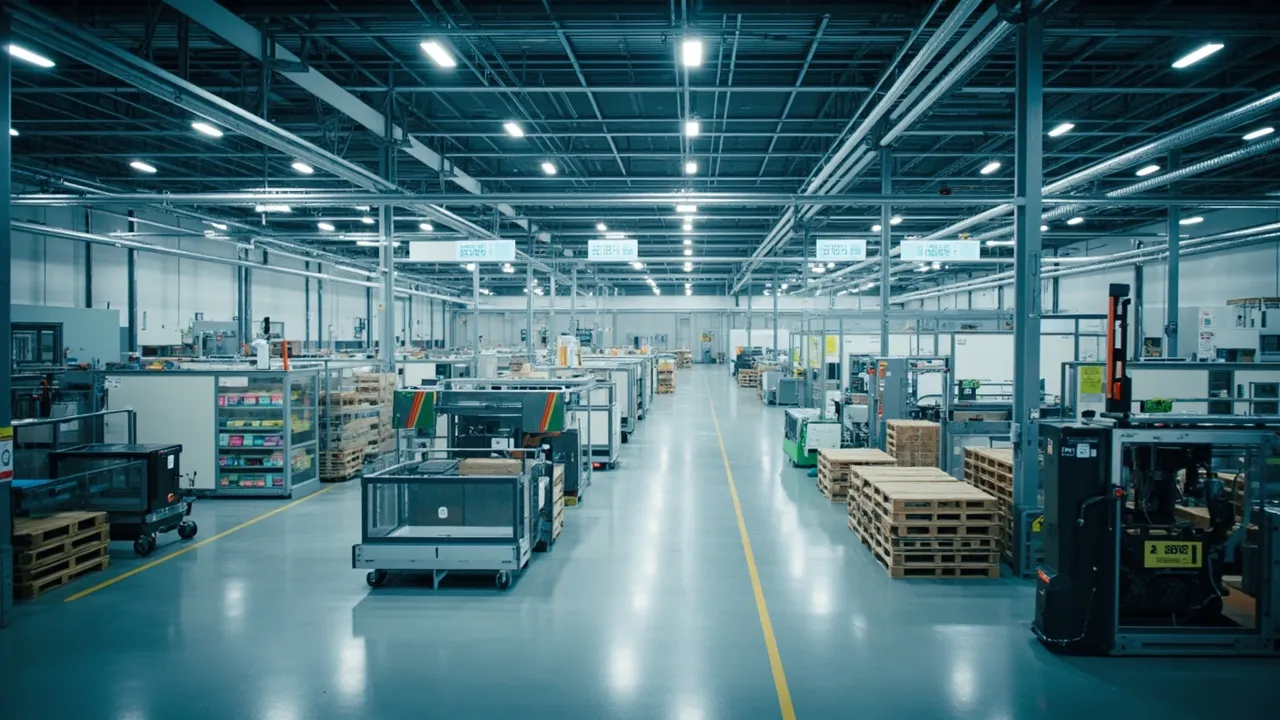
The United Kingdom food logistics market is entering a more interesting phase than simple refrigerated capacity growth. The headline story is still demand: more chilled exports, more pet-food volume, more pharmaceutical overlap, and more pressure to protect temperature integrity from factory to final delivery. But the operating model underneath is changing faster than the square footage.
Automated food warehouses are no longer just cost-reduction projects. They are becoming service platforms. Once food inventory is inside a high-control facility, operators can sell more than storage and transport: labeling, pallet reconfiguration, e-commerce pick-and-pack, waste-flow handling, temperature-compliance reporting, and shipment-ready documentation. That changes how logistics teams should think about warehouse automation. The question is not only “How many cases can we move per hour?” It is “Which billable, traceable services can we execute without slowing the freight?”
Mordor Intelligence values the UK food logistics market at USD 28.47 billion in 2025 and projects growth from USD 30.14 billion in 2026 to USD 38.85 billion by 2031, a 5.21% CAGR. The service mix is the part CXTMS readers should watch. Transportation services held 46.77% of market share in 2025, while value-added services are forecast to grow at a faster 7.78% CAGR through 2031. Cold chain operations already represented 64.92% of the market in 2025 and are projected to advance at 6.64% annually.
That combination points to a market where temperature-controlled logistics is becoming more service-dense. More revenue is being created inside the node, not just between nodes.
Automation is expanding the warehouse revenue model
Traditional food logistics treated warehousing as a necessary pause between production, transport, and retail allocation. Modern automated warehouses are different. They can run closer to 24/7, handle more order profiles, and convert inbound inventory into customer-specific outbound freight with fewer manual handoffs.
Mordor’s UK market analysis makes the point directly: once goods are inside a 24/7 automated warehouse, incremental revenue can come from labeling, pallet reconfiguration, and e-commerce pick-and-pack. That matters because those services used to be operational exceptions. A retailer needed a promotional pallet rebuilt. A foodservice customer needed case labeling changed. An online grocery flow needed smaller mixed orders picked from bulk inventory. Each request created friction.
Automation turns those exceptions into a designed service line. Robotic storage, shuttle systems, scanning, weighing, and workflow software can make value-added work repeatable enough to price, schedule, and audit. For food logistics operators, that is a strategic shift: automation is not just replacing labor in the same process. It is enabling a broader menu of services.
Cold-chain automation has to protect speed and safety
Food warehouses cannot chase throughput at the expense of product integrity. That is the hard constraint that separates food logistics automation from generic fulfillment automation. Every additional touch must preserve temperature, traceability, allergen controls, lot records, and shelf-life discipline.
A Food Logistics article on cold-chain warehouse automation notes that warehouse managers are using robotics and smart technology to boost throughput, improve reliability, and maintain strict temperature control without sacrificing speed or safety. That is the right framing. Automation only works in food logistics if it reduces exposure: less time with doors open, fewer manual staging errors, cleaner FIFO/FEFO rotation, and faster exception detection when a pallet moves through the wrong zone.
The operational requirements are specific. Temperature integrity has to be monitored across receiving, storage, value-added processing, staging, and loading. SKU coverage has to support both predictable bulk flows and awkward mixed food orders. Labeling accuracy has to connect physical goods with customer, regulatory, and traceability data. Labor planning has to shift from “more people for peak” to “the right people around automated workcells, exception handling, and quality checks.”
SKU coverage is becoming a competitive advantage
Value-added services depend on the warehouse being able to handle more product shapes and order profiles without creating a parallel manual process. That is why SKU coverage matters.
Inbound Logistics’ ecommerce innovation roundup shows how warehouse technology is moving in that direction. Exotec’s Skypod system is described as processing up to 600 bins an hour at each workstation and eliminating separate picking and packing zones. AutoStore FlexBins are designed to expand SKU coverage by introducing multiple bin heights, while autonomous inventory audit tools can sync high-frequency inventory checks directly with warehouse management systems.
Food logistics will not copy every ecommerce model directly. A chilled meat order, a frozen dessert pallet, and a pet-food case pack do not behave like apparel. But the automation principle carries over: higher SKU variety should not automatically mean lower control. If technology can support diverse packaging, frequent inventory verification, and one-to-one fulfillment at the workstation, food logistics providers can offer more service variants without losing discipline.
Value-added work needs transport-aware billing
The warehouse may perform the service, but transportation feels the consequences. A relabeled pallet changes readiness timing. A reconfigured load changes cube, weight, and sometimes temperature-zone assignment. An ecommerce pick-and-pack wave changes parcel, LTL, or multi-stop routing. A hold for quality inspection changes appointment feasibility.
If those events stay trapped inside the WMS, the transportation team learns about them too late. The better model is to treat value-added services as transport-aware milestones. A labeling task should update shipment readiness. A pallet reconfiguration should update dimensions and handling requirements. A temperature hold should create an exception before a carrier arrives. A completed pick-and-pack wave should trigger parcel or delivery planning rules.
Billing also has to become event-based. Value-added services are only profitable when the work is captured cleanly: what was performed, for which customer, against which order, under which temperature condition, and before which transport handoff. Manual accessorial tracking through spreadsheets is a lousy fit for automated warehouses. It creates leakage in exactly the place operators are trying to build new revenue.
What CXTMS readers should build now
For shippers, forwarders, and food logistics providers, the practical playbook starts with four questions.
First, which warehouse events should change the transportation plan? Label completion, quality release, temperature exception, pallet rebuild, order wave completion, and dock staging should not be invisible to transport planners.
Second, which value-added services are billable and auditable? If the service cannot be tied to an order, customer, timestamp, product, and shipment, margin will leak.
Third, where does temperature data become decision data? Temperature readings are useful only when they trigger release, hold, escalation, or customer communication workflows.
Fourth, can warehouse automation support broader SKU coverage without creating manual side doors? The moment exceptions move back to email and spreadsheets, the automation business case gets weaker.
CXTMS helps logistics teams connect these pieces. By linking warehouse milestones, carrier handoffs, billing events, documents, and exceptions in one transportation operating record, food logistics providers can turn automated warehouse work into visible, chargeable, service-level-controlled execution.
The UK market is showing where food logistics is headed: not just colder buildings or faster robots, but automated service platforms that make every label, pallet change, pick wave, and transport handoff part of the same commercial workflow.
Ready to connect warehouse automation with transportation execution instead of letting value-added work disappear between systems? Schedule a CXTMS demo and see how milestone visibility, exception control, and event-based workflows can make food logistics more profitable.