Mexico Food Logistics Is Following Nearshoring to the Border—and Warehouses Need to Be Ready

Nearshoring is usually discussed as a factory-location story. For food logistics, that framing is too narrow. The operational question is what happens after production shifts closer to the U.S. market: where mixed-temperature loads are staged, how quickly they clear the border, and whether warehouses can keep food-safe inventory moving without turning every handoff into dwell risk.
That is why the latest Mexico food logistics data matters. Mordor Intelligence projects Mexico’s food logistics market to grow from USD 15.75 billion in 2026 to USD 21.08 billion by 2031, a 6% CAGR. More revealing than the headline market size is the mix underneath it: transportation held 57.77% of the market in 2025, but value-added services are forecast to grow faster, at an 8.56% CAGR through 2031. Cold chain operations accounted for 54.49% of the market in 2025 and are expected to grow at 7.43% annually.
Food logistics growth is not just more reefer miles. It is more temperature-specific handling, more labeling and compliance work, more consolidation, and more data exchange before a truck reaches a crossing.
Border warehouses are becoming control points
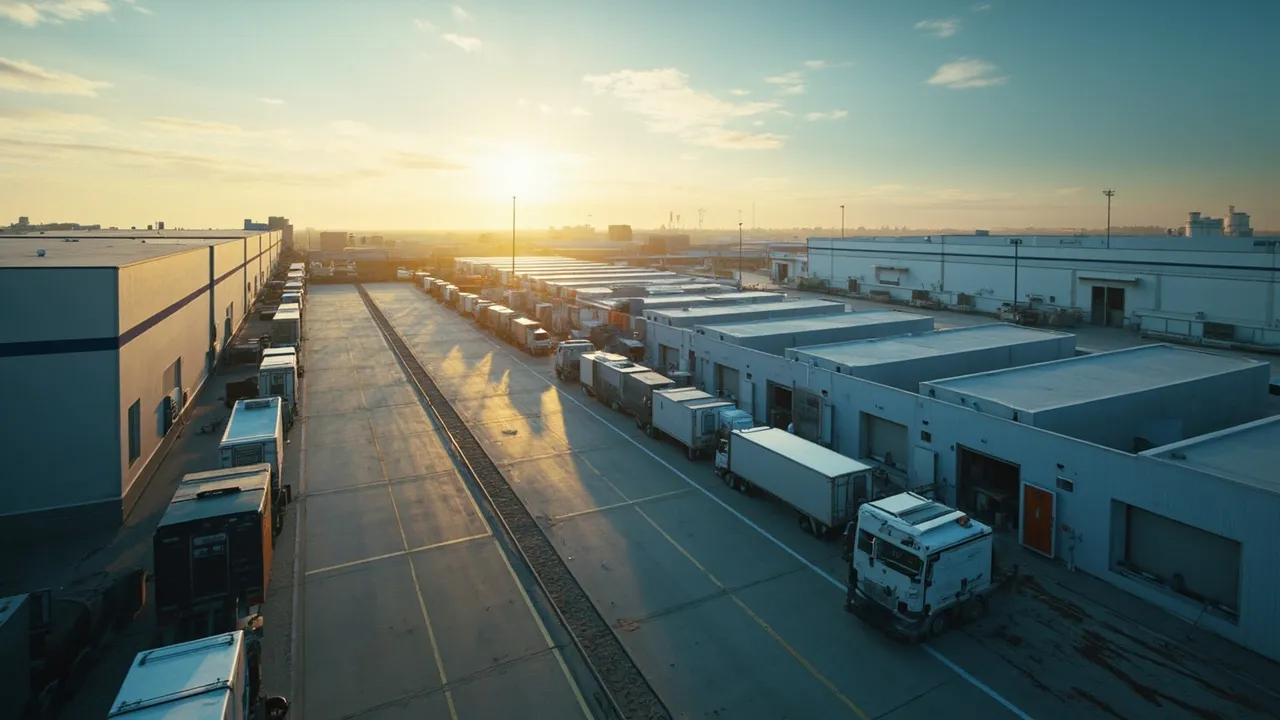
Mordor’s report notes that food-logistics warehousing is following nearshoring footprints, with developers adding multi-temperature chambers within roughly 30 kilometers of border gateways so exporters can consolidate mixed loads quickly. That detail is operationally important. A warehouse near Laredo, Otay Mesa, Nogales, or El Paso is not simply overflow storage. It becomes the control point where product, paperwork, appointment windows, and temperature history are synchronized.
Mixed food loads are especially unforgiving. A single trailer might include chilled produce, frozen proteins, dry grocery inventory, and promotional pallet builds with different handling rules. If the warehouse cannot separate chambers cleanly, stage cross-dock freight by appointment priority, and confirm labeling before customs submission, the border amplifies every upstream mistake.
The cost of failure is not abstract. A missed customs milestone can burn hours of reefer fuel. A late temperature exception can force inspection or rejection. A wrong pallet label can hold an otherwise ready trailer because the shipment record no longer matches the physical freight. Nearshoring shortens the distance to market, but it also compresses the tolerance for sloppy execution.
Cold-chain capacity is growing, but that does not solve coordination
Global cold-chain infrastructure is expanding. Food Logistics reported GCCA data showing that the top 25 temperature-controlled warehousing and logistics businesses now operate 7.76 billion cubic feet of temperature-controlled space, up 6.3% from 2025. That is real capacity growth, and it reflects sustained demand for food-safe storage and distribution.
But capacity alone does not make a border network reliable. The harder problem is orchestration across carriers, brokers, warehouse teams, inspection agencies, and customers. A cold room can protect inventory while it is inside the building. It cannot, by itself, decide whether a load should be held for consolidation, split because one SKU missed documentation, or rerouted because a crossing is congested.
That is where the transportation management layer starts to matter. Cross-border food logistics needs a shared operating record that connects purchase orders, temperature events, dock appointments, customs milestones, carrier tenders, and delivery promises. Without that connective tissue, the warehouse becomes a very expensive waiting room.
The new warehouse checklist is broader than storage
For border food logistics, “warehouse readiness” now means five capabilities working together.
First, multi-temperature slotting has to match the way orders actually move. Facilities need chilled, frozen, ambient, and sometimes controlled-atmosphere zones that can support short dwell windows without excessive rehandling. If staging logic ignores route sequence or border appointment priority, the team ends up rebuilding loads under time pressure.
Second, cross-dock discipline matters. Nearshored food flows are often designed for speed: product moves from production or regional consolidation into a border facility, then exits quickly for U.S. distribution. That model breaks when inbound ETAs, labor plans, and outbound appointments live in separate systems.
Third, weighing and labeling need to be treated as compliance events, not clerical chores. Food shipments may require lot-level traceability, bilingual labels, buyer-specific case markings, or weight validation before export documentation is finalized. A label mismatch is not a warehouse nuisance; it is a transportation delay waiting to happen.
Fourth, customs data transfer has to happen early. The best border warehouses will push shipment data to brokers and carriers before the freight is physically ready, then update changes as exceptions occur. Waiting until the trailer is sealed to discover missing data is how “nearshore” turns into “parked at the border.”
Fifth, temperature telemetry has to be tied to decisions. Food Logistics’ cold-chain outlook emphasizes smarter warehousing and the use of environmental data in routing and delivery strategies. That is exactly the right direction. Temperature readings should not sit in a separate portal that planners check after something goes wrong. They should trigger exception workflows, approval rules, and customer communication inside the shipment record.
Reduced dwell is the real business case
The strategic value of border food logistics is reduced dwell. Faster crossings, cleaner documentation, and better staging all convert into fresher product, lower detention exposure, better trailer utilization, and fewer emergency expediting decisions.
That matters because Mexico’s food logistics market is becoming more service-intensive. Mordor points to value-added services growing faster than the overall market. Those services—blast freezing, inventory optimization, labeling, pallet reconfiguration, and consolidation—are valuable only if they improve flow. If they add handling without improving visibility, they become another layer of delay.
For shippers and forwarders, the practical planning question is simple: can the organization see the next constraint before the freight reaches it? If a dock appointment slips, can transportation see the impact on customs cutoff? If a temperature event occurs, can customer service see whether the shipment is still releasable? If one SKU misses documentation, can the team split the load without losing track of landed cost and delivery commitments?
What CXTMS readers should build now
A Mexico border food-logistics playbook should start with appointment scheduling, temperature events, customs milestones, and consolidation logic.
Appointment scheduling needs to connect warehouse labor with carrier ETAs and border-crossing plans. Temperature events should be captured as shipment exceptions with severity rules, not just sensor history. Customs milestones should be visible beside transportation milestones so planners understand whether a load is physically ready, legally ready, or both. Consolidation logic should define when to hold, split, or release mixed food loads based on service commitments and product risk.
CXTMS helps logistics teams turn those rules into repeatable workflows. Instead of managing cross-border food moves through email chains, disconnected sensor dashboards, and spreadsheet appointment trackers, teams can centralize milestones, exceptions, documents, and carrier actions in one transportation operating record.
Nearshoring is bringing food production and distribution closer to the border. The winners will be the teams that make the border warehouse more than a storage node. It has to become a data-driven control tower for cold-chain execution.
Ready to tighten cross-border food logistics before dwell time eats the nearshoring advantage? Schedule a CXTMS demo and see how better shipment visibility, exception workflows, and milestone control can keep border freight moving.