Warehouse Robotics ROI Calculator: Is Automation Right for Your 3PL in 2026?

The warehouse robotics market has exploded from a niche technology experiment to a $9.33 billion industry in 2025, with projections reaching $21 billion by 2030 at a 17.7% compound annual growth rate. But behind the impressive headlines lies a critical question every 3PL operator must answer: Does automation actually pencil out for your operation?
With 25% of warehouses now automated—up from just 5% a decade ago—the technology has clearly matured. Yet the decision to invest remains complex, requiring careful analysis of costs, operational fit, and realistic payback expectations.
The Automation Landscape in 2026
Before diving into ROI calculations, it's essential to understand what's actually available. Today's warehouse robotics falls into several categories, each with distinct cost profiles and use cases:
Autonomous Mobile Robots (AMRs)
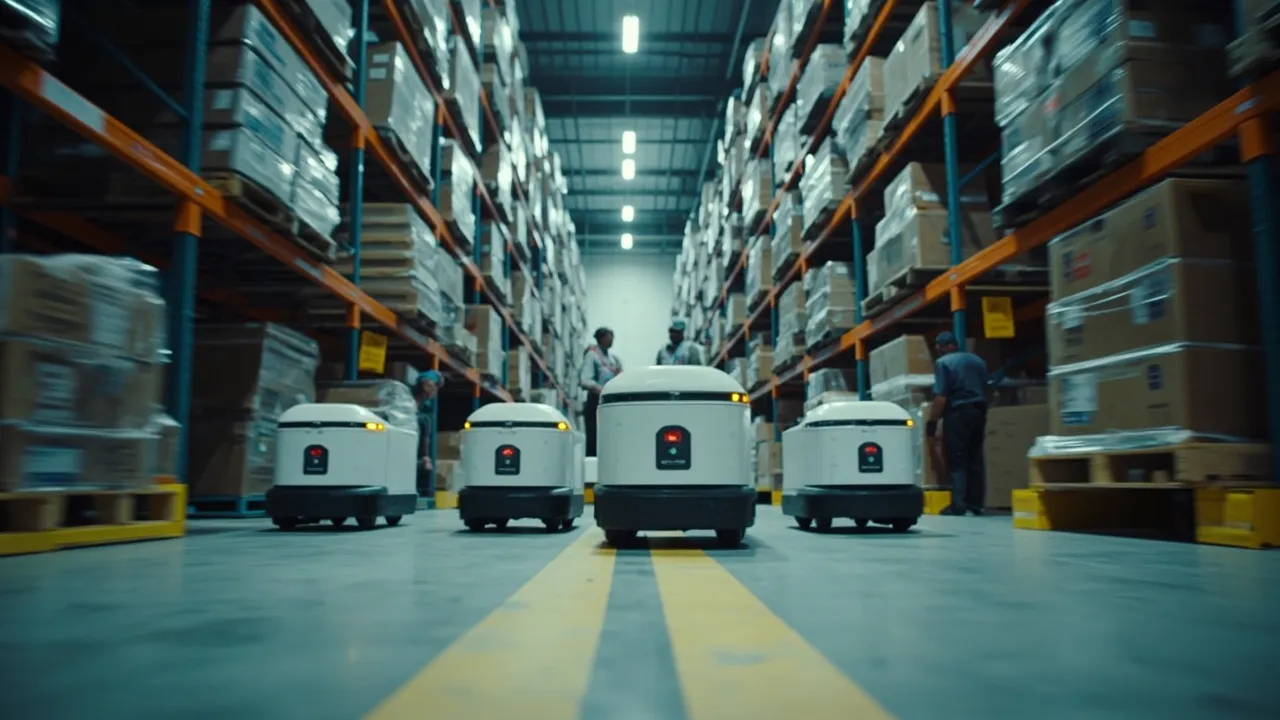
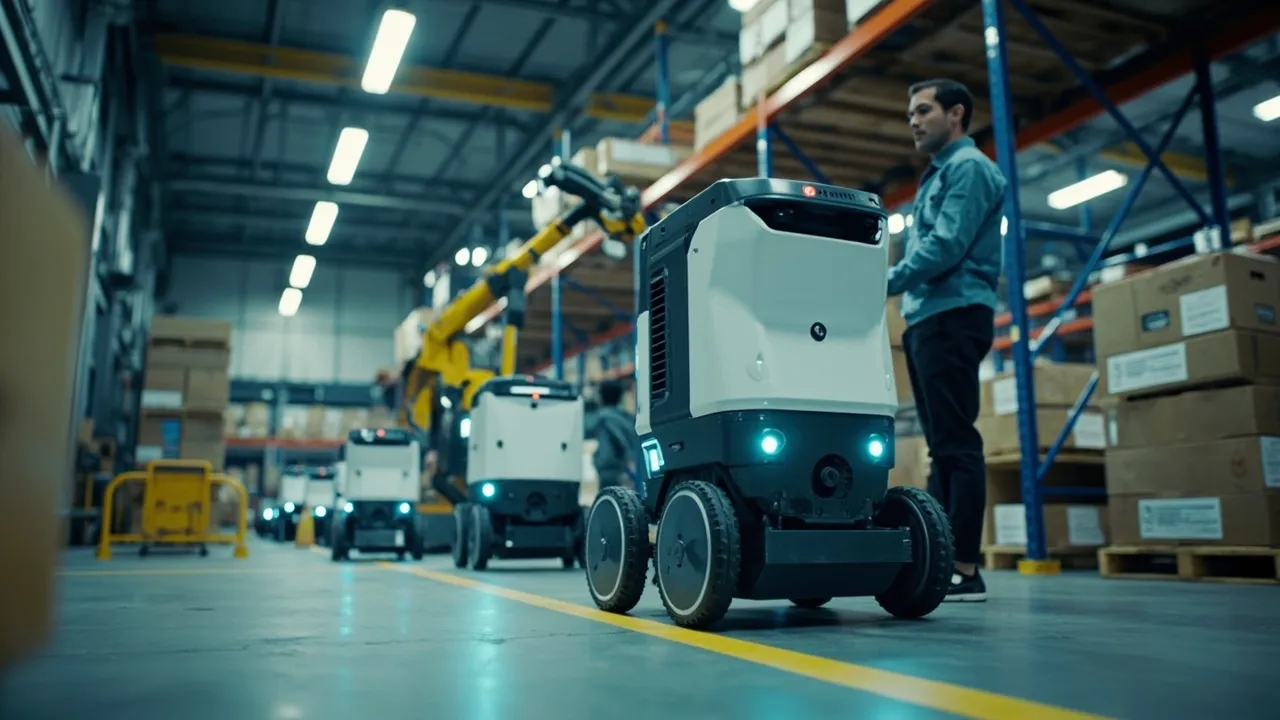
AMRs have emerged as the entry point for many 3PLs due to their flexibility and rapid deployment. Unlike traditional Automated Guided Vehicles (AGVs) that require fixed infrastructure like floor markers and magnetic tape, AMRs use onboard sensors and AI to navigate dynamically. This means deployment in as little as 48 hours compared to six weeks for AGV installations—translating to roughly 30% lower setup costs.
Modern AMR picking systems can boost productivity by 40-70%, with pick accuracy reaching 99.9% when combined with voice-directed workflows and barcode scan validation.
Automated Storage and Retrieval Systems (AS/RS)
AS/RS represents the higher end of automation investment, typically requiring $5-15 million for a full implementation. These systems excel in high-density storage environments where vertical space utilization matters. For 3PLs with stable, high-volume clients and predictable SKU profiles, AS/RS can deliver 3-4x throughput improvements.
Robotic Picking Arms
Once limited to rigid, repetitive tasks, modern picking robots now handle diverse SKU profiles thanks to advances in computer vision and AI. These systems work best for operations with standardized packaging or high-velocity items.
Breaking Down the True Costs
According to the 2025 MHI Annual Industry Report, 45% of logistics operators plan to purchase automation equipment within the next three years. But successful investment requires understanding costs beyond the sticker price.
Initial Investment Components
| Cost Category | AMR Fleet (10 units) | AS/RS (Medium) | Picking Robots (2 cells) |
|---|---|---|---|
| Hardware | $300,000-500,000 | $3-8 million | $400,000-800,000 |
| Integration | $50,000-100,000 | $500,000-1.5M | $100,000-200,000 |
| Facility Mods | Minimal | $200,000-500,000 | $50,000-100,000 |
| Training | $10,000-25,000 | $50,000-100,000 | $30,000-50,000 |
| Total Range | $360,000-625,000 | $3.75-10.1M | $580,000-1.15M |
Ongoing Operational Costs
The hidden expenses often surprise first-time adopters:
- Maintenance contracts: Typically 8-12% of hardware cost annually
- Software licensing: $2,000-10,000/month depending on fleet size
- Spare parts inventory: 5-10% of hardware cost as reserve
- Dedicated support staff: 1-2 FTEs for larger installations
- Energy costs: Often 15-20% lower than manual operations, but still significant for AS/RS
Calculating Your Payback Period
Research from a joint MIT-Mecalux study covered by Food Logistics found that AI and automation investments typically achieve payback within 2-3 years. AMRs specifically have shown payback periods under 24 months with ROI exceeding 250% in live deployments.
The ROI Framework
Here's a practical framework for calculating your specific ROI:
Step 1: Quantify Current Labor Costs
Annual Labor Cost = (FTEs × Hourly Rate × 2,080 hours) + Benefits (typically 25-35%)
For a 50-person picking operation at $18/hour with 30% benefits:
- Base: 50 × $18 × 2,080 = $1,872,000
- With benefits: $2,433,600/year
Step 2: Estimate Labor Reduction AMR implementations typically reduce labor requirements by 30-50% in targeted functions. Conservative estimate for our example: 35% reduction = $851,760 annual savings.
Step 3: Add Productivity Gains With 40-70% productivity improvement, the same workforce handles more volume. If this enables 20% more throughput without adding staff: additional value of $486,720/year (20% of labor cost).
Step 4: Factor Error Reduction Pick errors typically cost $20-50 per incident. If automation improves accuracy from 97% to 99.9%, savings compound quickly. For an operation processing 500,000 picks annually:
- Previous errors: 15,000 @ $30 avg = $450,000
- Post-automation: 500 @ $30 avg = $15,000
- Annual savings: $435,000
Step 5: Calculate Simple Payback
Total Annual Benefit = $851,760 + $486,720 + $435,000 = $1,773,480
Investment (10-unit AMR fleet): $500,000
Payback Period: 3.4 months
This example is deliberately optimistic—real-world results vary based on your specific operation.
When Automation Makes Sense
Not every 3PL should rush to automate. Based on industry data from The Supply Chain Xchange, here are the criteria that predict successful automation:
Strong Indicators for Automation
- Labor challenges: Persistent difficulty hiring or retaining warehouse workers
- Volume consistency: Stable or growing order volumes with predictable patterns
- Space constraints: Need to maximize throughput in limited footprint
- Error rates: Quality issues driving customer complaints or returns
- Growth trajectory: Plans to scale without proportional headcount increases
Proceed with Caution If...
- High SKU variability: Constantly changing product mix with unpredictable dimensions
- Short client contracts: Automation investments need 3+ year horizons
- Facility uncertainty: Lease expiration or potential relocation within 5 years
- Seasonal extremes: Very high peak-to-trough volume ratios (>4:1)
- Limited capital: Cannot absorb implementation overruns of 20-30%
The Pilot Approach: Starting Small
Rather than betting everything on a full automation deployment, leading 3PLs are adopting pilot programs that prove value before scaling. According to Supply Chain Brain, companies that started with focused pilots achieved faster ROI and smoother organizational adoption.
Recommended Pilot Structure
Phase 1 (Months 1-3): Proof of Concept
- Deploy 2-3 AMRs in highest-volume zone
- Measure productivity impact vs. control area
- Document integration challenges
Phase 2 (Months 4-8): Validation
- Expand to 5-10 units if Phase 1 succeeds
- Refine workflows based on learnings
- Train broader workforce on new processes
Phase 3 (Months 9-18): Scale
- Full deployment based on validated ROI
- Integrate with WMS and broader tech stack
- Establish ongoing optimization processes
Hidden Costs Most Operators Miss
Beyond the obvious expenses, watch for these often-overlooked factors:
Facility Modifications
Even AMRs need appropriate flooring, adequate clearance, and reliable WiFi coverage. Budget 10-15% of hardware cost for environmental upgrades.
Change Management
The human side of automation is frequently underestimated. Plan for productivity dips during the 2-3 month transition period, and invest in thorough training to avoid resistance.
Integration Complexity
Your WMS, TMS, and order management systems must communicate seamlessly with automation platforms. Custom integration work can easily reach $100,000-300,000 for complex environments.
Opportunity Cost
During implementation, operational disruptions can impact client service levels. Build buffer capacity or plan deployments during slower periods.
Making the Decision
The data strongly supports automation for operations meeting the right criteria. With companies dedicating 11-30% of warehouse technology budgets to AI and automation initiatives, the industry has clearly moved beyond experimentation.
Key questions to answer before committing:
- What's your current cost-per-pick, and what reduction would justify investment?
- Do you have the operational stability to support a 3-year payback horizon?
- Is your IT infrastructure ready for real-time automation integration?
- Do you have executive sponsorship and organizational readiness for change?
- Have you toured facilities with similar operations that have deployed automation?
The Bottom Line
Warehouse robotics has crossed the chasm from bleeding edge to best practice. The ROI is real—2-3 year payback periods and 250%+ returns are achievable for well-planned implementations. But automation isn't a magic solution. It requires careful analysis, realistic expectations, and commitment to change management.
Start with a pilot. Measure ruthlessly. Scale what works.
CXTMS helps freight forwarders and 3PLs optimize operations through intelligent automation and seamless technology integration. Learn how our platform can support your automation journey.