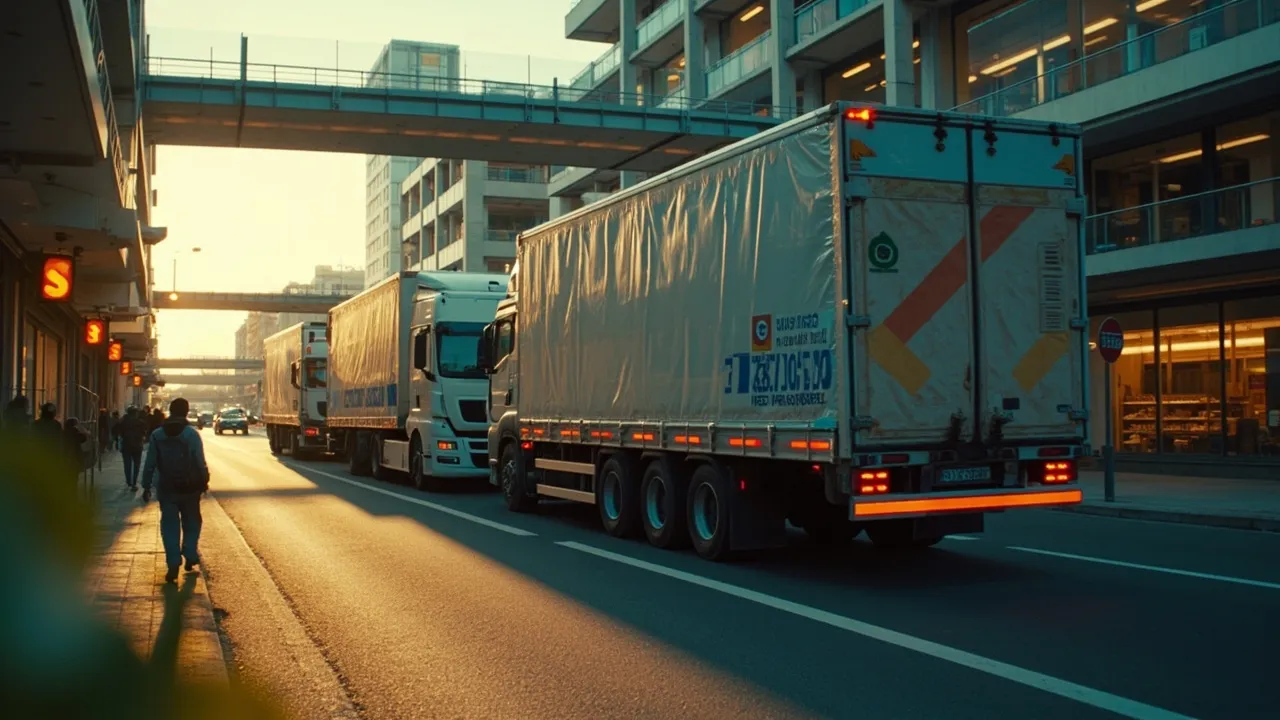
The Truck Parking Crisis: Congress Earmarks $200M as Parking Shortage Threatens Freight Capacity

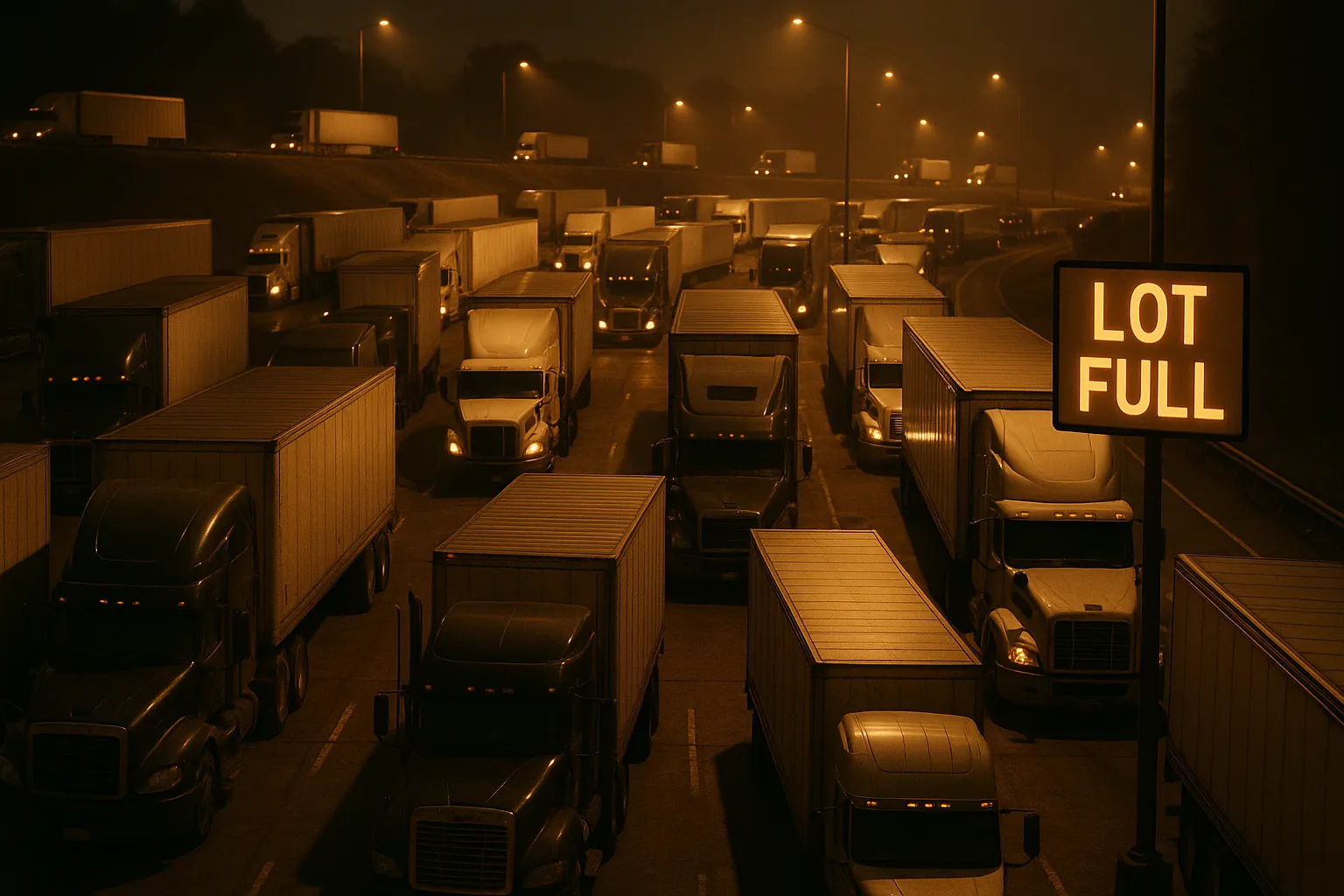
There is only one truck parking space for every 11 truck drivers on the road in the United States. That single statistic, drawn from research by the American Transportation Research Institute (ATRI) and the American Association of State Highway and Transportation Officials (AASHTO), captures one of the most dangerous and underreported infrastructure failures in American freight transportation.
For decades, the trucking industry has warned that a severe shortage of safe, legal parking forces drivers into life-threatening situations every night. In early 2026, Congress finally responded with a historic $200 million earmark in the Consolidated Appropriations Act—the first time federal lawmakers have ever dedicated a line-item of this magnitude specifically to truck parking expansion.
The Scope of the Crisis
The numbers paint a stark picture. According to the most recent nationwide inventory conducted under Jason's Law, there are approximately 313,000 truck parking spaces across the country: roughly 40,000 at public rest areas and 273,000 at private truck stops. Between 2014 and 2019, public truck parking spaces grew just 6 percent, while private spaces grew only 11 percent—modest gains that have been swallowed by surging freight demand.
The Federal Highway Administration (FHWA) has classified truck parking shortages as a national safety concern. In its 2019 Jason's Law survey of nearly 11,700 truck drivers, a staggering 98 percent reported difficulty finding safe parking within their regular operating areas. The problem spans every region and every state, with particular severity along major freight corridors like I-95, I-5, and the Chicago metropolitan area.
Meanwhile, freight volumes continue to climb. The Bureau of Transportation Statistics projects that U.S. freight activity will grow by 50 percent in tonnage between 2020 and 2050, reaching 28.7 billion tons. Trucks currently carry about 65 percent of that tonnage and are expected to remain the dominant mode. More freight means more trucks on the road—and the same inadequate parking infrastructure unless something changes.
When Parking Runs Out, People Die
The truck parking shortage is not an abstract logistics inconvenience. It kills people.
In May 2025, the National Transportation Safety Board (NTSB) released its investigation report on a fatal 2023 crash near Highland, Illinois. A Greyhound motorcoach struck three tractor-trailers that had been forced to park on the shoulder of a rest-area exit ramp on I-70. The NTSB concluded that driver fatigue, inadequate company oversight, and a "critical lack of safe truck parking along the National Highway System" were contributing factors in the fatal collision.
The board issued a blunt warning: until truck parking shortages are addressed, lives remain at risk on U.S. roads.
Every night across America, drivers who have exhausted their hours-of-service (HOS) windows face an impossible choice: continue driving illegally and risk catastrophic fatigue-related accidents, or park in unauthorized locations—highway shoulders, interstate on-ramps, abandoned lots—and risk being struck, ticketed, or towed. FHWA surveys confirm that unofficial truck parking occurs primarily on freeway ramps and highway shoulders, especially overnight, in locations never designed to accommodate 80,000-pound vehicles.
Congress Steps Up: The $200 Million Earmark
The Consolidated Appropriations Act of 2026, passed by the U.S. House of Representatives in January 2026, includes a record-breaking $200 million dedicated exclusively to expanding public commercial vehicle parking. As OOIDA President Todd Spencer stated: "With currently only one parking space for every 11 trucks on the road, we will keep pushing for solutions until truckers no longer have to worry about where they can stop and rest."
The legislation includes several important provisions that distinguish it from prior infrastructure funding:
- Dedicated purpose: The $200 million must be used exclusively for public commercial vehicle parking—no diversion to other transportation projects.
- Location requirements: Projects must be near or within the right-of-way of an Interstate, the National Highway System, or the National Highway Freight Network.
- Free access mandate: Recipients of the funding are prohibited from charging truck drivers for parking.
- Rural set-asides: A portion of the funding is reserved for small and rural-area projects, addressing parking gaps outside major metropolitan corridors.
- No scope creep: The money cannot be used to build electric vehicle charging stations or fueling infrastructure.
In ATRI's 2023 "Critical Issues in the Trucking Industry" survey of more than 4,000 industry stakeholders, lack of available truck parking ranked as the number two concern overall—surpassing traditional issues like driver shortages, driver compensation, and lawsuit abuse. The federal funding represents a direct congressional response to that industry consensus.
State-Level Momentum Building
Federal action is being mirrored at the state level. Virginia has introduced HJR6, which would require the Virginia Department of Transportation to study truck parking needs and capacity along I-66 and I-95—two of the most congested freight corridors on the East Coast. Multiple other states are introducing similar legislation to assess parking shortages and authorize expansion projects within their jurisdictions.
The FHWA is also actively supporting states through new survey initiatives. In January 2026, the agency launched a comprehensive survey to determine each state's capability to provide adequate parking and rest facilities for commercial motor vehicles engaged in interstate transportation—data that will inform future funding allocation and infrastructure planning.
What This Means for Shippers and Carriers
For fleet operators and shippers, the truck parking crisis has direct operational and financial consequences:
- HOS compliance risk: Drivers unable to find legal parking may be forced to violate hours-of-service regulations, exposing carriers to FMCSA enforcement actions and CSA score degradation.
- Detention and delay: Drivers who must park early to secure a safe spot lose productive driving hours, reducing effective freight capacity across the network.
- Driver retention: Parking frustration is a leading quality-of-life complaint among CDL holders, compounding the industry's chronic driver recruitment challenges.
- Insurance exposure: Accidents involving improperly parked commercial vehicles create significant liability for carriers and their insurance underwriters.
Smarter Route Planning Starts with Better Data
While the $200 million federal investment will take years to translate into physical parking spaces, technology can help bridge the gap today. Modern transportation management systems that integrate real-time parking availability data into route planning allow dispatchers and drivers to build HOS-compliant trip plans that account for parking constraints along their routes.
CXTMS provides fleet visibility tools that factor parking availability, HOS windows, and corridor congestion into intelligent route optimization. By connecting drivers with actionable parking data before they hit the road, carriers can reduce unauthorized parking incidents, improve HOS compliance rates, and protect their CSA scores.
The truck parking crisis did not develop overnight, and it will not be solved by a single appropriations bill. But the $200 million earmark represents a critical first step—an acknowledgment at the highest levels of government that safe truck parking is not a trucking industry problem. It is a national safety imperative.
Ready to optimize your fleet's route planning with real-time parking and HOS data? Request a CXTMS demo today and see how intelligent trip planning can keep your drivers safe, compliant, and productive.