Supplier Diversification Now Applies to Robots: The Hidden Vendor Risk in Warehouse Automation

Supplier diversification used to be a procurement conversation about factories, carriers, ports, and raw materials. If one source failed, the business needed another way to keep product moving.
That logic now belongs inside the warehouse too.
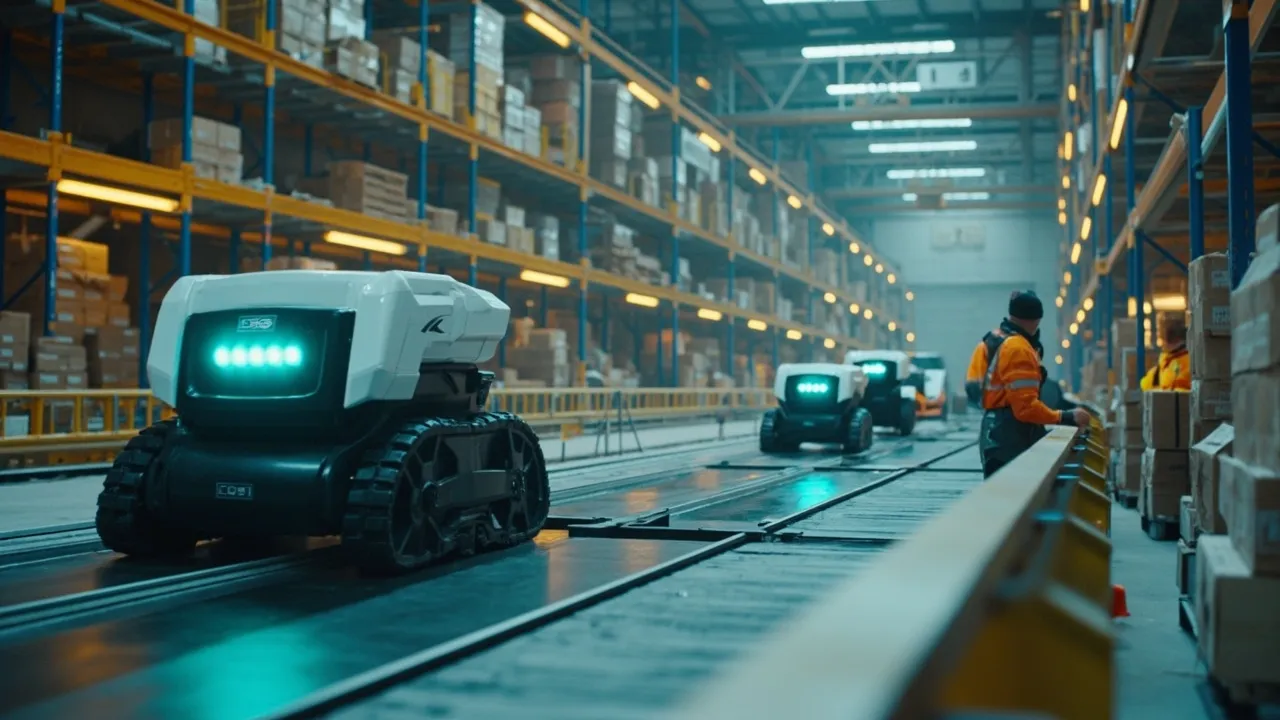
Robots are no longer isolated capital projects. AMRs, AGVs, robotic forklifts, palletizers, sortation systems, vision systems, and orchestration platforms are becoming part of daily throughput. When they work, they reduce travel, stabilize labor needs, improve accuracy, and protect service levels. When they fail, they can become a very expensive single point of failure.
Inbound Logistics makes the argument directly: robotic automation becomes sticky once it is embedded. A facility does not just buy an AS/RS, AMR fleet, or robotic palletizer. It rewrites SOPs, changes layouts, trains workers, redesigns handoffs, and connects software to the WMS, WES, TMS, labor systems, and dock workflows. The objective is "swap-ability" — changing, adding, or replacing automation without breaking throughput.
That matters because adoption is reaching the scale where this is no longer theoretical. Gartner predicted that by 2026, 75% of large enterprises would have adopted some form of intralogistics smart robot in warehouse operations. Even partial adoption creates dependency. A robot vendor outage, delayed spare part, end-of-life software change, price increase, or integration failure can hit like a carrier failure or port disruption.
The risk is not just the machine
Warehouse leaders often evaluate automation risk through the hardware: uptime, battery life, payload, speed, safety certification, maintenance schedule, and warranty coverage. Those matter, but they are not the whole exposure.
The larger risk is the operating model that grows around the machine.
A single robotics vendor can control task logic, fleet management, firmware updates, charging behavior, telemetry, map formats, exception handling, and maintenance workflows. A proprietary interface can make one system difficult to replace. A closed data model can limit productivity analysis across zones. A point-to-point WMS integration can look efficient during implementation, then become brittle when the operation adds another automation layer.
The dependency deepens with every process decision. If associates learn one interface, supervisors troubleshoot through one portal, maintenance teams stock one parts catalog, and IT has tested one integration path, the facility may be diversified on paper but concentrated in practice.
That is exactly the kind of risk shippers learned to avoid in sourcing and transportation. The warehouse just gave it a new costume and a charging dock.
Mixed fleets are coming either way
Most distribution centers will not become fully automated in one clean step. They will automate in layers: one zone, one use case, one budget cycle, one vendor pilot at a time. A site may start with AMRs, add autonomous pallet movement, connect sortation, deploy vision at packing, and later introduce robotic stretch wrapping.
Meanwhile, people and conventional forklifts stay.
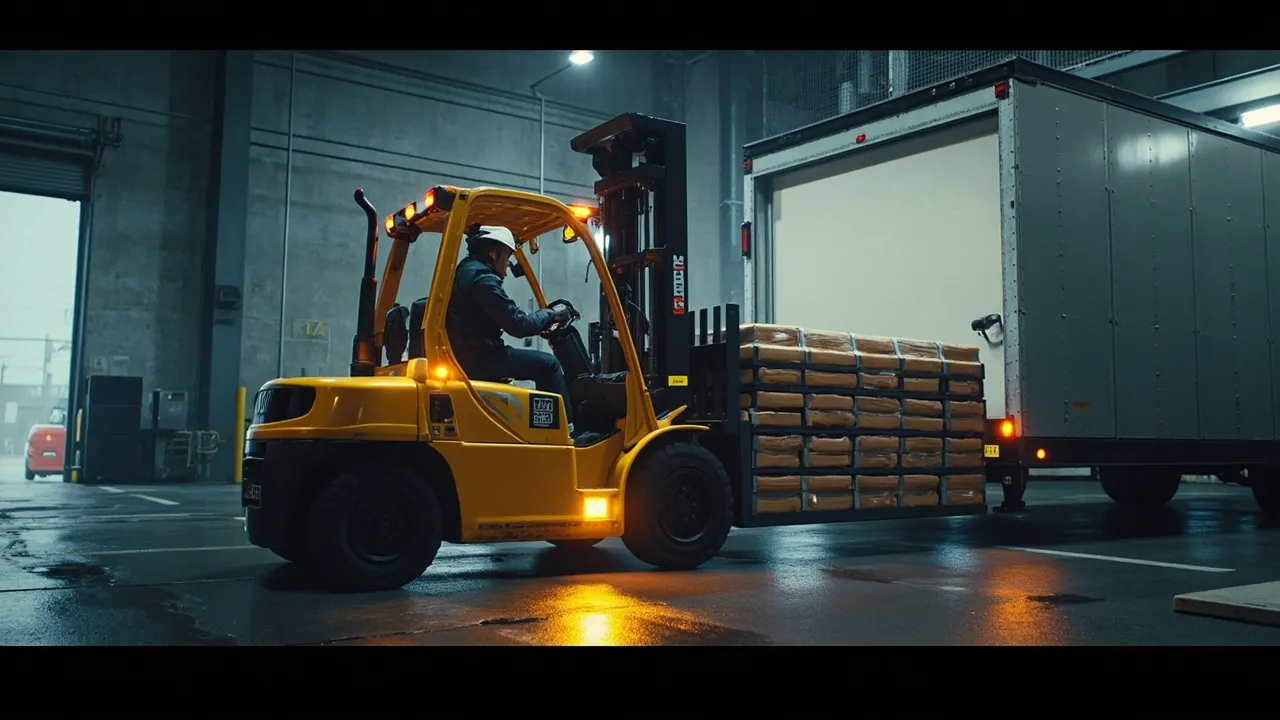
Supply Chain Brain highlights the practical challenge: facilities increasingly need to manage automated vehicles and human-operated forklifts in the same environment. A human driver can back into an automated vehicle. An AGV can block a dead-end aisle. Collision-avoidance systems may exist on automated equipment while manual forklifts lack equivalent sensing. The article's core point is simple and important: information about humans, vehicles, and robots has to be centralized and obtainable, because few warehouses can be completely automated.
That mixed reality changes procurement. Buying a robot is no longer enough. Operators need to know how it behaves when it shares space with people, legacy equipment, conveyors, dock doors, exception carts, and future automation that has not been selected yet.
Inbound Logistics suggests asking vendors how they accommodate four or more forms of automation, whether they orchestrate holistically or rely on point-to-point connections, and what orchestration should look like five and 10 years from now. Those questions separate a useful machine from a resilient architecture.
Five failure modes to test before signing
Robot supplier diversification should not mean collecting vendors like trophies. Too much variety without governance creates chaos. The goal is controlled optionality. Before buying or renewing a major automation platform, operators should test five failure modes.
First, software lock-in. Can tasks, maps, performance data, and exception codes be exported in usable formats? Can another orchestration layer consume the data? If the vendor relationship ends, what operational knowledge leaves with it?
Second, spare parts and maintenance dependency. What parts are proprietary? What is the lead time for critical components? Can internal technicians perform first-line maintenance, or does every meaningful repair enter the vendor queue?
Third, integration brittleness. Does the system connect through modern APIs and event streams, or through fragile custom middleware? Can it support changes in order profiles, SKU velocity, carrier cutoff times, or dock schedules without a professional services project?
Fourth, cyber exposure. Robots are networked assets. They collect operational data, receive software updates, and interact with core systems. Security reviews should cover identity, access control, patching, remote support, data retention, and incident response.
Fifth, operational fallback. If a fleet goes down for two hours, what happens? Can supervisors reroute work manually? Can another zone absorb volume? Are labor standards, carrier appointments, and customer promises modeled around a fallback plan, or only around the happy path?
If a vendor cannot answer those questions clearly, the price quote is not the real cost.
Governance beats vendor sprawl
The solution is not to ban single-vendor automation. In some facilities, standardizing on one platform can reduce training burden and speed deployment. The mistake is treating standardization as resilience.
A better approach is to define which systems own tasking and movement, how exceptions escalate, where telemetry lands, which data is required for reporting, and how new vendors are certified before entering the building.
Scenario modeling belongs in that process. What happens during peak if one automation zone loses capacity? What if a software update changes robot behavior? What if volume shifts from parcel to pallet, or a carrier cutoff moves earlier?
Those scenarios should connect warehouse automation to transportation execution. A stalled pick module becomes a missed tender. A blocked aisle becomes a late departure. A robot maintenance queue becomes detention risk at the dock. Automation risk does not stay politely inside the four walls.
Why this matters to CXTMS users
For shippers and logistics teams, the transportation management system should not be blind to warehouse automation constraints. If robotic throughput, dock readiness, load quality, and exception recovery influence shipment timing, that data needs to flow into planning and execution.
CXTMS helps logistics teams manage that handoff: turning operational signals into better tender timing, more realistic dock schedules, cleaner exceptions, and more resilient carrier communication. The goal is not to micromanage robots from the TMS. The goal is to make sure automation decisions do not create invisible transportation risk.
Warehouse automation will keep expanding. The winners will not be the companies with the most robots. They will be the companies that can change vendors, recover from failures, and still ship on time.
If your warehouse automation roadmap is starting to affect freight execution, now is the time to connect those decisions to transportation planning. Request a CXTMS demo to see how better execution data can reduce the downstream risk of increasingly automated operations.