Driver Biometric Lawsuits Make Fleet Data Consent a Logistics Governance Issue

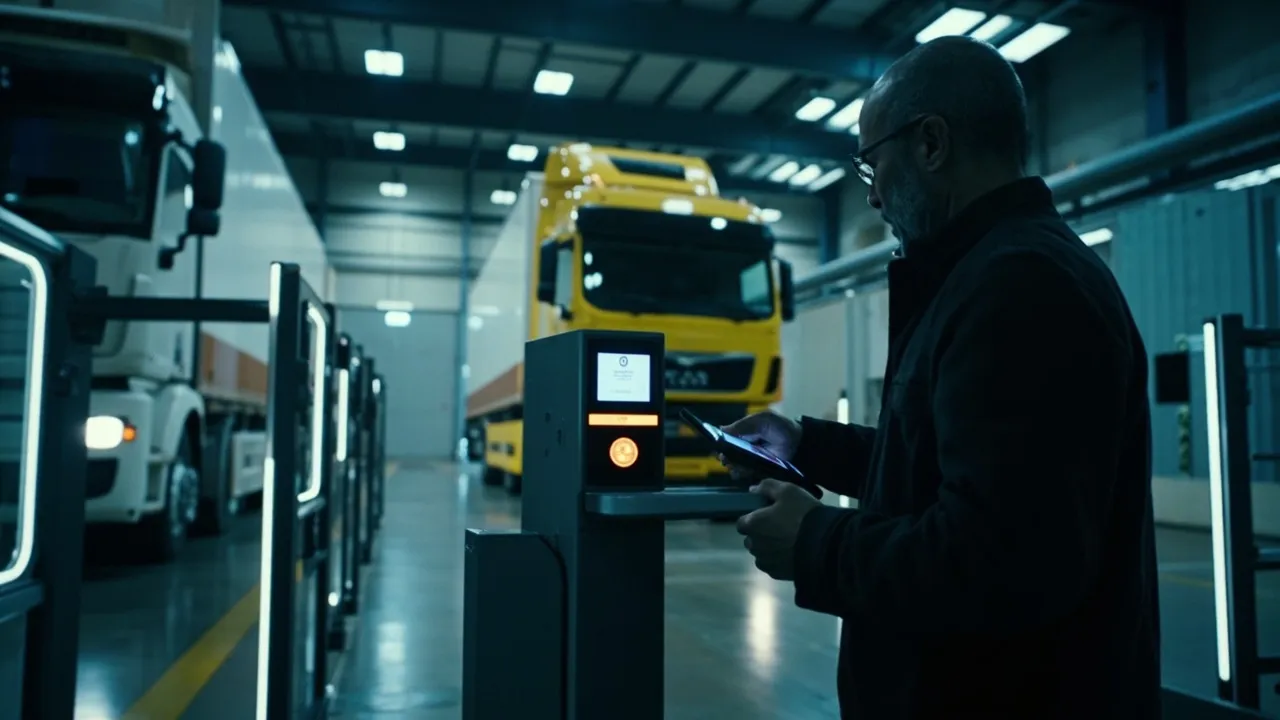
Fleet technology has moved far beyond location dots on a dispatch screen. Drivers clock in through biometric devices, pass gates with identity systems, sit under inward-facing cameras, receive AI coaching, share telematics streams with insurers, and interact with voice agents that may be recorded. Each tool can improve safety and efficiency. Each also creates a data governance obligation.
The warning sign is now clear. FreightWaves reported that a 2021 biometric privacy lawsuit against Universal Intermodal Services has been granted class-action status. The case involves Illinois truck driver Brandon Willis, a former Universal Intermodal Services driver, and allegations tied to fingerprint scanners used to clock workers in and out at a Harvey, Illinois facility.
The class period is not small. According to the report, the class can include people who clocked in to the company's system between March 30, 2016 and the present. The class also reaches beyond Universal employees to other workers doing business with Universal whose fingerprints were allegedly scanned at the facilities. FreightWaves noted that the expanded class includes people working for LINC, a Universal Logistics subsidiary not named as a defendant, and third-party staffing agencies.
The risk is not limited to direct employees. It can follow the entity that allegedly collected, stored, or transmitted the data.
Consent Is Now an Operating Requirement
The case centers on Illinois' Biometric Information Privacy Act, known as BIPA. FreightWaves summarized the court's discussion this way: an entity gathering biometric information must inform the person in writing and receive a written release regarding collection and retention. The lawsuit alleges fingerprints were captured through biometric scanners without the required consent.
The operational lesson is larger than one state law or one time-clock system. Consent cannot live only in HR onboarding paperwork. It has to connect to the real places where driver and worker data enters the operation.
That includes yard gates, warehouse time clocks, driver check-in kiosks, mobile apps, in-cab cameras, safety coaching tools, telematics platforms, insurance programs, and vendor-managed compliance portals. If a driver, contractor, temp worker, carrier representative, or warehouse associate is asked to identify themselves, record behavior, or share vehicle data, the company needs a defensible answer to five questions: what was collected, why, who received it, how long it was retained, and where the consent record sits.
The class-action expansion matters because logistics facilities are rarely staffed by one clean employer group. Intermodal yards, cross-docks, warehouses, and customer sites mix company drivers, owner-operators, agency workers, contractors, guards, carrier reps, and vendor personnel. A biometric scanner at the gate does not care which payroll system the person belongs to. The legal exposure may not either.
AI Safety Tools Raise the Governance Bar
Biometric time clocks are only one part of the driver data picture. Fleet safety technology is becoming more continuous and more behavior-based.
FreightWaves reported on Samsara's Ride Along feature, which uses AI to conduct virtual ride-along sessions lasting 10 to 30 minutes. Unlike camera systems that flag discrete events such as phone use, close following, or harsh braking, Ride Along evaluates a continuous window and produces a summarized view with video access. The article also noted that the system assesses drivers against a 22-factor safety standard and can assign training when warranted.
That can help safety teams move from punishment after rare events to structured coaching based on a broader sample of driving. But it also means fleets are collecting richer behavioral records. A 30-minute AI-evaluated session is not the same governance object as a single harsh-braking event.
The same report described an in-cab AI companion that can speak with drivers before and during shifts about safety scores, weather, route notes, and policy questions. FreightWaves noted that the agent opens each session with a disclosure: "This is AI on a recorded line."
That is the governance problem in one sentence. The technology may be centralized, but consent, recording, biometric, employment, and retention rules can vary by jurisdiction. A national fleet cannot assume one disclosure covers every driver and facility.
Telematics Data Is Leaving the Fleet
Driver data is also increasingly shared outside the transportation department. Insurers, safety vendors, brokers, shippers, maintenance platforms, and compliance systems may all touch the record.
FreightWaves recently reported that Progressive confirmed a small subset of trucking risks are required to participate in its Smart Haul telematics program as part of underwriting, and that some applicants may be required to install Motive devices within 30 days. The same report said coverage may be subject to cancellation if required devices are not installed within that period.
That is mostly an insurance story, but it also has a consent angle. Telematics data can include speeding events, harsh braking, acceleration, cornering, mileage, utilization, hours of operation, and other driving characteristics. If that data influences underwriting, claims, renewal risk, or vendor eligibility, fleets need to know what they have agreed to share.
A Governance Checklist for Fleet Data
Start with a data inventory. List every system that collects biometric, video, voice, location, behavioral, timekeeping, safety, or telematics data. Include vendor portals and customer-site systems.
Map the people covered. Separate company drivers, contractors, temp workers, warehouse staff, mechanics, visitors, carrier partners, and customer personnel. Consent language that works for one group may not work for another.
Document the purpose. A fingerprint scanner for timekeeping, a gate system for security, a dashcam for safety coaching, and an insurer telematics feed for underwriting are different use cases. The policy should say why the data exists.
Control vendor access. Contracts should define whether vendors collect, store, process, transmit, or monetize driver data. They should also define breach notice, deletion, retention, subcontractor access, and audit rights.
Set retention periods. Keeping biometric templates, video clips, voice recordings, and telematics histories forever is rarely a good default. Retention should match legal requirements, operating need, claims exposure, and worker expectations.
Finally, preserve proof. Consent forms, disclosure language, policy acknowledgments, vendor agreements, data-sharing approvals, deletion records, and exception notes should be tied to the worker, carrier, facility, or shipment context where the data is used.
Make Driver Data Defensible
CXTMS helps logistics teams bring driver and carrier data governance into the transportation workflow. Carrier profiles, driver compliance fields, document tracking, role-based access, vendor policy records, and exception workflows can live alongside shipment execution.
The Universal Intermodal case shows why that matters. A single operational control, such as a fingerprint clock-in process, can become a multi-year class-action issue when consent and retention are not provable. As AI safety tools, recorded driver agents, and insurer telematics programs become more common, the governance burden will only grow.
Fleet data consent is no longer a back-office privacy task. It is part of logistics risk management. Schedule a CXTMS demo to see how carrier documents, driver compliance records, vendor policies, and audit trails can be managed inside a transportation workflow built for accountability.