Middle-Mile Autonomous Trucking Reaches Commercial Viability in 2026

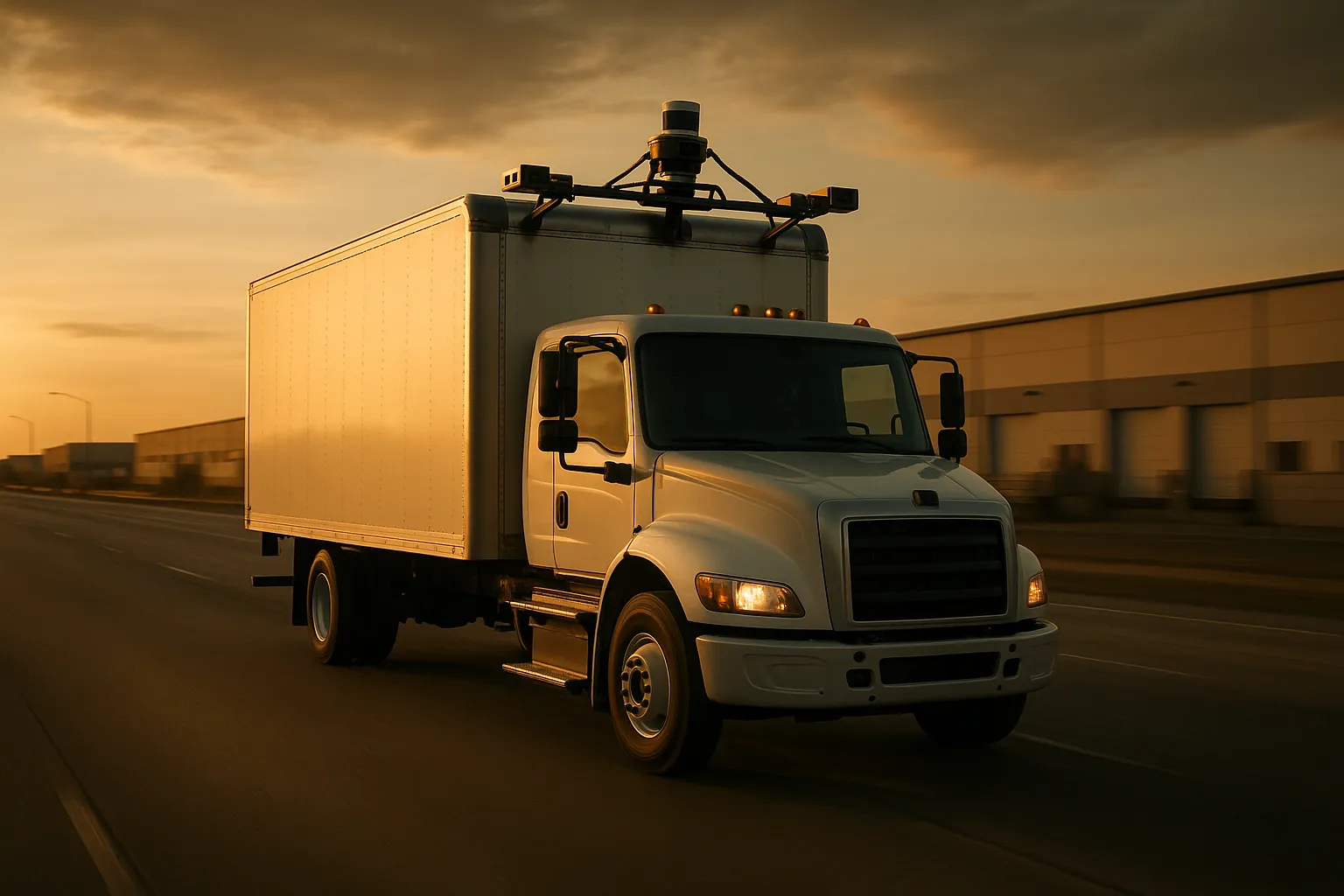
While the promise of coast-to-coast driverless semi-trucks still faces regulatory and technological hurdles, a quieter revolution is already happening on America's roads. Middle-mile autonomous trucking—the segment connecting distribution centers to retail stores—has emerged as the commercial proving ground for self-driving freight, and 2026 is the year it goes mainstream.
The Middle-Mile Advantage
Long-haul trucking captures headlines, but middle-mile logistics is where autonomous technology is delivering real returns today. These routes typically span 40-50 miles on fixed, repeatable paths between distribution centers, micro-fulfillment centers, and retail locations. The predictability of these routes—same roads, same destinations, same schedules—creates the ideal conditions for Level 4 autonomous systems to operate reliably.
According to Mordor Intelligence, the autonomous truck market reached $39.51 billion in 2025 and is projected to grow at a 10.70% CAGR to reach $65.72 billion by 2030. But it's the middle-mile segment that's driving the most immediate commercial adoption, with commercial vehicle autonomy projected to grow at a remarkable 25.72% CAGR through 2030—outpacing passenger vehicle automation.
Gatik's Milestone: 60,000 Driverless Deliveries
The headline-grabbing proof point came in late January 2026 when Gatik announced it had become the first U.S. company to operate fully driverless trucks at scale for commercial deliveries. Since launching freight-only operations in mid-2025, the company completed 60,000 fully driverless orders without incident, operating day and night on highways and surface streets.
Gatik's approach—purpose-built Class 6 and Class 7 autonomous trucks for B2B supply chains—has attracted Fortune 500 retailers. The company's partnership with Walmart dates back to 2021 when it launched the world's first driverless commercial transportation service. More recently, Gatik expanded operations with Loblaw in Canada, running 24/7 autonomous routes moving both dry and perishable goods.
The scale ambitions are equally impressive: Forbes reports that Gatik plans to have hundreds of robotic delivery trucks operating in the U.S. and Canada by the end of 2026.
Aurora's Long-Haul Expansion
While Gatik dominates middle-mile, Aurora Innovation is pushing autonomous trucking into longer regional routes. The company surpassed 100,000 driverless miles on public roads in late 2025 and expanded its commercial operations with a new route from Fort Worth to El Paso.
Aurora's roadmap for 2026 includes deploying hundreds of driverless trucks with next-generation hardware that cuts costs by more than 50% while doubling the range of its proprietary FirstLight lidar system to 1,000 meters. The company has already secured commercial contracts, including a deal with Detmar to deploy 30 Aurora Driver-powered trucks hauling sand for a major energy producer—with each unit operating over 20 hours daily.
The Driver Shortage Context
Autonomous trucking isn't just a technology story—it's a solution to a structural labor crisis. The American Trucking Associations reports a shortage of 60,000-115,000 drivers as of 2025, with projections reaching 160,000 by 2030. The industry employs 3.58 million professional drivers, but demographic headwinds are intensifying as the existing workforce ages and recruitment struggles continue.
The math is compelling: 71.4% of all U.S. freight tonnage moves on highways. When you can't find drivers for the trucks you need, automation becomes not just a cost play but a capacity necessity.
Middle-mile routes are particularly affected by driver challenges. These runs—typically shorter and more repetitive than long-haul—can be less attractive to drivers seeking mileage-based pay. For retailers and distributors running high-frequency replenishment between DCs and stores, autonomous trucks operating 20+ hours daily offer utilization levels human drivers simply cannot match.
What This Means for Logistics Operations
For transportation managers evaluating autonomous trucking, 2026 presents the first realistic window for integration into middle-mile networks:
Fixed-route suitability: If your operations include repetitive DC-to-store, DC-to-DC, or hub-to-hub movements on defined corridors, these routes are prime candidates for autonomous deployment—either through partnerships with providers like Gatik or future fleet conversions.
Capacity augmentation: Rather than wholesale replacement, most adopters are using autonomous trucks to augment capacity on high-volume lanes where driver availability is constrained. This hybrid approach—mixing autonomous and human-driven assets—reflects the current operational reality.
Data integration requirements: Autonomous fleets generate massive amounts of telemetry data. TMS platforms need to evolve to ingest, normalize, and act on this data for real-time routing decisions and predictive maintenance.
Regulatory geography matters: Commercial autonomous trucking permissions vary significantly by state and municipality. Texas has emerged as the epicenter of autonomous trucking operations due to favorable regulations. Understanding where your lanes intersect with permissive jurisdictions is essential for planning.
The Road Ahead
The autonomous trucking industry has moved past pilot programs into revenue-generating operations. Gatik's 60,000 incident-free deliveries and Aurora's 100,000+ driverless miles demonstrate that the technology works at commercial scale in the middle-mile segment.
But scaling from hundreds to thousands of autonomous trucks will require continued progress on several fronts: regulatory harmonization across state lines, insurance frameworks for driverless operations, and integration protocols between autonomous fleets and traditional TMS platforms.
For logistics leaders, the question is no longer "if" but "when and how" autonomous trucking fits into your network strategy. The companies acting now—building relationships with AV providers, identifying suitable lane candidates, and preparing their technology infrastructure—will be best positioned as the autonomous truck population moves from hundreds to thousands over the next few years.
Evaluating how autonomous trucking fits your middle-mile operations? Contact CXTMS to explore integration strategies for next-generation logistics.