AI-Powered Logistics Control Towers: From Visibility to Decision Systems


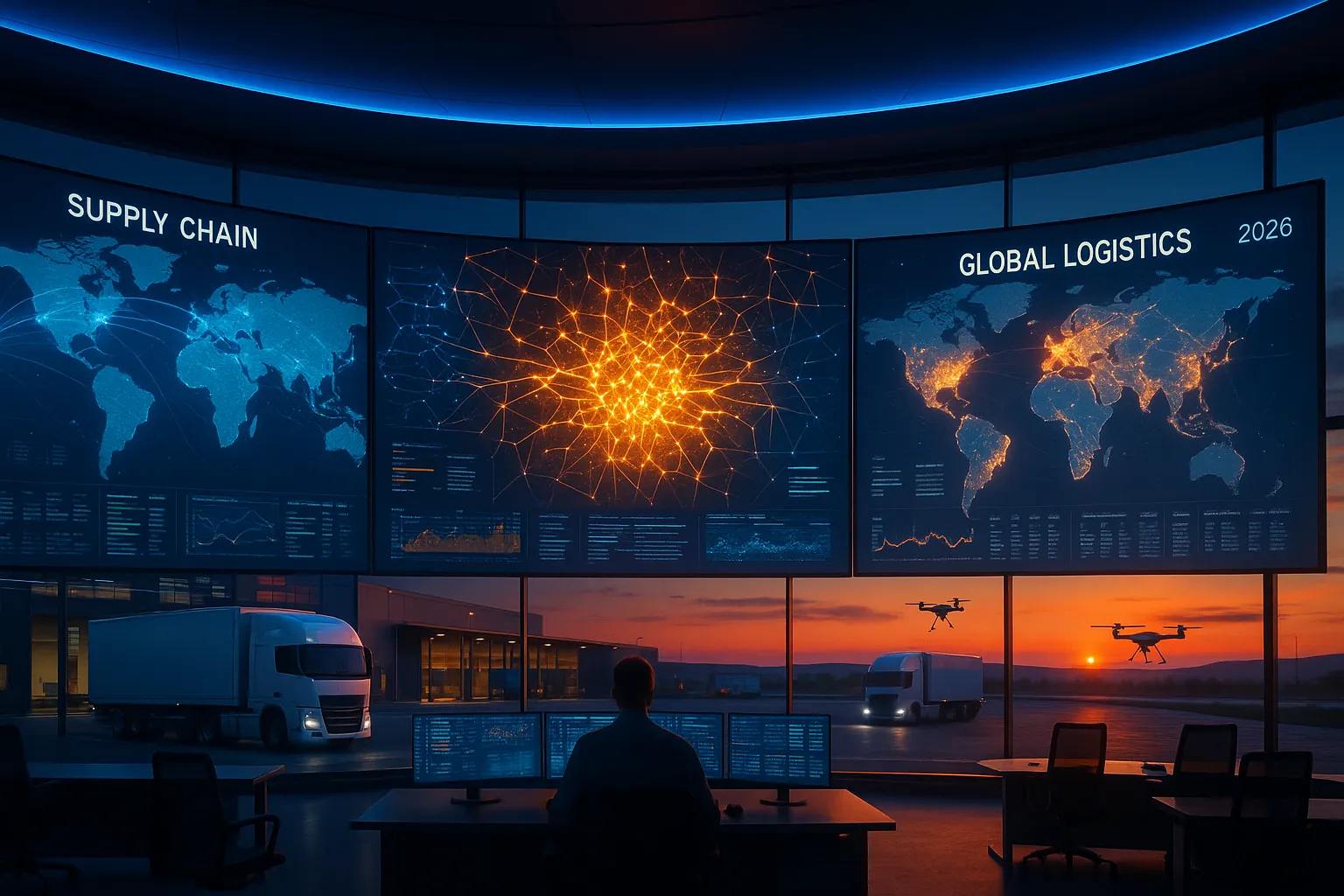
The logistics control tower is evolving. What once served as a passive dashboard for tracking shipments has transformed into an intelligent decision engine—one that anticipates disruptions before they happen and orchestrates responses in real time.
The $32 Billion Opportunity
The numbers tell a compelling story. According to Grand View Research, the global control tower market reached $9.7 billion in 2024 and is projected to hit $32.1 billion by 2030—a compound annual growth rate of 23%. This explosive growth isn't driven by companies seeking better visibility alone. They're investing in something far more valuable: predictive intelligence that transforms how supply chains operate.
As KPMG noted in their 2025 supply chain outlook, organizations are shifting from "monitoring and alerting" to "near real-time and proactive" operations. The reactive model—waiting for problems to surface before responding—is becoming obsolete.
From "Where Is My Shipment?" to "Where Should It Be?"
Traditional control towers answered one fundamental question: Where is my freight right now?
The new generation of AI-powered control towers answers a different question entirely: Where should my freight be, given everything we know about the world right now?
This shift from reactive tracking to predictive orchestration represents a fundamental change in logistics philosophy. Modern AI control towers integrate internal operations data—inventory levels, warehouse capacity, carrier performance—with external signals like weather patterns, port congestion, geopolitical events, and even social media sentiment.
Supply Chain Management Review describes this as "predictive orchestration," where AI and machine learning combine internal and external data to forecast disruptions and recommend proactive actions. Instead of scrambling when a port closure hits, these systems identify the risk days in advance and automatically evaluate alternative routing options.
The Intelligence Stack: Three Levels of AI Integration
Today's advanced control towers operate across three distinct intelligence layers:
1. Real-Time Visibility
The foundation remains visibility—but now it's comprehensive. Modern platforms integrate data from transportation management systems, warehouse management systems, IoT sensors, carrier APIs, and external data feeds into a single unified view. This isn't just tracking dots on a map; it's understanding the complete context of every shipment.
Companies report 10% reductions in logistics costs through AI-powered route optimization alone, according to enterprise research from Glean. When every truck, container, and package becomes a data point feeding continuous optimization, the savings compound rapidly.
2. Predictive Analytics
The second layer applies machine learning to historical patterns and real-time signals. These systems learn what "normal" looks like for your specific supply chain and flag anomalies before they become crises.
A shipment running four hours behind schedule might be unremarkable in isolation. But if the AI recognizes that this delay, combined with forecasted weather at the destination and the receiving warehouse's current processing queue, will cascade into a stockout at three retail locations—that's actionable intelligence.
Nearly half of organizations are now integrating AI into supply chain systems, with 70% of supply chain CEOs stating that AI solutions are essential for competitive operations, according to recent industry surveys.
3. Autonomous Decision-Making
The emerging frontier is autonomous response. Instead of flagging problems for human review, advanced systems take action within pre-defined parameters. They reroute shipments, adjust inventory allocations, and communicate with carriers—all without human intervention.
This isn't about removing humans from the loop. It's about elevating human decision-making to strategic issues while letting AI handle the thousands of tactical adjustments that optimal supply chain execution requires.
Real-World Impact: The Numbers That Matter
The business case for AI-powered control towers extends beyond cost savings:
- Disruption reduction: Predictive systems identify potential problems days or weeks before they impact operations, allowing proactive mitigation
- Inventory optimization: Better demand sensing and supply visibility enable leaner inventory positions without sacrificing service levels
- Carrier performance: Continuous monitoring and automatic performance scoring drive accountability and enable dynamic carrier selection
- Customer experience: Proactive communication about delays and accurate ETAs build trust, even when things go wrong
With U.S. logistics costs exceeding $2.3 trillion annually, even marginal improvements in efficiency translate to substantial dollar savings. Organizations that master predictive logistics aren't just cutting costs—they're building competitive moats that reactive competitors can't easily cross.
The 2026 Imperative: Move Now or Fall Behind
The technology gap between leaders and laggards is widening. According to Deloitte's 2026 State of AI in the Enterprise report, worker access to AI rose by 50% in 2025, and the number of companies with 40% or more of their AI projects in production is set to double in the next six months.
Organizations still operating with traditional visibility tools face a compounding disadvantage. Every disruption they react to—rather than anticipate—carries opportunity costs their AI-enabled competitors avoid.
The message for logistics leaders is clear: control towers have evolved from nice-to-have dashboards into mission-critical decision engines. The question isn't whether to invest in AI-powered logistics intelligence. It's whether you can afford not to.
Ready to transform your supply chain visibility into predictive intelligence? Contact CXTMS to see how our AI-powered TMS solutions can help you anticipate disruptions before they impact your operations.