Last-Mile Tech Stack Interoperability: Why Unified Platforms Are Replacing Fragmented Delivery Systems in 2026

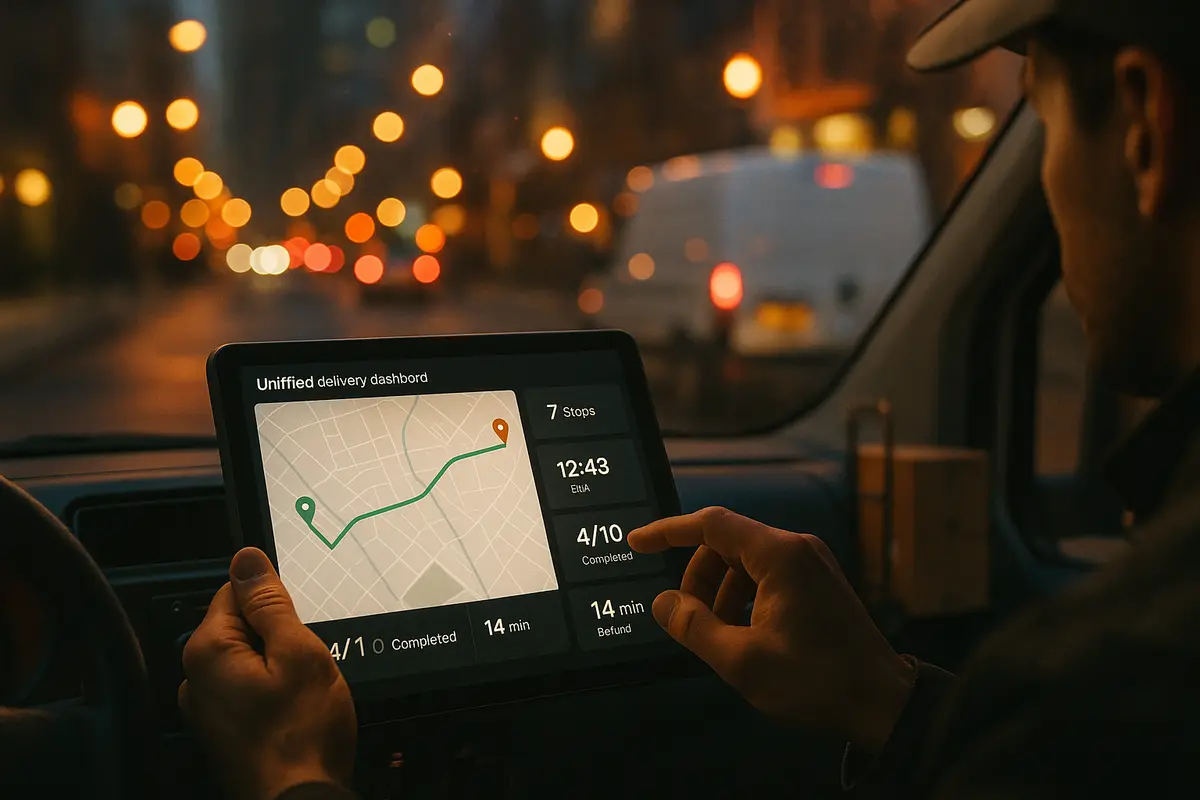
The average last-mile operation runs on six or more disconnected systems — separate tools for routing, telematics, order management, fleet tracking, proof of delivery, and customer notifications. Each one generates data. Almost none of them talk to each other. In a market projected to reach $315.69 billion by 2029, that fragmentation isn't just inconvenient — it's a competitive death sentence.
The Fragmentation Crisis Hiding in Plain Sight
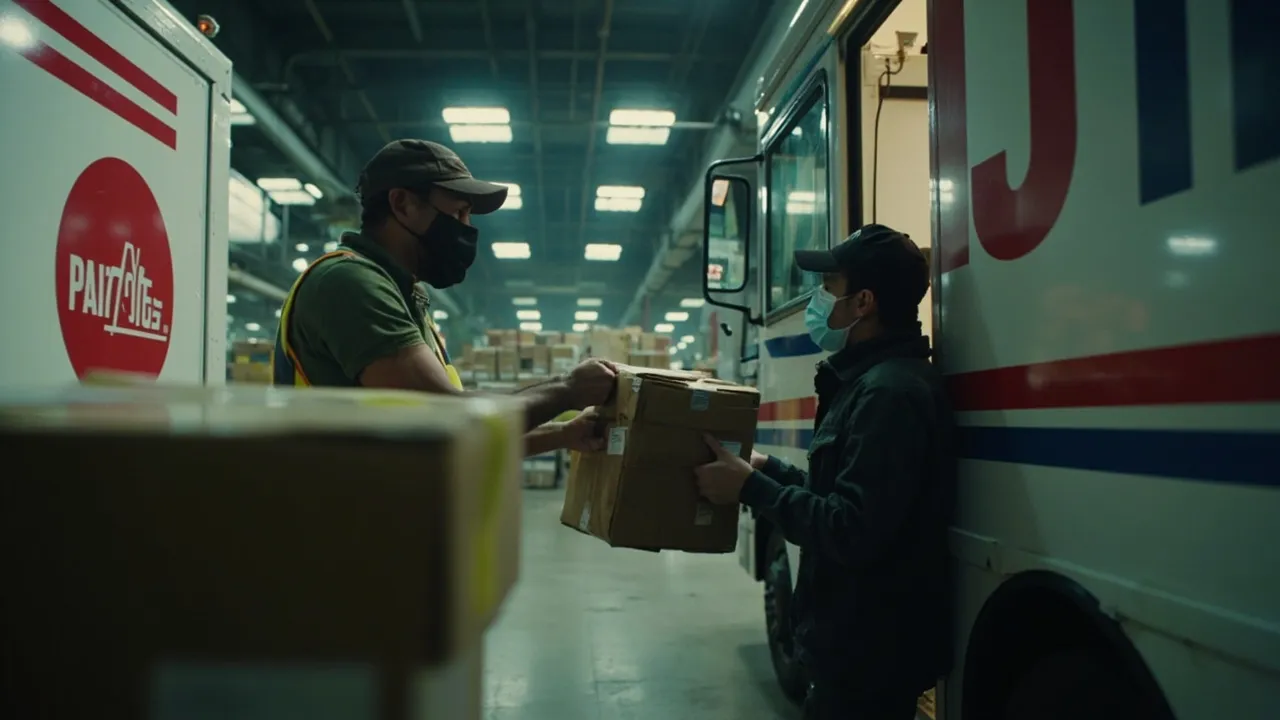
Legacy last-mile technology was built to solve individual problems. One vendor handles route optimization. Another manages driver dispatch. A third tracks deliveries. A fourth sends customer ETAs. The result is a patchwork of point solutions held together by manual processes, flat-file exports, and prayers.
According to Global Trade Magazine, this siloed approach is "the single biggest drag on performance" for fleet operators in 2026. When routing software can't see real-time order changes from the OMS, or when telematics data sits in a silo separate from delivery scheduling, the entire operation suffers. Drivers get suboptimal routes. Customer service teams can't answer basic questions. And managers spend hours reconciling data across spreadsheets instead of making decisions.
The numbers tell the story: with only 17% of transportation companies fully automated as of 2025 — and 37% still "heavily or mostly reliant" on manual processes — the gap between integrated and fragmented fleets is widening fast.
Why Legacy Integration Can't Keep Up
Traditional integration methods — EDI transactions, nightly batch files, FTP transfers — were designed for a world where "real-time" meant same-day. In 2026, customers expect delivery updates every few minutes. Shippers need to reroute drivers mid-shift based on new orders. And fleet managers need to see the complete picture across dozens of carriers and hundreds of stops simultaneously.
EDI can't do that. Flat-file imports running on overnight batch cycles can't do that. Even many first-generation API integrations — built as one-off connectors between specific systems — create maintenance nightmares as each endpoint needs custom mapping, version management, and error handling.
The real cost isn't just technical debt. It's the decisions that never get made because the data arrives too late, in the wrong format, or not at all. When a failed delivery costs retailers around $17 per missed stop, according to Inbound Logistics, those integration gaps translate directly to margin erosion.
The API-First Architecture Shift
The companies winning in last-mile delivery have stopped buying point solutions and started building integrated technology stacks. The architecture that's emerging follows a clear pattern: API-first design, event-driven data flows, and a unified data layer that serves as the single source of truth across the entire delivery lifecycle.
Here's what that looks like in practice:
- Order ingestion flows directly from the OMS or e-commerce platform via webhooks, triggering immediate route optimization without manual intervention.
- Dynamic routing adjusts in real time based on live traffic, new orders, driver availability, and delivery window changes — all fed by a continuous data stream rather than periodic batch updates.
- Proof of delivery captures (photos, signatures, timestamps) write back instantly to the OMS, ERP, and customer notification systems simultaneously.
- Exception management triggers automated workflows when deliveries fail, rerouting packages or scheduling returns without human intervention.
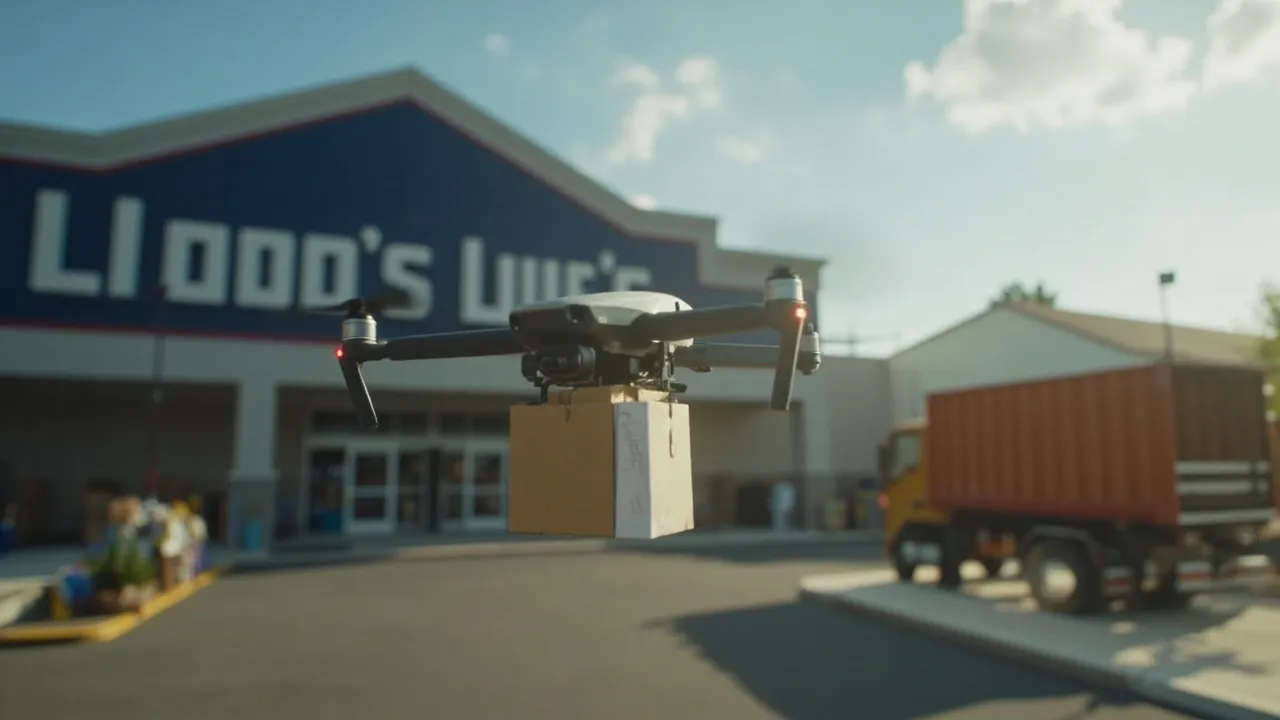
This isn't theoretical. At Manifest 2026, logistics technology providers showcased unified platforms that consolidate dispatch, fleet management, route optimization, and carrier connectivity into single environments — eliminating the need for separate tools stitched together with custom middleware.
AI Demands Integration — Not the Other Way Around
One of the strongest drivers of the unification trend is artificial intelligence. AI models are only as good as the data they can access, and fragmented tech stacks starve AI of the cross-functional context it needs to deliver real value.
A routing AI that can't access real-time inventory data from the WMS will optimize routes for orders that may not be ready for pickup. A demand forecasting model disconnected from delivery performance data will miss the feedback loop between promised ETAs and actual completion rates. An AI-powered customer communication system that can't see live driver locations will send inaccurate updates that erode trust rather than build it.
The 96% of transportation professionals already using AI in their operations, as reported in a 2025 industry benchmark survey, are quickly discovering that AI amplifies whatever environment it operates in. In an integrated stack, AI delivers compounding returns — each system's data enriches every other system's intelligence. In a fragmented stack, AI delivers isolated improvements that often create new inconsistencies.
What a Unified Last-Mile Platform Actually Delivers
Organizations that have made the shift to unified platforms report measurable improvements across every key metric:
- 15–25% reduction in delivery costs through optimized routing that accounts for real-time variables across the entire operation.
- 30–40% decrease in customer service inquiries because proactive, accurate notifications reduce "where's my package" calls.
- 20% improvement in on-time delivery rates from dynamic rerouting that responds to exceptions in minutes rather than hours.
- 50% faster onboarding of new carriers and delivery partners through standardized API connectors rather than custom integrations.
These aren't aspirational numbers — they represent the performance gap that's opening between companies running integrated stacks and those still managing spreadsheet-driven operations.
Building Your Interoperability Roadmap
Migrating from fragmented point solutions to a unified stack doesn't happen overnight. The practical path forward involves three phases:
Phase 1: Establish the data layer. Before connecting systems, define a unified data model for orders, shipments, stops, vehicles, and events. This becomes the contract that every system reads and writes to.
Phase 2: Replace batch with event-driven flows. Start with the highest-impact integration — typically OMS-to-routing — and replace file-based transfers with real-time API connections. Measure the improvement, then expand.
Phase 3: Consolidate or orchestrate. Either migrate to a unified platform that handles multiple functions natively, or implement an integration orchestration layer that manages data flow, transformation, and error handling across your existing tools.
How CXTMS Connects the Last-Mile Stack
CXTMS was built with interoperability as a core design principle, not an afterthought. Our API-first architecture connects ERP, OMS, WMS, and carrier management systems into a single operational view — giving logistics teams real-time visibility across every delivery partner, every route, and every shipment without the middleware sprawl that plagues legacy integrations.
Whether you're managing your own fleet, coordinating with third-party carriers, or running a hybrid model, CXTMS provides the unified data layer that makes AI-powered decision-making actually work.
Tired of managing six disconnected delivery systems? Contact CXTMS for a demo and see how a unified logistics platform transforms last-mile performance.