GXO's North America Expansion: How Reshoring and Tariff-Driven Demand Are Fueling 3PL Automation Growth in 2026

The logistics landscape in North America is undergoing a dramatic transformation in 2026, with GXO Logistics positioning the region as its central growth engine. As companies respond to geopolitical pressures, tariff uncertainties, and the growing demand for supply chain resilience, 3PL providers like GXO are finding unprecedented opportunities for expansion and technological advancement.
GXO's Strategic North America Focus
GXO Logistics is making a bold bet on North American growth, robotics, and AI to power stronger margins and free cash flow in 2026. The company is strategically positioning itself to capitalize on three major converging trends: reshoring initiatives, tariff-driven supply chain redesign, and accelerating automation adoption.
According to recent industry analysis, "GXO Logistics is positioning North America as its central growth engine in 2026, betting that reshoring, tariff-driven supply chain redesign and accelerating automation will fuel margin expansion and free cash flow gains." This strategic shift comes as major corporations reevaluate their global supply chain footprints in response to increasing geopolitical risks and changing trade dynamics.
Reshoring and Tariff Impacts on 3PL Demand
The reshoring trend is gaining significant momentum, driven by government incentives and the growing recognition of supply chain vulnerabilities. A 2025 Deloitte study predicted that 40% of U.S. companies would relocate at least part of their supply chains to North America by 2026. This massive shift is creating substantial demand for 3PL services capable of handling increased domestic distribution needs.
Tariff uncertainty is further accelerating this trend. Companies are being forced to rebuild their logistics networks for resilience rather than speed, with organizations rethinking everything from supplier geography to warehouse placement. As noted by industry experts, "Between rising tariffs, geopolitical pressures, and surging consumer expectations, organizations are being forced to rebuild their logistics networks for resilience rather than speed."
This reshoring wave is particularly benefiting 3PL providers like GXO, who can offer the flexibility, scale, and technological capabilities that many companies need as they transition their supply chains back to North American shores.
Automation Investments and Technology Deployments
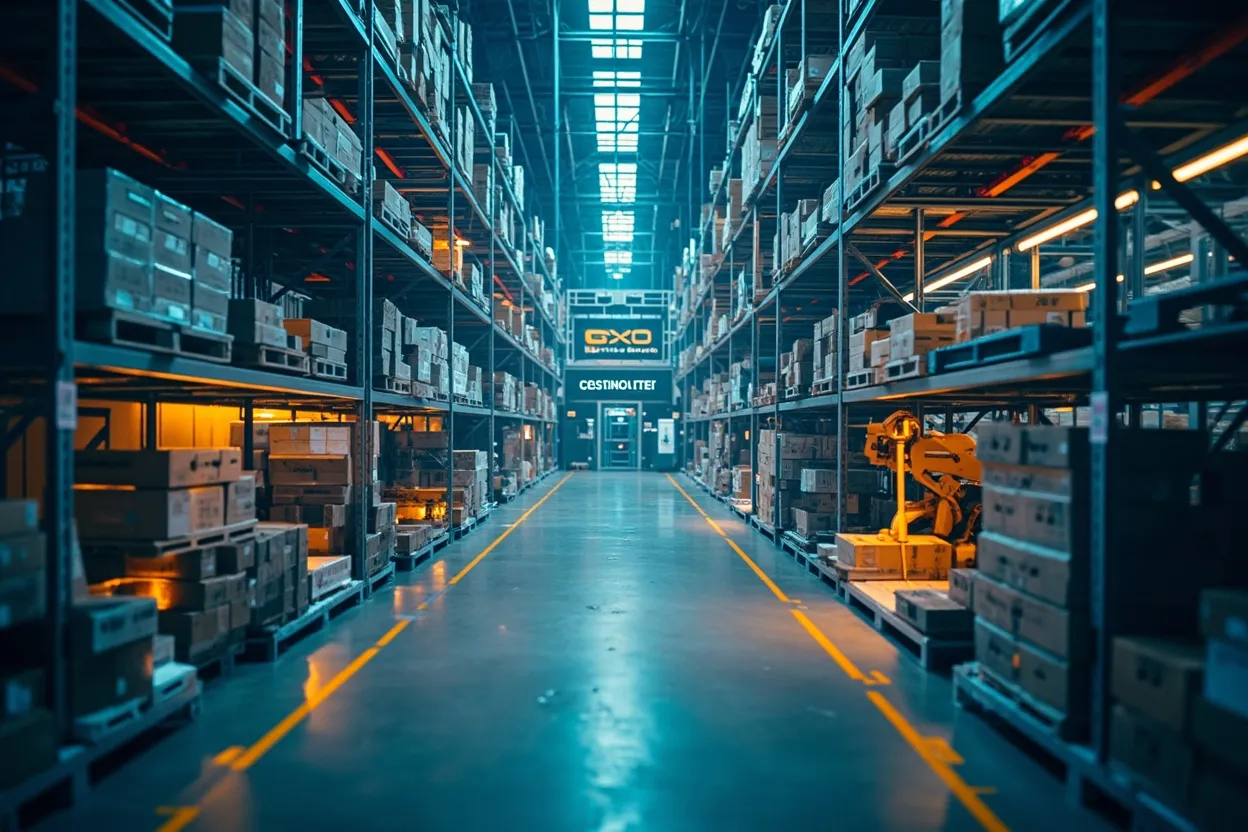
GXO's commitment to automation is evidenced by their significant investments in warehouse technology. The company increased its overall units of warehouse automation in 2023 by 50%, including doubling its use of vision technology. This aggressive automation strategy is positioning GXO to meet the growing demand for efficient, scalable logistics solutions.
One of GXO's most notable automation projects includes a fully automated 385,000-square-foot facility developed in partnership with Eddie Bauer, expected to be complete in the first half of 2026. This type of large-scale automation investment demonstrates how 3PL providers are leveraging technology to meet the increasing demands of their clients.
The automation focus extends beyond just warehouse operations. GXO is exploring AI applications and machine learning capabilities to optimize warehouse operations further. As Neil Shelton, SVP of Strategy and Investments at GXO, noted, automation often becomes a catalyst for companies to reevaluate and improve their operations when volumes are less growth-oriented.
Impact on Shipper Outsourcing Decisions
The convergence of reshoring, tariff pressures, and automation capabilities is fundamentally changing how shippers approach outsourcing decisions. Companies are increasingly turning to 3PL providers like GXO because they offer several key advantages:
- Technological Infrastructure: 3PLs are making significant automation investments that individual companies may not be able to justify on their own
- Scalability: The ability to quickly scale operations up or down in response to changing market conditions
- Geographic Flexibility: The capability to establish and manage distribution networks across North America efficiently
- Expertise: Specialized knowledge in logistics optimization and supply chain management
Shipper-outsourcing decisions are increasingly being driven by the need for technological expertise and operational flexibility rather than just cost considerations. This shift is creating significant opportunities for 3PL providers who can demonstrate strong technological capabilities and strategic thinking.
Future Outlook for 3PL Industry Consolidation
The 3PL industry is likely to see increased consolidation as larger players like GXO leverage their technological advantages and financial resources to acquire smaller competitors. This consolidation trend is being accelerated by the high cost of automation technology and the growing demand for integrated logistics solutions.
The warehouse automation market is experiencing rapid growth, with projections indicating continued strong performance through 2026 and beyond. Companies that can successfully integrate automation technologies with their logistics services will be well-positioned to capture market share in this evolving landscape.
Strategic Implications for 2026
For logistics industry participants, the current trends present both challenges and opportunities. The shift toward more resilient, technology-enabled supply chains requires significant investment and strategic planning. However, companies that can successfully navigate this transition will be positioned for significant competitive advantages.
The key to success in 2026 will be the ability to balance technological innovation with operational excellence. As the industry continues to evolve, 3PL providers who can deliver both cutting-edge automation solutions and reliable, customer-focused service will emerge as the clear leaders in the North American market.
Ready to optimize your supply chain with advanced automation technology? Request a CXTMS demo to see how our platform can help you navigate the evolving logistics landscape of 2026.