Comau and Omron Point to the Next Automation Requirement: Flexible Intralogistics, Not Fixed Lines

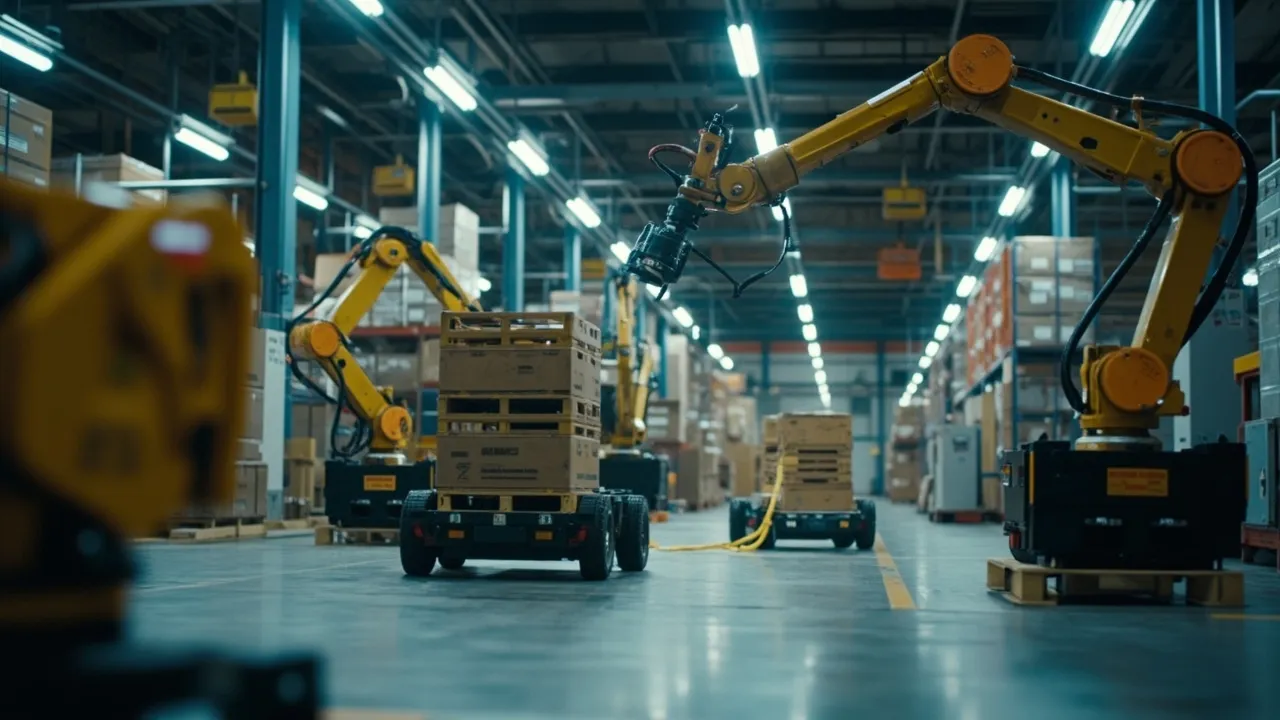
The next wave of industrial automation will not be won by the biggest fixed conveyor layout or the most impressive greenfield robot cell. It will be won by systems that can be deployed into messy, existing operations without forcing the business to stop breathing.
That is the real signal behind the new Comau and Omron Robotics collaboration reported by Modern Materials Handling. The companies signed a strategic agreement to expand advanced industrial automation solutions for electronics, semiconductors, medical manufacturing, and light industrial intralogistics. The announcement emphasizes flexible, easily deployable automation that can fit both current production lines and next-generation manufacturing environments.
That wording matters. It is not a narrow robotics story. It is a brownfield operations story.
Automation buyers want optionality
Manufacturers and logistics teams have spent years learning the hard way that rigid automation can become a constraint when demand, SKU mix, labor availability, or facility strategy changes. A fixed line can deliver excellent throughput when the assumptions are right. But when the assumptions move, the system can become expensive steel in the wrong place.
The Comau-Omron agreement points in the opposite direction: complementary portfolios, robotics hardware, advanced controls, software-driven automation, and solutions designed to be easier to deploy and adapt. Comau CEO Pietro Gorlier described the goal as combining robotics expertise with Omron technologies and software capabilities to deliver solutions that are easier to deploy, highly adaptable, and future-ready. Omron Robotics CEO Olivier Welker framed the collaboration around flexible, connected, and sustainable production systems.
Strip out the executive language and the customer demand is clear: automation must handle industrial complexity without demanding a perfect facility.
That is exactly where intralogistics is heading. The most urgent operational problem is often not whether a robot can perform a task in isolation. It is whether the automation can move material between receiving, kitting, production, quality, storage, packing, and shipping while the building keeps changing around it.
The market is rewarding modular systems
The investment backdrop supports the same conclusion. Mordor Intelligence estimates the warehouse automation market at $34.17 billion in 2026, rising to $65.74 billion by 2031, a 13.98% compound annual growth rate. Its analysis also says mobile robots held 41.36% of warehouse automation market share in 2025, while piece-picking robots are forecast to grow at a 15.27% CAGR through 2031.
Those numbers are not just about warehouses buying more machines. They show buyers shifting toward automation that can be reconfigured, scaled, and redeployed. Mordor specifically points to persistent labor shortages, plug-and-play robotics, robotics-as-a-service models, and the need to reconfigure systems in days rather than months as major forces behind the growth.
That is a very different investment thesis from the old automation playbook. Historically, companies built automation around a long-term volume profile and hoped the business behaved as predicted. Today, the better question is: how fast can the automation adapt when the forecast is wrong?
Brownfield is the real battleground
Inbound Logistics makes the point directly in its 2026 supply chain technology trends report: warehouse investment is shifting toward brownfield modernization, extracting more capacity, uptime, and flexibility from installed assets rather than committing to full network resets. The report also describes automation orchestration moving toward device-agnostic platforms that layer robotics and modern execution tools onto current operations.
That is where Comau and Omron’s combined proposition becomes relevant for logistics leaders. Brownfield facilities rarely have ideal aisle widths, clean data, perfectly standardized totes, or unlimited downtime. They have legacy WMS instances, old PLCs, forklift traffic, seasonal labor, safety constraints, and supervisors who cannot afford a six-month science project.
Flexible intralogistics automation has to meet that world as it is. A robot that only works in a pristine demo environment is not operationally useful. A system that can be phased into one workflow, learn from exceptions, connect to existing controls, and then move to the next workflow is much more valuable.
The same is true for manufacturing environments. Electronics, semiconductors, and medical manufacturing all face high product complexity, strict quality expectations, and frequent process changes. In those settings, material movement is not just a warehouse function. It is part of production continuity.
What logistics leaders should evaluate
The buying checklist needs to change. Throughput still matters, but it is no longer enough.
First, evaluate integration burden. Can the automation connect with the WMS, MES, ERP, TMS, and control layer without a custom middleware swamp? Mordor notes that legacy IT and WMS integration complexity can delay automation returns, with some projects overrunning budgets by 30% and timelines by up to 12 months. That is not a side issue. It is often the difference between a strong pilot and a stalled program.
Second, test control software and orchestration. Flexible automation depends on task assignment, traffic management, exception handling, and prioritization. If robots, conveyors, workstations, and human labor are optimized separately, the building still loses flow.
Third, scrutinize safety and maintenance. Brownfield operations mix people, forklifts, robots, pallets, totes, and equipment in tight spaces. Safety cannot be bolted on after deployment. Maintenance also needs to fit the operating rhythm: spare parts, battery strategy, remote diagnostics, and clear ownership when uptime slips.
Fourth, ask how easily the system redeploys. Can a robot fleet shift from replenishment to kitting during a product launch? Can a cell be moved when a customer profile changes? Can software rules be changed by operations teams, or does every adjustment require an integrator?
Those questions reveal whether a project is truly flexible or merely marketed that way.
The transportation connection
Intralogistics automation also affects transportation execution. When internal material flow becomes more dynamic, dock planning, appointment scheduling, staging, and carrier handoffs need better synchronization. A flexible production or warehouse floor can still fail the customer if outbound transportation is planned around stale assumptions.
This is where logistics teams should connect automation planning to transportation management early. If robots improve pick speed, do dock doors become the new bottleneck? If production changeovers become faster, can carrier routing absorb more frequent release changes? If kitting improves, does that change shipment consolidation or expedite risk?
Automation should not create a faster island inside a slower network.
The CXTMS takeaway
The Comau-Omron collaboration is a useful marker for where automation demand is going. Customers want robotics and controls that fit mixed environments, brownfield constraints, and shifting operational priorities. The winning systems will be flexible enough to move with the business, not just fast enough to justify a capital request.
For logistics leaders, the mandate is simple: evaluate automation as part of the flow from supplier to production to warehouse to dock to customer. Integration, orchestration, safety, maintenance, and redeployment flexibility are now core requirements.
CXTMS helps logistics teams manage the transportation side of that more dynamic operating model. If your automation roadmap is increasing speed inside the facility, schedule a CXTMS demo to make sure your freight execution, carrier workflows, dock planning, and shipment visibility can keep up.