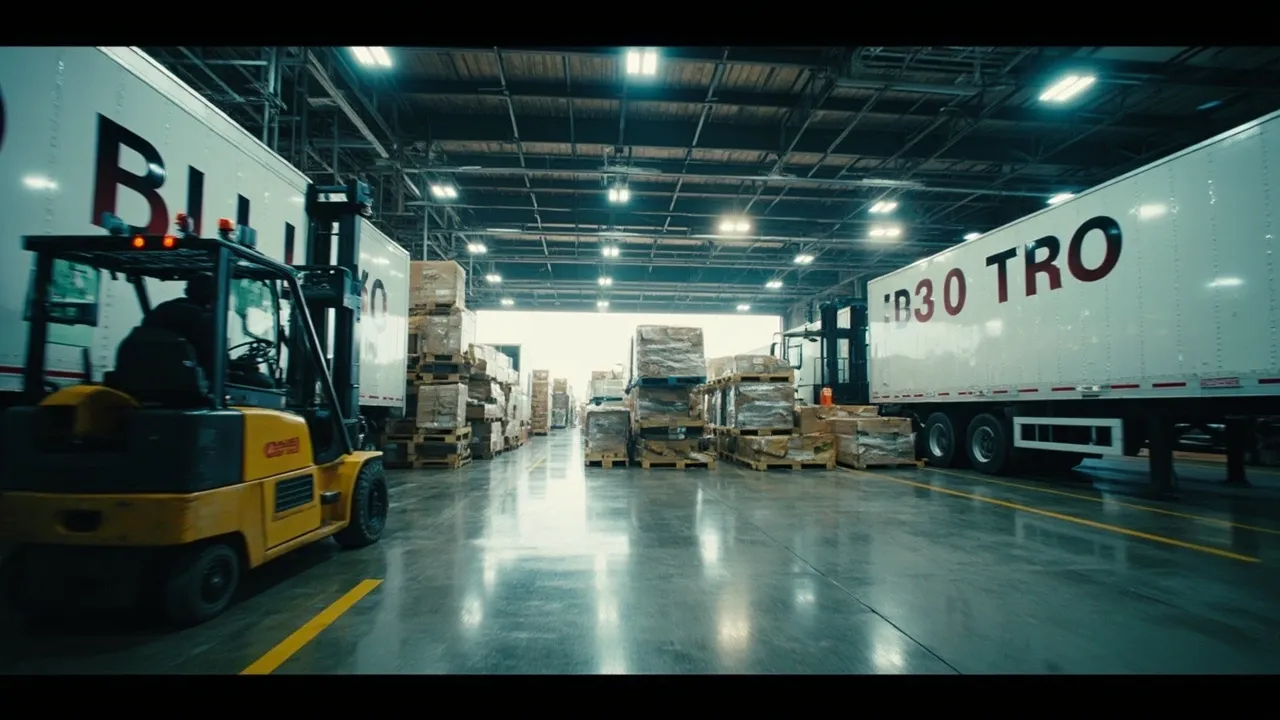
The 2026 Trucking Capacity Cliff: Why Driver Shortage and Regulatory Pressures Are Collapsing Truckload Supply


The U.S. trucking industry has spent the better part of five years absorbing shock after shock — pandemic surges, e-commerce spikes, fuel inflation, and tariff crossfire. But 2026 is different. This isn't a demand problem or a rate correction. ACT Research calls it a "structural transition year" — one defined by accelerating capacity contraction, tightening driver supply, and a regulatory confluence that is actively removing trucks from the road. The industry isn't cycling through a soft patch. It's hitting a cliff.
The Numbers Behind the Cliff
The American Trucking Associations puts the current U.S. driver shortage at approximately 82,000 drivers — a figure that has climbed steadily from the roughly 50,000 gap that defined the pre-pandemic era. Industry observers project the shortage will reach 160,000 by 2028 if current trends continue unchecked. That's not a temporary disruption. That's a structural deficit baked into the demographic pipeline.
The average truck driver age is 57 years old. For-hire truckload carriers are most exposed — their driver workforces skew older, and recruiting younger drivers into a profession with demanding schedules, significant upfront training costs, and increasingly hostile road conditions has never been harder.
Meanwhile, the Federal Motor Carrier Safety Administration's March 2026 final rule restricting non-domiciled CDL eligibility is now removing an estimated 40,000 drivers per year from the road as legacy licenses expire and only H-2A, H-2B, and E-2 visa holders remain eligible. The net loss: roughly 34,000 qualified drivers annually, on top of the existing 82,000 shortage.
Capacity Contraction Is Accelerating — Not Stabilizing
ACT Research's 2026 forecast is blunt: capacity contraction is accelerating, driver availability is tightening, and both spot and contract rate floors are resetting higher. Freight demand remains uneven — industrial segments are fragile, and housing-linked freight remains depressed — but the supply-side story is unambiguously negative.
The mechanism is simple math. Every quarter, more drivers exit than enter. Every regulatory cycle removes additional capacity. Equipment is aging and expensive to replace. Carriers with viable fleets are being more selective about which loads they accept at which rates. The era of excess capacity masking poor procurement strategy is over.
Spot rates for dry van and refrigerated freight are running more than 20% above year-ago levels — not because shippers are moving more freight, but because fewer trucks are available to move it. Flatbed tender rejection rates have approached 50% in recent months. The signal is clear: capacity isn't soft. It's structurally constrained.
The EPA 2027 Pre-Buy Is Already Starting
Regulatory pressure isn't limited to driver eligibility. The Environmental Protection Agency's 2027 NOx emissions standard — requiring a dramatic reduction from current allowable nitrogen oxide levels — is triggering a procurement cycle that will further tighten equipment supply and inflate costs.
The math is stark. Industry projections estimate that 2027-compliant engines will add $8,000 to $15,000 per truck in incremental equipment costs compared to current models. Some estimates place the full incremental cost, including emissions hardware and reliability risk on first-generation technology, closer to $25,000 per unit. Fleets are responding by accelerating purchases in 2026 to pull forward demand before the new standards take effect.
The result is a classic pre-buy cycle: demand for 2026-model trucks surges, new truck deliveries tighten as factories max out, and carriers who haven't yet refreshed their equipment face a choice between expensive new engines or operating aging, less-reliable trucks. Both paths carry cost. Either way, the effective number of roadworthy trucks available to shippers contracts further.
FleetOwner reporting confirms the dynamic is already underway. Industry experts expect a significant demand increase in 2026 as fleets accelerate procurement ahead of the regulatory cliff. Shippers who rely on carriers with older fleets may find those relationships strained — or broken — as maintenance costs climb and equipment downtime increases.
The Convergence Effect: Three Pressures, One Cliff
What's unique about 2026 isn't any single pressure — it's the convergence of multiple, simultaneous constraints:
- Driver supply: 82,000 shortage today, 160,000 projected by 2028
- Regulatory removal: 34,000 net drivers lost annually from FMCSA non-domiciled CDL restrictions
- Equipment cost spikes: EPA 2027 pre-buy inflating costs and tightening 2026 truck availability
These pressures don't just add — they compound. A carrier facing driver shortages can't simply buy more trucks. A fleet trying to navigate the pre-buy cycle can't recruit enough drivers to justify the equipment investment. Smaller carriers are being squeezed out entirely, reducing the competitive landscape that keeps rates in check for shippers.
J.B. Hunt's internal analysis, cited in company commentary on immigration policy impacts, suggests that if FMCSA enforcement achieves full impact — combined with ELP enforcement causing carrier exits — the industry could reach peak active truck utilization as early as Q4 2026. That is a fundamentally different industry than the one shippers have been operating in for the past two years.
What Shippers Must Do Now
The capacity cliff isn't a future scenario. It's a present condition that will worsen through the rest of 2026. Shippers who plan now will maintain service levels. Those who wait will pay a premium — both in rate and in missed deliveries.
1. Tender early. The practice of holding freight until the last minute to extract lower rates is becoming a liability. Tender acceptance rates are declining as carriers have more choice over which loads to accept. Submitting loads earlier gives carriers more scheduling certainty and makes your freight more attractive in the queue.
2. Build carrier relationships, not just rates. The carriers who have trucks and drivers are being selective. A competitive rate is table stakes. Shippers with strong carrier relationships — clear communication, consistent lanes, reliable detention pay — will get priority treatment over shippers treating carrier relationships as purely transactional.
3. Explore modal shift before you need it. LTL capacity is also tightening but has different constraints than truckload. Intermodal rail can absorb some truckload demand, particularly for longer-haul lanes with schedule flexibility. Building modal options into your procurement strategy before truckload capacity tightens further gives you optionality when you need it most.
4. Lock in contract coverage for Q3 now. The EPA pre-buy effect, combined with the driver shortage and regulatory capacity removal, suggests Q3 2026 will be more constrained than Q2. If your procurement cycle allows, securing coverage for Q3 before peak seasonal demand hits is significantly cheaper than chasing spot capacity in July.
5. Audit your carrier base for regulatory exposure. If your primary carriers rely on non-domiciled driver workforces in states like California, Texas, or Florida — where immigrant driver concentration is highest — your supply chain has regulatory concentration risk. Mapping that exposure and diversifying across compliant carriers reduces your vulnerability to a single enforcement action.
How CXTMS Helps You Navigate the Capacity Cliff
CXTMS gives logistics teams the visibility and planning tools to act on capacity constraints before they become operational crises. Our lane-level analytics integrate carrier density data, rejection rate trends, and regulatory disruption signals to help you:
- Identify tightening corridors before rate spikes hit your P&L
- Model rate scenarios that account for EPA-driven equipment cost increases alongside driver supply contraction
- Diversify carrier mix across compliant, stable-capacity providers
- Time your procurement to lock in coverage ahead of seasonal and regulatory inflection points
The 2026 trucking capacity cliff isn't a single event — it's a structural shift that will define the freight market for years. Shippers who treat it as a temporary soft patch will be caught flat-footed. Those who build capacity resilience into their logistics operations now will be the ones keeping freight moving when the cliff edge arrives.
Ready to build a capacity-resilient freight strategy? Request a CXTMS demo today and see how real-time intelligence gives your logistics team the edge in a tightening market.