Warehouse Automation Hits $90 Billion: What the 2026 Cobots Revolution Means for Shippers

Global organizations invested $21 billion in warehouse automation in 2023. By 2033, that figure is expected to exceed $90 billion—a staggering 329% increase in just ten years. For shippers still relying on manual processes, the message is clear: the warehouse of the future is being built right now, and it runs on collaborative robots.
The Numbers Behind the Boom
According to Modern Materials Handling's 2026 Automation Study, companies plan to spend an average of $1.6 million on materials handling equipment and solutions in 2026, up from $1.5 million in 2025. That steady climb reflects a broader industry truth: automation isn't a luxury anymore—it's an operational requirement.
The study, which surveyed over 120 professionals directly involved in purchasing decisions, found that AS/RS, conveyors, software, and robotics rank among the top picks for modernization. Facilities averaging 137,054 square feet and employing around 1,095 workers are actively rethinking how goods move from dock to door.
Yet full automation remains unevenly distributed. Labeling leads at 24% fully automated, followed by reporting at 18% and packaging at 13%. Picking—arguably the most labor-intensive warehouse function—sits at just 12% full automation. That gap represents both the challenge and the opportunity for cobots.
Why Cobots, Why Now?
The warehouse labor crisis isn't easing. The U.S. Bureau of Labor Statistics reports over 1.83 million warehouse workers as of mid-2025, up from just 628,000 in 2010. But despite those numbers, operators consistently report they can't find enough people.
As Modern Materials Handling reported, the average tenure for warehouse workers has collapsed from over 10 years in 2005 to less than two years today. Gallup surveys rank warehousing near the bottom for job quality. Workers leave for flexibility, advancement, and less physically demanding roles.
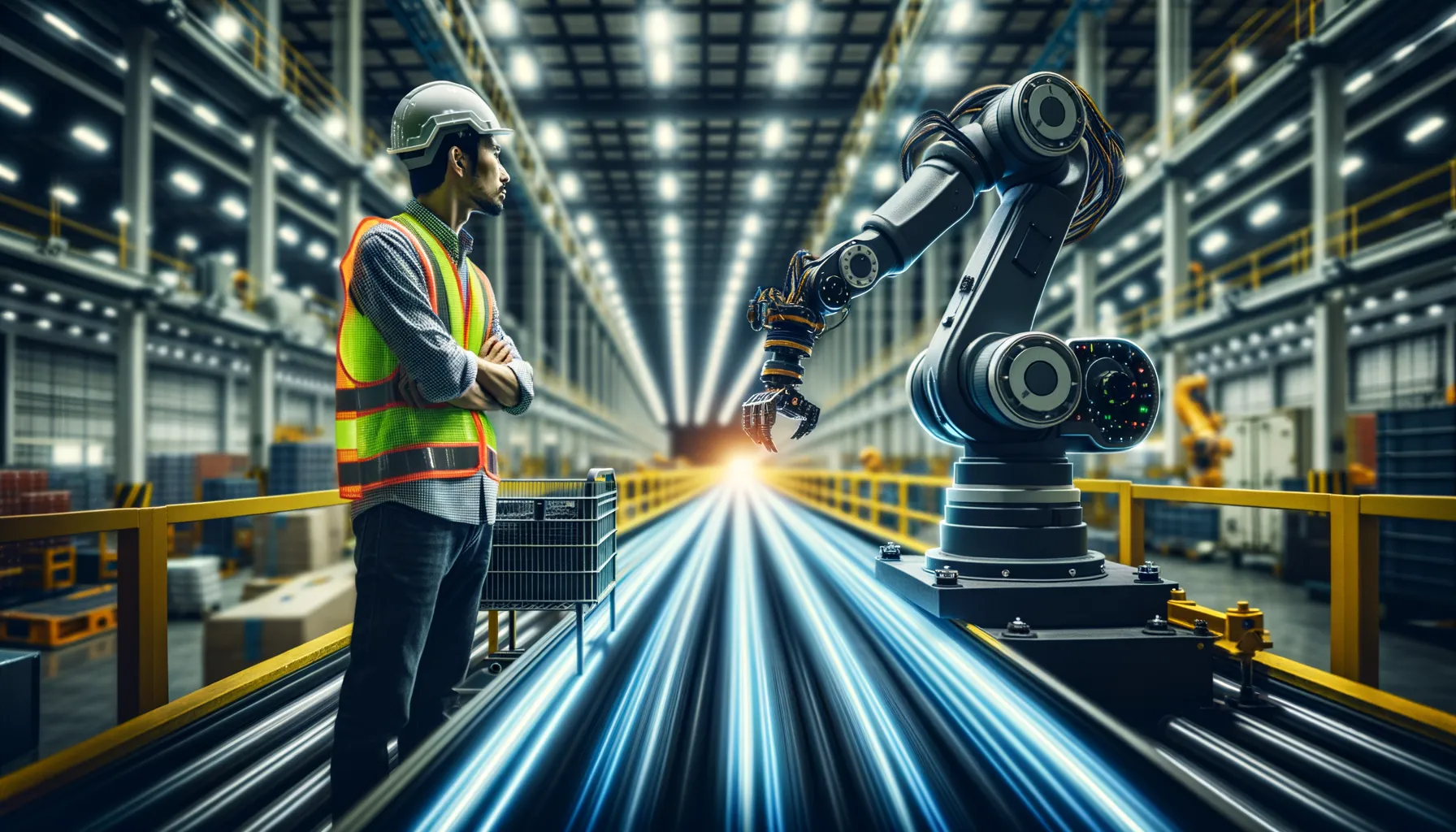
Collaborative robots—cobots—offer a different path. Unlike traditional industrial robots that operate behind safety cages in fully automated cells, cobots work alongside humans. They handle the repetitive, physically demanding tasks—case picking, palletizing, sorting—while workers shift to system oversight, exception handling, and quality control.
Research indicates cobots can improve warehouse productivity by up to 30% without requiring the massive infrastructure overhaul of full automation. That makes them especially attractive for mid-sized operations that can't justify a $50 million lights-out facility but desperately need to boost throughput.
The Hybrid Warehouse Model
The future isn't fully automated or fully manual—it's hybrid. The 2026 landscape features three tiers of warehouse technology working in concert:
Tier 1: Automated Storage and Retrieval (AS/RS) Goods-to-person systems that bring inventory directly to pickers. These deliver the biggest throughput gains but require significant capital investment and facility redesign.
Tier 2: Autonomous Mobile Robots (AMRs) and Cobots Flexible, deployable solutions that navigate existing warehouse layouts. AMRs transport goods between zones. Cobots assist with picking, packing, and palletizing. Nearly 50% of large warehouses are expected to deploy robotic systems by the end of 2025.
Tier 3: AI-Powered Software Warehouse management systems that orchestrate human and robot workflows, optimizing pick paths, balancing workloads, and predicting demand spikes before they create bottlenecks.
The magic happens when all three tiers communicate seamlessly. A WMS that knows both human and robot capacity can route orders to the fastest available resource—whether that's a cobot arm or a veteran picker who knows the layout by heart.
What This Means for Shippers
If you're a shipper, the warehouse automation wave affects you even if you never touch a robot. Here's how:
Faster fulfillment windows. Automated facilities process orders faster. Carrier pickup windows tighten. Your TMS needs to match that speed with real-time load planning and carrier coordination.
Shifting cost structures. Automated warehouses trade labor costs for capital expenditure and maintenance. Understanding your 3PL's automation profile helps you negotiate better rates and SLAs.
Integration demands. Inbound shipment data needs to flow directly into automated receiving systems. A TMS that can push ASN data, appointment scheduling, and real-time ETAs into warehouse systems eliminates the manual handoff that creates delays.
Resilience during disruptions. Facilities with cobots and AMRs can scale throughput without recruiting temporary labor. During peak seasons or supply chain disruptions, automated warehouses maintain capacity while manual operations scramble.
How CXTMS Bridges the Gap
CXTMS connects transportation management with warehouse operations to ensure inbound and outbound flows stay synchronized with automated fulfillment.
Dock scheduling integration ensures carriers arrive when automated receiving lines are ready—not when they're backed up processing the previous load. Real-time shipment visibility feeds warehouse planning systems with accurate ETAs, allowing automated sorting and putaway to pre-allocate resources before trucks arrive.
For outbound operations, CXTMS load optimization coordinates with automated packing and palletizing workflows. When your warehouse robots build pallets to spec, your TMS ensures the carrier and trailer type match those dimensions—eliminating costly repack operations at the dock.
The Human Element Isn't Going Away
Despite the $90 billion trajectory, warehouse workers aren't becoming obsolete. They're becoming more valuable. As Zebra Technologies' Andres Boullosa noted, frontline workers are "transitioning to higher-level work" as robots absorb the repetitive tasks.
The warehouse worker of 2026 monitors dashboards, manages exceptions, maintains robotic systems, and makes the judgment calls that algorithms can't. They're system operators, not box movers. And the companies that invest in upskilling their workforce alongside their automation will outperform those that treat it as a simple labor replacement.
The Bottom Line
Warehouse automation isn't slowing down—it's accelerating. The cobots revolution is making advanced fulfillment accessible to operations of all sizes, and the ripple effects reach every shipper, carrier, and logistics provider in the supply chain.
The question isn't whether to adapt. It's how fast you can integrate your transportation and warehouse operations into a unified, automated workflow.
Ready to synchronize your transportation management with automated fulfillment? Contact CXTMS for a demo and see how intelligent TMS integration keeps your supply chain moving at the speed of automation.