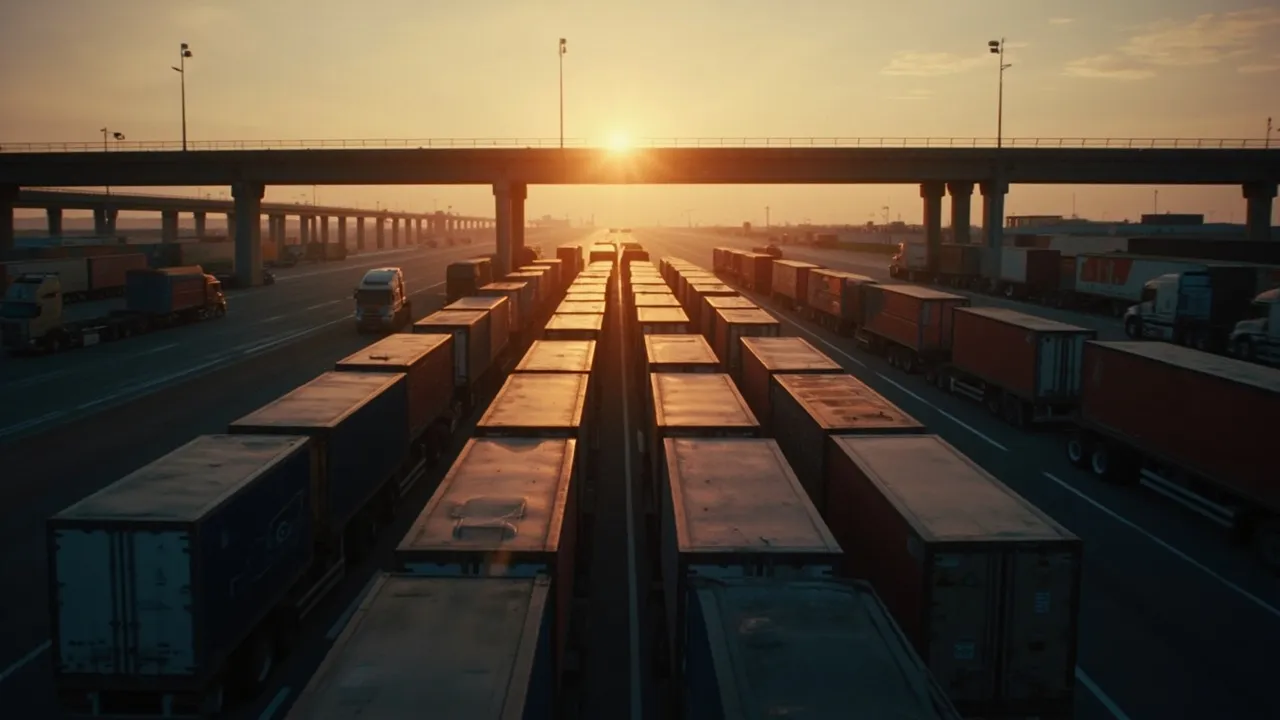
US-Mexico Laredo Corridor Freight Hits Record Volume: How the Busiest Land Port Needs Billions in Expansion to Keep Up

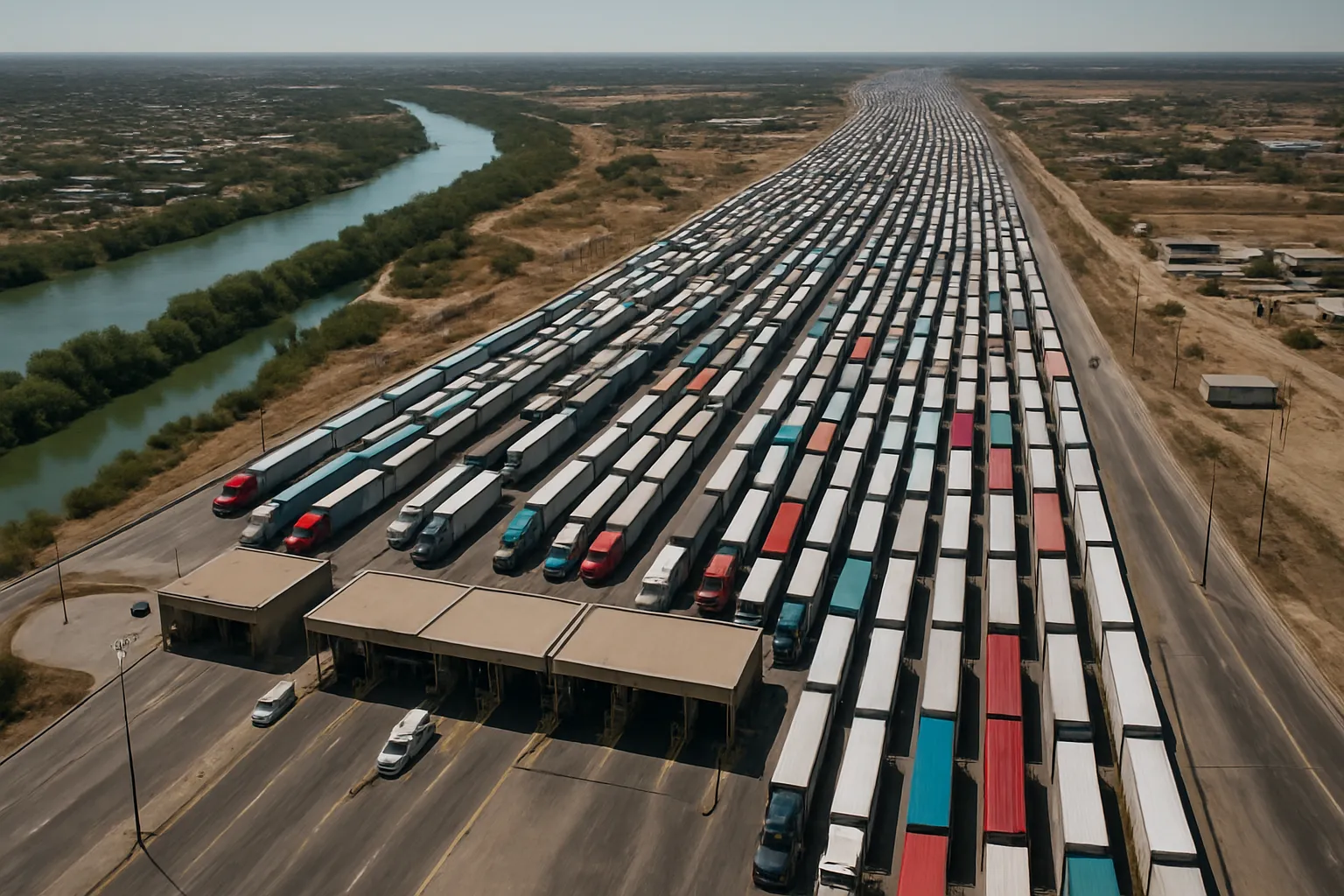
When over 14,000 freight trucks line up at a single border crossing every day — sometimes surging past 21,000 — you're not looking at a bottleneck. You're looking at a chokepoint that could define the future of North American trade. That's exactly the situation facing the Laredo-Nuevo Laredo corridor, and the numbers from 2025 make it impossible to ignore.
Port Laredo just recorded $353.94 billion in international trade for 2025, a $14.94 billion year-over-year increase that cements its position as the Western Hemisphere's leading land port. But record volume through aging infrastructure is a recipe for disruption — and shippers who depend on this corridor need to understand what's coming.
The Numbers Behind North America's Busiest Border Crossing
US-Mexico freight trade reached $872.8 billion in 2025, up 3.9% from 2024, according to the Bureau of Transportation Statistics (BTS). Mexico has widened its lead as the United States' largest land-trade partner by freight value, overtaking Canada, whose bilateral freight fell to $712.8 billion in the same period.
The mode split tells the real story of why Laredo matters so much. Trucks carry 73.6% of all US-Mexico freight by value, with rail accounting for another 12.7%. This isn't a diversified, multi-modal corridor — it's overwhelmingly a trucking corridor, and that concentration of volume through a handful of bridge crossings creates enormous vulnerability.
More than 97% of Port Laredo's trade is directly tied to Mexico. The corridor handles the highest-value manufactured goods flowing between the two countries: automotive parts, passenger vehicles, computers, cell phones, electronics, and commercial vehicles. When a single border crossing processes this volume of high-value, time-sensitive freight, any disruption — whether from weather, policy changes, or infrastructure failure — ripples across supply chains continent-wide.
Why Nearshoring Is Making the Bottleneck Worse
The nearshoring wave that accelerated after 2020 has fundamentally changed the demand equation at the border. As manufacturers shift production from Asia to Mexico to shorten supply chains and reduce tariff exposure, truck crossings at Laredo increased 28% between 2019 and 2024, according to U.S. Customs and Border Protection data.
That growth shows no signs of slowing. Mexico continues to attract industrial investment tied to nearshoring, and the composition of trade is evolving in ways that amplify border traffic. January 2026 data from the U.S. Census Bureau showed US exports to Mexico rising 13.1%, driven by capital goods, intermediate components, and machinery needed to expand Mexican production capacity. This creates a feedback loop: more factories in Mexico mean more components flowing south and more finished goods flowing north, all through the same constrained corridor.
The broader Laredo Customs District — which includes all ports under federal jurisdiction in the region — recorded $481.8 billion in total trade activity in 2025. That's nearly half a trillion dollars in goods funneling through a stretch of the Texas-Mexico border that was designed for a fraction of today's volume.
The Infrastructure Gap: Bridges, Inspection, and Capacity
The World Trade Bridge, which celebrated its 25th anniversary in 2025, remains the primary commercial crossing in the Laredo corridor. It was built to streamline cross-border commerce, and it does — but it was engineered for traffic volumes that the nearshoring era has blown past.
On an average day, 12,000 trailers circulate through Laredo's border crossings. On peak days, inspections handle up to 21,000 trucks, according to FreightWaves reporting on interviews with the interim bridge director. The result is hours-long wait times that erode the just-in-time delivery advantages that make cross-border manufacturing viable in the first place.
Infrastructure expansion is underway, but the scale of investment needed is enormous. City officials from both Laredo and Nuevo Laredo have been coordinating on major bridge expansion projects, including the Nuevo Laredo III crossing expansion, which received technical validation from Mexico's Ministry of Infrastructure, Communications, and Transportation (SICT) in late 2025. The expansion aims to add dedicated commercial lanes, modernize customs processing, and improve intermodal connectivity between truck and rail.
But bridge capacity is only one piece of the puzzle. Laredo's competitive advantage in cold chain logistics — with three refrigerated inspection facilities across its two commercial bridges — also needs expansion. These temperature-controlled docks allow trucks carrying pharmaceuticals, fresh produce, and perishable goods to undergo inspection without breaking the cold chain. As agricultural and pharmaceutical trade grows, these specialized facilities face their own capacity constraints.
Carrier Financial Pressure: Record Volume, Squeezed Margins
For carriers operating in the Laredo corridor, record trade volumes haven't translated into proportional rate increases. The combination of strong export flows and competitive carrier capacity has kept rates relatively stable even as volume climbs. This creates a familiar squeeze: carriers absorb higher fuel costs, longer border wait times, and increased compliance complexity without meaningful rate relief.
The wait time problem is particularly acute. Every hour a truck sits in a customs queue is an hour of driver time, fuel consumption, and lost utilization. For carriers running dedicated cross-border routes, border delays can turn a profitable lane into a margin-negative one — especially when shippers expect the same transit times they negotiated when the corridor was less congested.
What Smart Shippers Are Doing Now
The shippers who will navigate this corridor successfully over the next several years are the ones planning for congestion today rather than reacting to it when it arrives. Several strategies are emerging:
Route diversification. While Laredo dominates US-Mexico truck freight, alternative crossings at Eagle Pass, El Paso, and Pharr offer overflow capacity. Shippers using CXTMS platforms can model transit time and cost scenarios across multiple crossings to identify optimal routing as congestion patterns shift.
Customs pre-clearance optimization. Reducing dwell time at the border starts with documentation. Shippers who invest in electronic customs pre-clearance, C-TPAT certification, and advanced manifest filing can move through inspection faster and more predictably than those relying on manual processes.
Nearshoring corridor planning. As new manufacturing capacity comes online in Monterrey, Saltillo, and other northern Mexico industrial centers, the freight patterns feeding into Laredo will shift. Proactive shippers are mapping their tier-1 and tier-2 supplier locations against border crossing capacity to identify potential bottlenecks before they materialize.
Intermodal integration. Rail connectivity improvements in the Laredo corridor offer an opportunity to shift some volume off the highway and onto rail for the long-haul segments of cross-border moves. This won't replace truck-based just-in-time flows, but it can relieve pressure on bridge crossings for bulk and less time-sensitive cargo.
The Corridor That Can't Afford to Fail
Port Laredo isn't just a border crossing — it's the central nervous system of North American manufacturing. When 73.6% of US-Mexico trade by value moves by truck and more than 97% of Laredo's trade is tied to a single bilateral relationship, the corridor's performance directly determines whether nearshoring delivers on its promise or collapses under its own weight.
The infrastructure investments now in planning and early construction will take years to deliver full capacity relief. In the meantime, shippers who treat the Laredo corridor as a strategic planning variable — not just a route on a map — will gain measurable advantages in cost, reliability, and supply chain resilience.
Planning cross-border freight through congested corridors? Request a CXTMS demo to see how our platform optimizes US-Mexico routing, customs documentation, and multi-crossing scenario planning to keep your supply chain moving even when the border backs up.