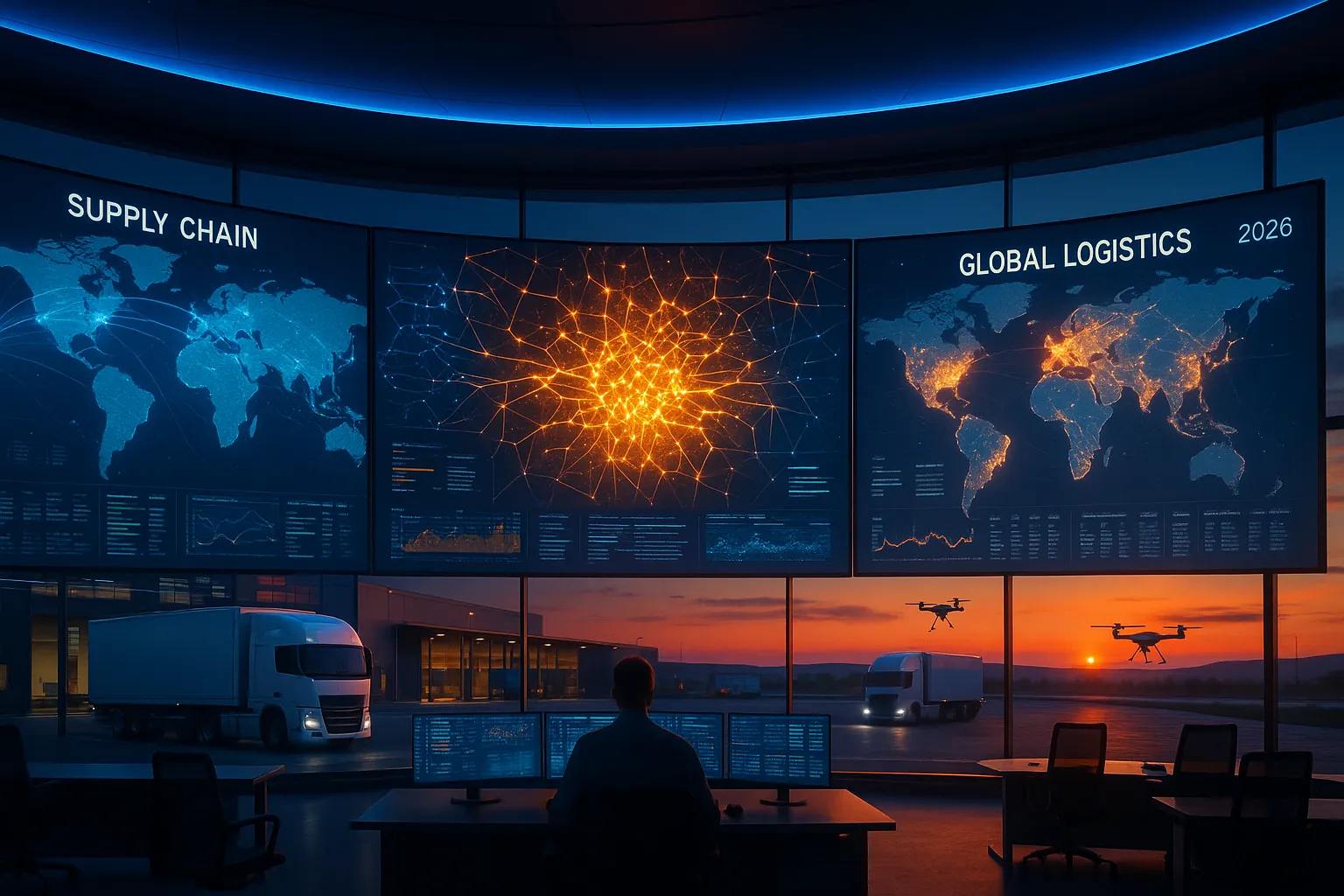
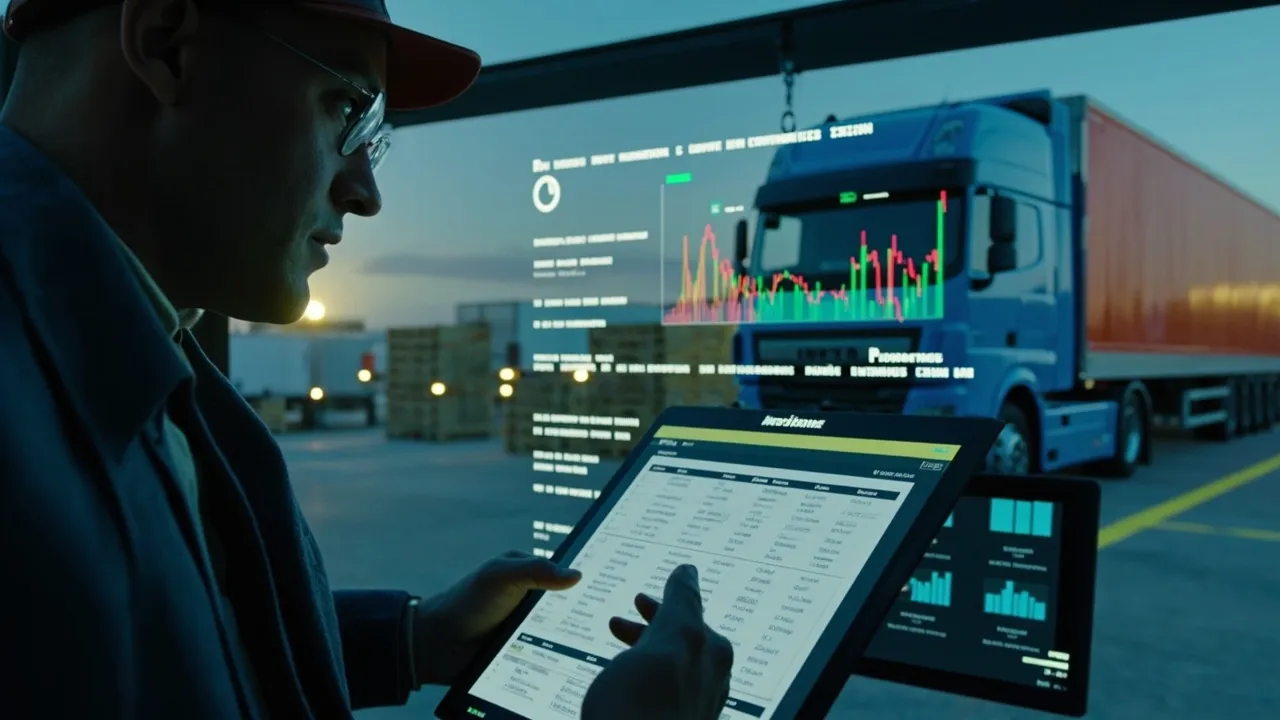
Self-Healing Supply Chains Meet Autonomous Operations: How AI Agents Are Running Supply Chains Without Human Intervention in 2026

The logistics landscape is undergoing a seismic shift in 2026 as self-healing supply chains powered by autonomous AI agents move from concept to reality. What was once science fiction is now becoming standard practice, with leading companies achieving remarkable productivity gains while dramatically reducing human intervention in day-to-day operations.
The Dawn of Self-Healing Supply Chains
In 2026, supply chains are evolving from reactive systems that respond to disruptions after they occur to predictive networks that anticipate and resolve problems before they impact customers. According to industry experts, "We're seeing supply chains becoming a little bit more in self-correcting, where AI predicts disruptions, optimizes the flows, and hopefully automates the planning," noted Abe Eshkenazi, CEO of the Association for Supply Chain Management.
This transformation represents a fundamental shift in how supply chains operate. Instead of human teams constantly monitoring for issues and implementing manual interventions, AI-powered systems now continuously monitor network performance, detect anomalies, and implement corrective actions in real-time. The result is supply chains that can heal themselves, much like biological systems respond to threats and maintain equilibrium.
Autonomous AI Agents: The Brains Behind Self-Healing
The key differentiator in today's most advanced supply chains is the emergence of truly autonomous AI agents. These aren't just automation tools that follow predefined rules—they're intelligent systems that can understand context, make decisions, and learn from experience.
Leading logistics companies are already deploying fleets of AI agents that operate independently while coordinating with each other to maintain optimal network performance. One major carrier reports operating a fleet of 30+ AI agents that have performed millions of tasks, delivering faster speed-to-market, better service, and more strategic support while freeing up human workers to focus on high-value activities.
The scale of these operations is staggering. Companies managing over 37 million shipments annually—more than 100,000 loads per day—are now seeing their AI agents handle everything from route optimization to exception resolution without human intervention.
Hard Data: The Impact of Autonomous Operations
The business case for autonomous supply chains is compelling and backed by concrete results:
- 35% Productivity Gains: Companies implementing autonomous AI agents have achieved over 35% productivity gains since 2023, delivering more value while decoupling headcount growth from volume growth
- $2.6-4.4 Trillion Annual Value: McKinsey estimates that AI agents could add $2.6 to $4.4 trillion in annual value across various business applications
- 60% Disruption Resolution: Gartner predicts that 60% of supply chain disruptions will be resolved without human intervention by 2031
- 50% AI Agent Adoption: By 2030, 50% of cross-functional supply chain management solutions will use intelligent agents to autonomously execute decisions
- 15% Autonomous Decisions: Gartner projects that by 2028, at least 15% of work decisions will be made autonomously by AI agents, up from virtually zero in 2024
These numbers aren't just theoretical—they're being realized by companies that have moved beyond experimentation to full-scale deployment of autonomous supply chain systems.
How Self-Healing Supply Chains Operate
The magic of self-healing supply chains lies in their ability to operate continuously without human oversight. Here's how the process works:
1. Continuous Monitoring and Anomaly Detection
AI agents constantly monitor every aspect of the supply chain—from inventory levels and transportation costs to supplier performance and customer demand patterns. Advanced machine learning algorithms compare current performance against historical baselines and predictive models, instantly identifying deviations that could indicate potential problems.
2. Predictive Analytics and Early Warning
Unlike traditional systems that react to visible problems, self-healing supply chains use predictive analytics to forecast issues before they materialize. By analyzing vast amounts of data—weather patterns, geopolitical events, market fluctuations, and operational metrics—these systems can anticipate disruptions and implement preemptive measures.
3. Autonomous Decision-Making
When anomalies are detected or predictions indicate potential problems, AI agents don't just flag issues—they take action. They can reroute shipments, adjust inventory levels, reorder materials, or redirect resources without waiting for human approval. These decisions are made in real-time, often within seconds of an issue being identified.
4. Learning and Adaptation
The most sophisticated systems don't just execute decisions—they learn from the outcomes. Each action taken by an AI agent contributes to a growing knowledge base that improves future decision-making. The systems continuously refine their algorithms based on results, becoming more accurate and effective over time.
Implementation Challenges and Considerations
While the benefits are clear, implementing self-healing supply chains isn't without challenges:
Governance and Control
Establishing proper governance frameworks is crucial. Companies need protocols for handling situations where AI agents might make suboptimal decisions. This includes defining when human intervention is necessary and establishing processes for reviewing AI-driven decisions.
Data Quality and Integration
AI systems depend on high-quality, comprehensive data. Companies must ensure they have clean, well-structured data across their entire supply chain ecosystem. This often requires significant investment in data infrastructure and integration capabilities.
Workforce Transformation
The shift to autonomous operations requires a fundamental transformation of the workforce. Rather than being replaced, human workers are being elevated to roles that involve higher-level oversight, strategic planning, and system improvement. Companies are investing heavily in training programs to help workers develop the skills needed to collaborate effectively with AI systems.
Change Management
Organizational change management is critical to successful implementation. Companies need to address resistance to change, provide clear communication about the benefits of autonomous systems, and demonstrate early wins to build momentum.
The Future Trajectory
The evolution toward fully autonomous supply chains is accelerating. Several key trends are shaping the future:
Increased Complexity Handling
As AI systems become more sophisticated, they're handling increasingly complex supply chain scenarios. Multi-optimization problems that once required human judgment are now being solved autonomously, considering multiple variables simultaneously.
Cross-Enterprise Collaboration
We're seeing the emergence of AI agents that can collaborate across organizational boundaries. These systems can work with suppliers, customers, and partners to optimize the entire extended supply chain, not just individual company operations.
Enhanced Predictive Capabilities
Predictive analytics is becoming more accurate and far-reaching. Systems that once forecasted a few days ahead are now predicting weeks or months into the future, with greater accuracy and confidence levels.
Integration with Physical Systems
The line between digital and physical operations is blurring. AI agents are increasingly integrated with physical systems like autonomous vehicles, robotic warehouses, and smart facilities, creating truly end-to-end autonomous supply chains.
Why Self-Healing Matters in 2026
In today's volatile global environment, the ability to self-heal is no longer a luxury—it's a necessity. Companies face unprecedented challenges including:
- Geopolitical Uncertainty: Trade tensions, tariffs, and political instability create constant disruption
- Economic Volatility: Fluctuating demand, inflation, and changing consumer behavior require rapid adaptation
- Environmental Factors: Climate change, natural disasters, and sustainability concerns impact supply chains
- Resource Constraints: Labor shortages, material limitations, and capacity constraints challenge traditional operations
Self-healing supply chains provide the resilience and agility needed to navigate these challenges while maintaining operational excellence and cost efficiency.
Getting Started with Autonomous Operations
For companies looking to begin their journey toward autonomous supply chains, several steps can accelerate progress:
- Assess Current Capabilities: Evaluate existing systems, data quality, and workforce readiness
- Identify High-Value Use Cases: Start with areas where autonomous operations can deliver immediate, measurable benefits
- Build Foundational Infrastructure: Invest in data integration, API connectivity, and monitoring systems
- Implement Phased Rollout: Begin with limited deployments and gradually expand scope
- Establish Governance Frameworks: Define decision-making protocols and oversight mechanisms
- Invest in Workforce Development: Train employees to work effectively with AI systems
The companies that embrace self-healing supply chains and autonomous operations now will have a significant competitive advantage in the years ahead. As the technology continues to evolve and mature, the gap between early adopters and laggards will only widen.
Conclusion
The future of supply chains is autonomous. Self-healing systems powered by AI agents are no longer theoretical concepts—they're operational realities delivering tangible business value. Companies that have made the transition are achieving remarkable results, from 35% productivity gains to dramatic improvements in service levels and customer satisfaction.
As we move through 2026 and beyond, the question for supply chain leaders isn't whether to adopt autonomous operations—it's how quickly they can implement these technologies to stay competitive in an increasingly complex and volatile business environment. The companies that embrace this transformation will be the ones that thrive in the new era of supply chain management.
Ready to explore how autonomous AI agents can transform your supply chain operations? Request a CXTMS demo to see how self-healing supply chain technology can deliver measurable results for your business.