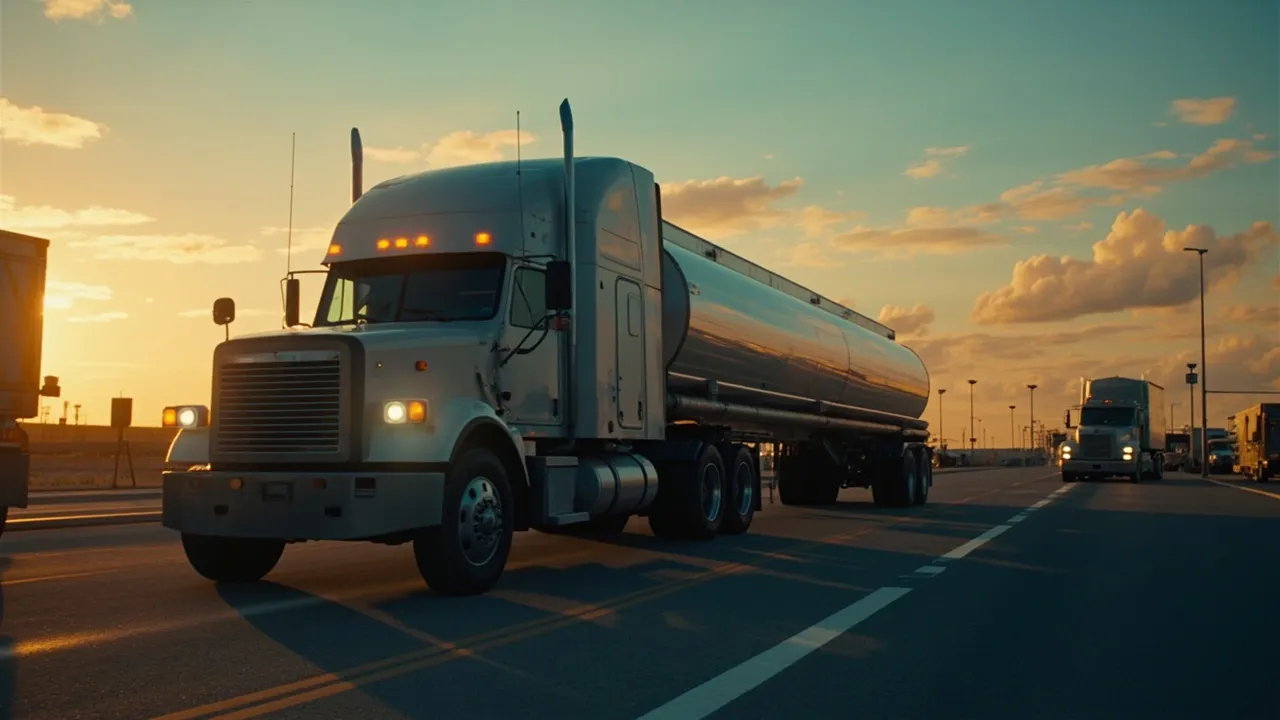
LNG Trucking Gets a Second Look: Why $5 Diesel Is Driving Long-Haul Fleets Back to Natural Gas

Diesel just hit a price point that changes the math for every fleet manager in America. With U.S. diesel prices surging past $5 per gallon for the first time since 2022—driven by geopolitical disruptions in the Strait of Hormuz and tightening global oil supplies—long-haul fleets are revisiting an alternative fuel they once dismissed: liquefied natural gas.
This isn't the natural gas trucking story of 2014, when underpowered engines and sparse fueling infrastructure killed fleet interest before it could gain traction. In 2026, a convergence of new engine technology, expanding refueling networks, and brutal diesel economics is creating a genuine inflection point for LNG in Class 8 long-haul operations.
The $5 Diesel Breaking Point
Fuel represents approximately 21% of total cost per mile for the average trucking operation, according to the American Trucking Research Institute. When diesel was sitting at $3.50 per gallon, the economic case for switching to natural gas was marginal at best. At $5 per gallon, the calculus shifts dramatically.
Small and mid-sized carriers are feeling the squeeze most acutely. One Chicago-based fleet operator reported the diesel spike is costing an additional $750 per week on just 100 gallons of daily consumption. Multiply that across a 50-truck fleet running 500 gallons daily, and you're looking at nearly $200,000 in annualized additional fuel costs.
Natural gas, by contrast, has remained relatively price-stable. LNG typically trades at a 30–40% discount to diesel on a diesel-gallon equivalent (DGE) basis. At $5 diesel, that spread translates to savings of $1.50–$2.00 per DGE—enough to fundamentally alter the total cost of ownership equation for long-haul tractors.
LNG vs. CNG vs. RNG: Which Gas Fits Which Fleet?
Not all natural gas is created equal, and the right variant depends entirely on fleet profile and operating radius:
-
Compressed Natural Gas (CNG): Best suited for regional and return-to-base operations under 300 miles. Lower infrastructure cost per station, but tanks are bulky and limit payload capacity. The U.S. currently has 1,385 CNG stations in operation.
-
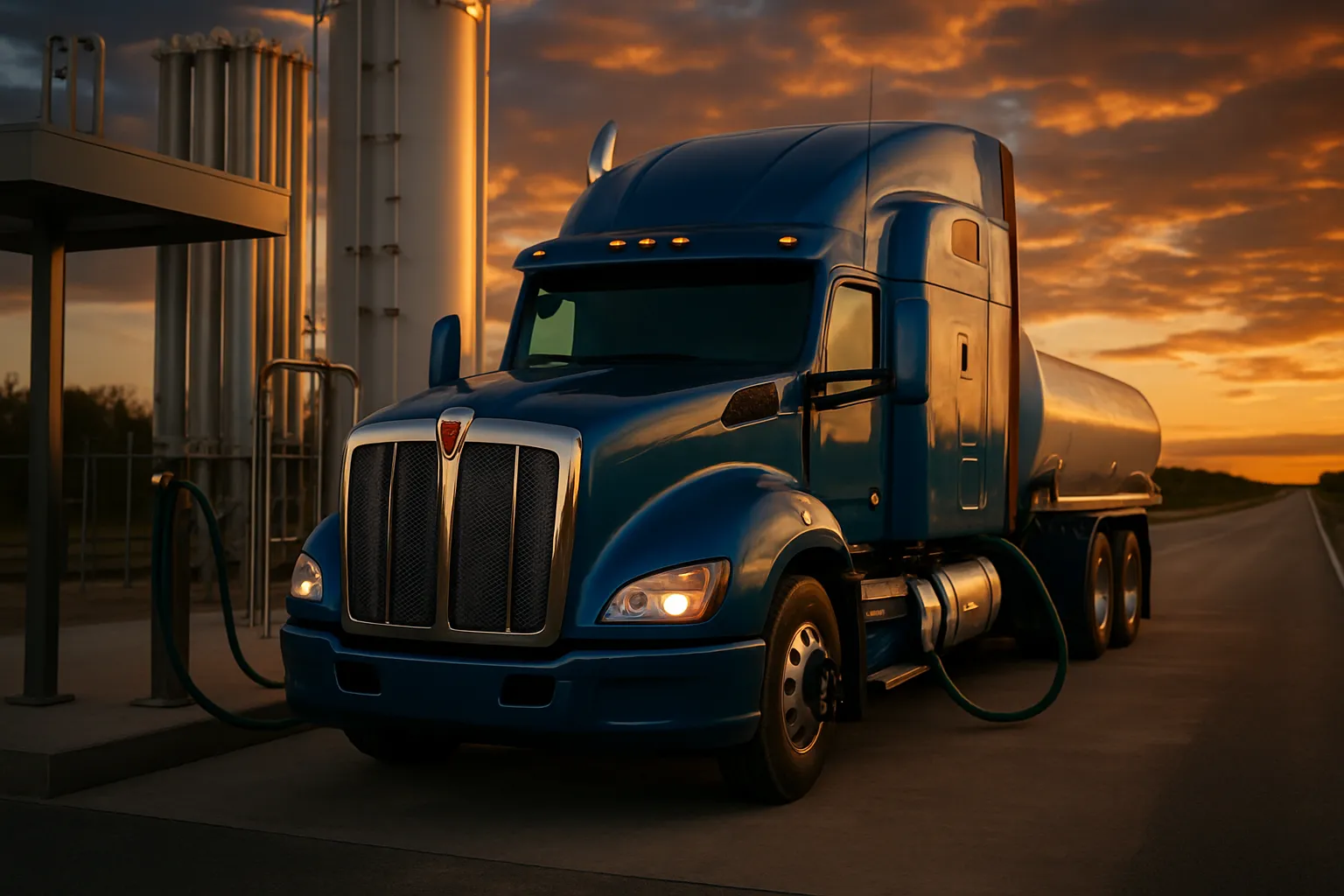
Liquefied Natural Gas (LNG): The long-haul contender. LNG's higher energy density allows 500–700 mile ranges comparable to diesel. More expensive fueling infrastructure, but critical for over-the-road applications. There are currently 81 LNG stations nationwide, with expansion planned along major freight corridors.
-
Renewable Natural Gas (RNG): Biomethane captured from landfills, dairy operations, and wastewater treatment plants. When used as fuel, RNG can achieve up to 300% lower greenhouse gas emissions compared to diesel on a lifecycle basis. Some dairy fleets are literally fueling trucks with gas generated from their own herds.
For long-haul fleets evaluating the diesel-to-gas transition, LNG is the primary candidate. CNG works for metro distribution; RNG is the sustainability play that can be blended with either.
The Cummins X15N Changes Everything
The single biggest reason LNG trucking deserves a second look in 2026 is the Cummins X15N engine. Previous natural gas engines—including Cummins' own ISX12N—lacked the power and torque needed for heavy-duty long-haul applications. The X15N solves that problem definitively.
Key specifications that matter for fleet operators:
- 500 horsepower and 1,850 lb-ft of torque—matching diesel performance
- 10% better fuel economy than the previous-generation ISX12N
- Several hundred pounds lighter than its predecessor, translating directly to additional payload capacity
- No diesel exhaust fluid (DEF) required, eliminating a recurring consumable cost
- 1.5 million miles of U.S. testing plus 3.5 billion miles of architectural validation in global markets
The performance gap that killed natural gas trucking a decade ago no longer exists. As one Cummins engineer noted after testing at Colorado's 12,000-foot Loveland Pass: "The X15N performs like a 15-liter diesel."
Fleet adoption is accelerating. Over 40 leading fleets have placed orders for X15N-equipped trucks, with roughly 30% of those orders coming from fleets that have never used natural gas before. Major retailers including Walmart are already running X15N-powered trucks in their operations. Industry analysts are predicting up to 20% market penetration for natural gas engines in the Class 8 segment.
Refueling Infrastructure: The Real Bottleneck
Infrastructure remains the honest constraint. With 81 LNG stations versus approximately 150,000 diesel stations nationwide, the coverage gap is undeniable. However, the network is expanding:
According to The Transport Project's Q4 2025 NGV Refueling Infrastructure Report, nearly 1,500 natural gas fueling stations (CNG and LNG combined) are now operational across the United States and Canada, with year-over-year growth continuing. New stations are being strategically positioned along high-volume freight corridors—I-10, I-40, I-80, and I-95—where long-haul volume justifies the infrastructure investment.
The compressed natural gas market is projected to grow from $225 billion in 2026 to $554 billion by 2034, representing an 11.9% compound annual growth rate. That kind of market trajectory attracts infrastructure capital.
For fleet operators, the practical approach is corridor-based: identify your highest-volume lanes, verify LNG station coverage, and pilot natural gas tractors on those specific routes before committing to a fleet-wide transition.
Why Battery Electric Isn't Ready for 500+ Mile Routes
The elephant in the room is battery electric trucks. While BEVs are making genuine progress in urban delivery and regional drayage, the physics of long-haul remain challenging. A Class 8 battery electric tractor capable of 500+ mile range would require battery packs so heavy they would significantly reduce payload capacity—a non-starter for most freight applications.
Charging infrastructure for heavy-duty trucks is even sparser than LNG stations, and megawatt-level charging times still measured in hours can't match the 15-minute fill time of an LNG tank. For routes exceeding 300 miles, LNG fills a critical gap in the alternative fuel landscape that batteries simply cannot address today.
This doesn't make LNG a competitor to electrification—it makes it a complement. Fleets can electrify urban and regional operations while deploying LNG on long-haul corridors, creating a diversified fuel strategy that reduces diesel dependency across the entire operation.
The TCO Calculation Fleet Managers Need to Run
The total cost of ownership comparison between LNG and diesel tractors over a five-year lifecycle looks increasingly favorable for natural gas:
- Fuel savings: At current spreads, LNG saves $0.50–$0.70 per mile on fuel alone
- DEF elimination: Saves approximately $1,200–$2,400 annually per truck
- Maintenance: Natural gas engines run cleaner, potentially extending oil change intervals and reducing aftertreatment system maintenance
- Upfront premium: LNG tractors cost $30,000–$50,000 more than diesel equivalents
- Breakeven: At $5 diesel and current natural gas prices, payback on the upfront premium can occur within 18–24 months for high-mileage operations
The wild card is residual value. As natural gas adoption grows and fueling infrastructure expands, resale values for LNG tractors should strengthen—but the secondary market remains thin compared to diesel.
How CXTMS Supports Multi-Fuel Fleet Strategy
Transitioning to a multi-fuel fleet creates complexity that manual planning can't handle. Which trucks run which corridors? Where are the fueling stops? How does fuel cost variance affect lane profitability?
CXTMS route planning and cost modeling tools help fleet operators map LNG station coverage against their actual freight lanes, model fuel cost scenarios across diesel, LNG, and CNG price curves, and optimize truck assignments based on fuel type and route compatibility. As fleets diversify their powertrains, having a TMS that understands multi-fuel economics becomes a competitive advantage.
The $5 diesel moment won't last forever—but the strategic case for fuel diversification will. Request a CXTMS demo to see how our platform helps fleets model the transition from single-fuel dependency to optimized multi-fuel operations.