FedEx Deploys Berkshire Grey's Scoop System: How Autonomous Trailer Unloading Is Solving Parcel Logistics' Most Dangerous Job


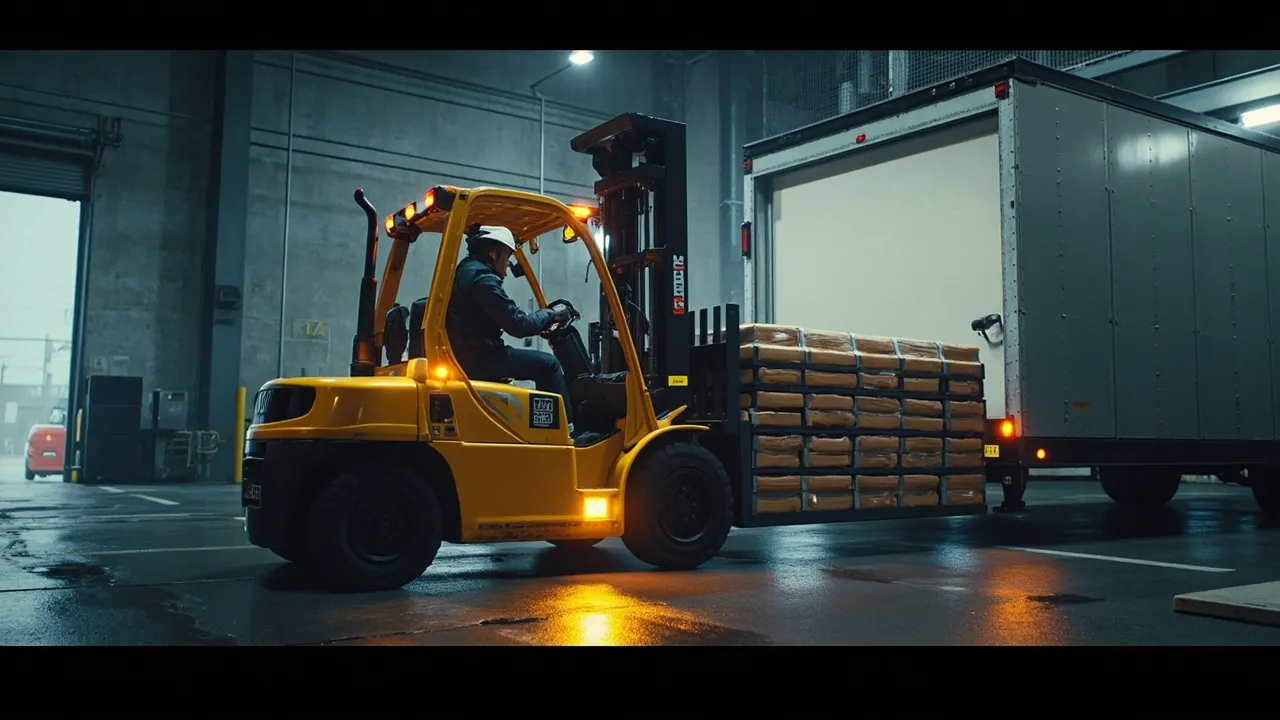
Every night, across thousands of parcel hubs worldwide, workers climb inside trailers stacked floor-to-ceiling with packages of every conceivable size and weight. They work in extreme temperatures — sweltering in summer, freezing in winter — manually lifting and sliding parcels onto conveyor belts at rates that push the human body to its limits. It is, by nearly every measure, the most physically demanding and injury-prone job in logistics.
That's about to change. In February 2026, FedEx announced the deployment of Berkshire Grey's Scoop system — a fully autonomous robotic trailer unloader designed to eliminate the ergonomic nightmare of manual trailer unloading while maintaining the throughput that parcel networks demand.
The Last Manual Frontier in Parcel Hubs
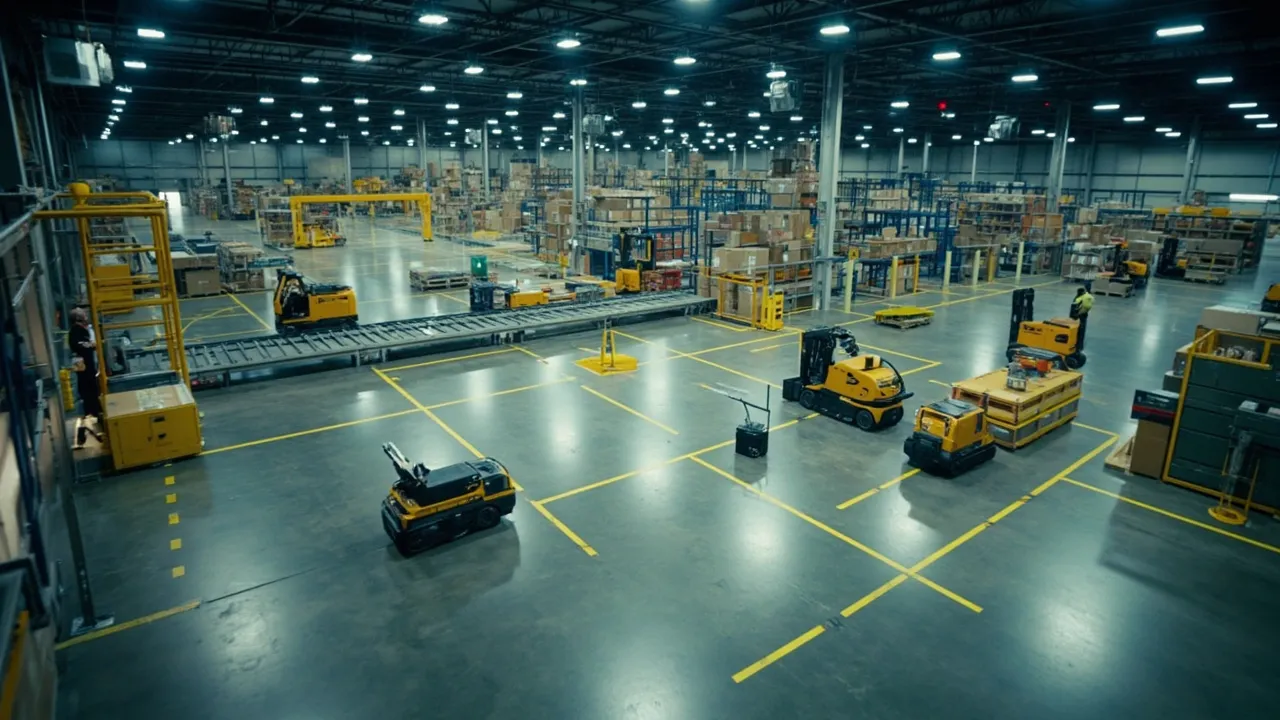
Warehouse and distribution operations have seen tremendous automation advances in recent years. Sortation systems, robotic pick-and-place arms, and autonomous mobile robots have transformed how packages move through facilities. But one critical chokepoint has stubbornly resisted automation: the trailer itself.
The numbers tell a sobering story. According to Bureau of Labor Statistics data, loading dock operations account for roughly 25% of all warehouse accidents. Between 2016 and 2020, BLS reported a total of 99,860 warehouse injuries nationwide, with musculoskeletal disorders from repetitive lifting among the most common. Warehouse workers experience injuries requiring medical attention at a rate of 8.8 cases per 100 full-time equivalent workers — the equivalent of one injury for every 11 workers.
Trailer unloading sits at the epicenter of this injury crisis. Workers inside trailers face confined spaces, unstable package walls, repetitive bending and lifting motions, and no climate control. Annual turnover in these roles routinely exceeds 100%, creating a perpetual hiring and training cycle that drains operational budgets.
How Berkshire Grey's Scoop System Works
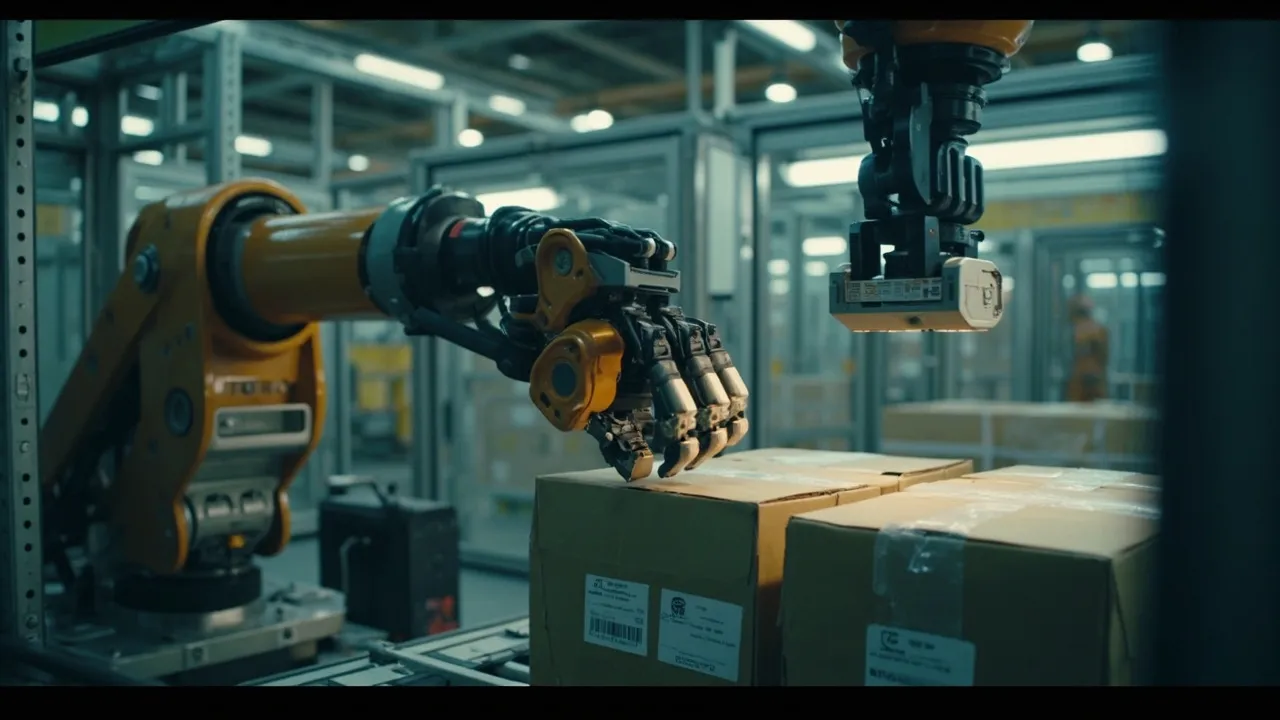
The Scoop system represents a fundamentally different approach to trailer unloading. Rather than trying to replicate human movements with a humanoid robot, Berkshire Grey engineered a purpose-built autonomous system that enters the trailer, recognizes and handles all package types, and maintains consistent inbound flow as it systematically empties the trailer from front to back.
According to FedEx EVP of Planning, Engineering and Transformation Kawal Preet, the system equips the workforce "with cutting-edge technology, ultimately enhancing safety and improving operational efficiency — all while maintaining the high service standards our customers expect."
What makes Scoop notable is its versatility. Parcel trailers contain an unpredictable mix of package sizes, weights, shapes, and materials — from small polybags to heavy, irregularly shaped boxes. Traditional automation struggles with this variability. Scoop's AI-driven recognition system handles the full spectrum of package types autonomously, then exits the trailer on its own when unloading is complete.
FedEx is currently in the final stage of piloting the technology at one facility with multiple unloaders, with plans to have the first production units operational later in 2026. VP of Advanced Technology and Innovation O.P. Skaaksrud confirmed that additional facilities are being targeted for deployment this year.
A Broader Robotics Wave Is Building
FedEx's Scoop deployment doesn't exist in isolation. It's part of an accelerating wave of warehouse robotics adoption across the logistics industry.
A 2025 study conducted by MHI, Peerless Research Group and The Robotics Group found that 48% of participating organizations were using robots in their plants and warehouses — up from just 23% three years earlier. The warehouse robotics market itself is projected to grow from $9.33 billion in 2025 to $24.55 billion by 2031, reflecting a 17.5% CAGR, according to Mordor Intelligence.
The competitive landscape confirms this momentum. UPS has deployed automation across 127 buildings. Amazon continues expanding its robotic fulfillment capabilities. Walmart recently opened a robotics-equipped distribution center in Louisiana. The message is clear: high-volume logistics operations that don't invest in automation risk falling behind on both cost efficiency and worker safety.
What This Means for 3PLs and Regional Carriers
While FedEx and UPS have the capital to pursue custom robotics partnerships, the implications extend far beyond the integrators. The Berkshire Grey relationship — which started with small-package sortation in 2021, expanded to broader AI robotic capabilities in 2022, and now encompasses trailer unloading — demonstrates how robotics deployments evolve through staged adoption.
For 3PLs and regional carriers evaluating similar automation, the key considerations include:
- Start with the highest-injury, highest-turnover tasks. Trailer unloading consistently tops both lists, making it a natural first target for robotics ROI.
- Staged deployment reduces risk. FedEx's multi-year pilot-to-production approach with Berkshire Grey offers a model for deliberate scaling.
- Robotics-as-a-service models are emerging. Not every operation needs to purchase systems outright — subscription and per-unit pricing models are making automation accessible to mid-market operators.
- Integration matters more than hardware. The real value comes from connecting robotic unloading data to broader facility management, WMS, and transportation management systems.
How CXTMS Helps Identify Automation Opportunities
Deploying robotics effectively requires data — specifically, granular visibility into where operational bottlenecks, injury risks, and labor costs concentrate across your logistics network.
CXTMS provides the parcel handling analytics and facility performance dashboards that help shippers and logistics operators identify which nodes in their network are prime candidates for automation investment. By tracking throughput rates, dwell times, handling costs per unit, and facility-level KPIs across your transportation network, CXTMS surfaces the data-driven insights that justify automation business cases.
Whether you're a parcel carrier evaluating trailer unloading robots or a shipper benchmarking facility performance across your 3PL partners, visibility into operational metrics is the foundation of every smart automation decision.
Ready to see where automation can transform your logistics operations? Request a CXTMS demo and discover how real-time logistics intelligence drives better decisions — from the dock door to the final mile.