The $497 Billion Cold Chain Boom: How IoT and AI Are Eliminating Spoilage Across Global Supply Chains

The global cold chain logistics market has crossed a tipping point. Valued at $341 billion in 2024 and growing at a 15.3% CAGR, the industry is projected to reach nearly $1.36 trillion by 2034, according to GM Insights. In 2026, that trajectory puts the market at approximately $497 billion—and the forces driving this explosion aren't slowing down.
The Spoilage Crisis That Won't Go Away
Here's the uncomfortable truth: roughly 30% of all food produced for human consumption is lost or wasted before it reaches a plate. A significant portion of that waste happens in transit, where temperature excursions silently destroy perishable goods. According to Food Logistics, even a single undetected temperature spike inside a refrigerated container can cascade across an entire shipment, reducing shelf life and forcing disposal of fresh produce, meat, and dairy.
The cumulative cost is staggering. Between 2025 and 2030, food waste is expected to cost the global economy $3.4 trillion, according to supply chain research from Avery Dennison. Cold chain failures—broken seals, malfunctioning reefer units, delayed transfers at distribution centers—account for a disproportionate share of that loss.
For shippers, this isn't an abstract problem. Every spoiled pallet is a direct hit to margin, customer trust, and regulatory standing.
IoT Sensors: From Post-Mortem to Real-Time Intervention
The traditional approach to cold chain monitoring was reactive. A temperature data logger would ride along with the shipment, and someone would check it after delivery. By that point, the damage was done—you were performing an autopsy, not preventing a death.
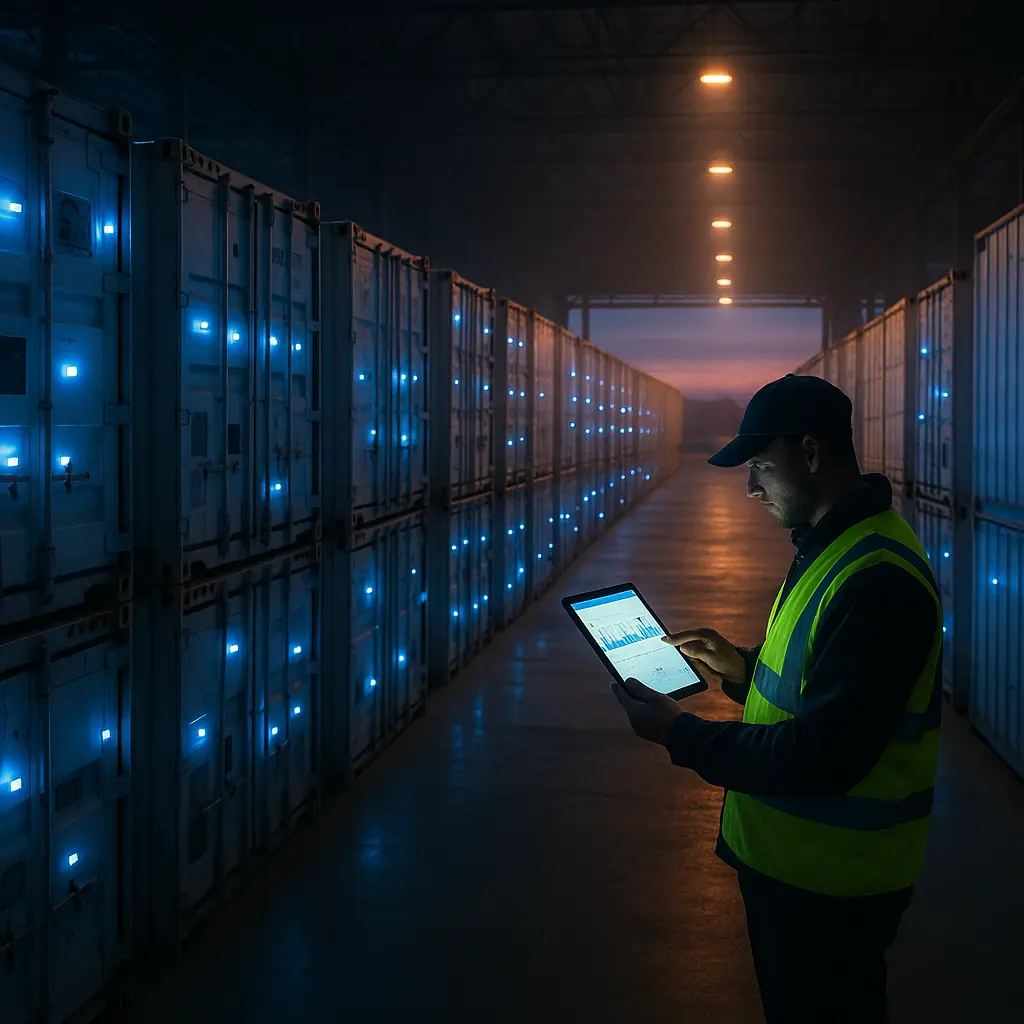
IoT-enabled sensors have fundamentally changed this equation. Modern cold chain monitoring systems use wireless sensors that transmit temperature, humidity, and location data in real time to cloud-based dashboards. When a reefer unit starts drifting above threshold, alerts fire immediately—not hours or days later.
The technology has matured rapidly. Today's sensors are smaller, cheaper, and more reliable than even two years ago. Battery life spans entire ocean freight voyages. Cellular and satellite connectivity ensures monitoring continues even in transit deserts where Wi-Fi doesn't reach.
But sensors alone aren't enough. They generate data. What turns that data into action is AI.
AI Predictive Analytics: Catching Spoilage Before It Happens
The real breakthrough in cold chain management isn't just knowing the current temperature—it's predicting when a temperature excursion will occur before it actually does.
AI models trained on historical shipment data, weather patterns, equipment maintenance records, and transit route analytics can identify risk patterns that human operators would miss. A reefer unit that's been running 0.3°C warmer than usual over the past six hours? That's a compressor degradation signature. An LTL shipment scheduled to transfer at a distribution center with a history of dock delays during afternoon peak? That's a dwell-time risk.
These predictive models enable proactive rerouting, preemptive maintenance dispatches, and automated alerts to warehouse teams to prioritize receiving. The result: fewer excursions, less waste, and dramatically lower claim rates.
Pharmaceutical Cold Chain: Where Precision Is Non-Negotiable
If food cold chain is high-stakes, pharmaceutical cold chain is life-or-death. mRNA vaccines, biologics, and cell therapies demand temperature precision of ±0.5°C or tighter, maintained from manufacturing facility to patient administration. A single breach can render a $50,000 gene therapy shipment worthless.
The post-pandemic world has permanently elevated pharmaceutical cold chain requirements. IoT sensors validated at ultra-cold temperatures (down to –70°C for mRNA products) now combine with GPS tracking and blockchain-based chain-of-custody records to provide end-to-end proof of compliance. Regulators increasingly expect this level of documentation—passive temperature indicators are no longer sufficient for GDP (Good Distribution Practice) audits.
For third-party logistics providers handling pharmaceutical freight, the investment in IoT infrastructure isn't optional. It's table stakes for winning and keeping pharma contracts.
The Visibility Gap That TMS Integration Closes
Here's where many cold chain operations still fall short: the data exists, but it lives in silos. Temperature monitoring platforms don't talk to transportation management systems. Carrier performance data doesn't integrate with quality management workflows. When an excursion happens, the response is manual—emails, phone calls, spreadsheets.
A modern TMS with cold chain integration bridges this gap. When IoT sensors detect an anomaly, the TMS can automatically:
- Flag the affected shipment and adjust its priority in receiving queues
- Trigger carrier scorecarding updates to track which lanes have the highest excursion rates
- Generate compliance documentation for regulatory audits and insurance claims
- Initiate exception workflows that route to the right team without manual intervention
This is the difference between having data and having actionable intelligence. Temperature readings in a standalone dashboard are useful. Temperature readings integrated into your shipment lifecycle, carrier management, and quality workflows are transformative.
The Bottom Line
The cold chain logistics boom isn't just about market size—it's about a fundamental shift in how the industry treats perishable goods. IoT and AI are moving cold chain management from reactive damage control to predictive, automated, and integrated operations.
For shippers handling temperature-sensitive freight, the question isn't whether to invest in cold chain technology. It's whether your current systems can keep up with the precision, speed, and integration that 2026 demands.
Managing temperature-sensitive supply chains? Contact CXTMS to see how integrated cold chain visibility transforms your logistics operations.