The $823 Billion Reverse Logistics Crisis: How AI Is Turning E-Commerce Returns Into a Competitive Advantage

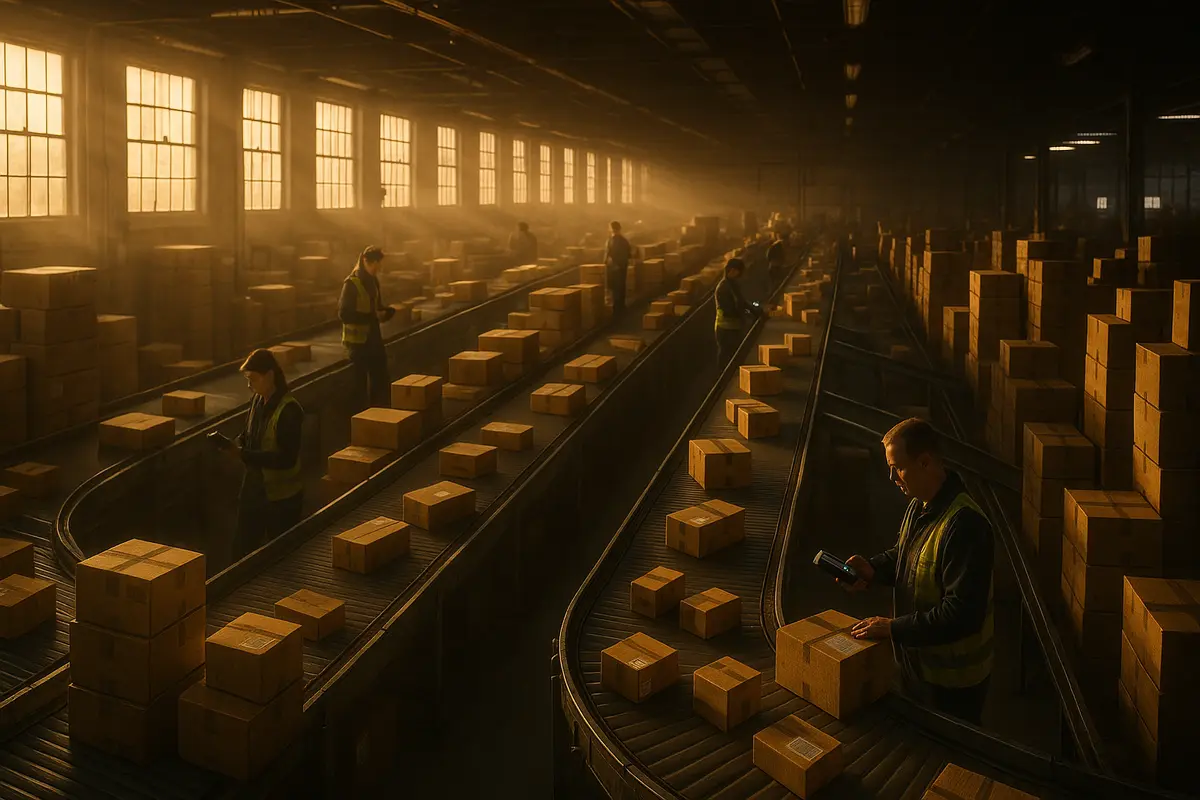
Every returned package tells a story of friction — a size that didn't fit, a color that looked different on screen, or an impulse buy that didn't survive the unboxing. In 2025, those stories added up to $849.9 billion in returned merchandise in the U.S. alone, according to the National Retail Federation. That's not a rounding error. That's an industry-defining challenge — and an enormous opportunity for shippers who get it right.
The Returns Explosion Is Accelerating
The global reverse logistics market hit an estimated $823 billion in 2024 and is projected to reach over $3.1 trillion by 2033, growing at a 17.4% CAGR, according to Grand View Research. The growth isn't surprising when you look at the numbers: online return rates hover around 19.3% of all e-commerce sales — nearly one in five purchases comes back.
Gen Z shoppers are accelerating the trend. NRF data shows that consumers aged 18–30 made an average of 7.7 online returns in the past 12 months, more than any other generation. "Bracketing" — buying multiple sizes or colors with the intent to return most of them — has become standard shopping behavior.
For shippers and 3PLs handling fulfillment, this means reverse logistics volume is no longer a seasonal spike. It's a year-round operational reality that demands dedicated infrastructure.
The Cost Math That Keeps CFOs Awake
Processing a return costs retailers an average of $30 per item — compared to roughly $12 for the original outbound delivery. That 2.5x cost multiplier means every $1 million in refunds actually costs businesses approximately $1.3 million when you factor in inspection, repackaging, restocking, and disposition.
And the financial bleeding doesn't stop at processing costs. According to NRF's 2025 report, 82% of consumers now consider free returns a major factor in their purchasing decisions, up from 76% the previous year. Meanwhile, 71% of shoppers say they're less likely to buy from a retailer again after a poor returns experience — up from 67% in 2024.
The message is clear: retailers can't simply raise return barriers without losing customers. They need to make returns cheaper to process, not harder to initiate.
How AI Is Rewriting the Returns Playbook
Artificial intelligence is emerging as the critical technology that breaks the cost-versus-experience tradeoff. Here's how forward-thinking logistics operations are deploying it:
Predictive Disposition
Traditional returns processing routes every item through the same inspection pipeline. AI-powered systems analyze product category, return reason, customer history, and item condition data to make instant disposition decisions before the item even arrives at the warehouse. High-value electronics might route to refurbishment. Fast-fashion items past their trend window go straight to secondary markets. Damaged goods skip inspection entirely and route to recycling.
The result: 40–60% faster processing times and significantly reduced handling costs per unit.
Automated Fraud Detection
Return fraud costs U.S. retailers an estimated $103 billion annually, according to NRF data. AI models can flag suspicious patterns — serial returners, "empty box" schemes, and wardrobing — in real time, protecting margins without penalizing legitimate customers.
Dynamic Return Routing
Instead of funneling all returns to a central warehouse, AI algorithms calculate the optimal return destination based on inventory needs, geographic proximity, and resale potential. A returned jacket in Dallas might route to a nearby store that's low on that size rather than traveling 1,500 miles back to a distribution center.
Predictive Return Prevention
The most cost-effective return is the one that never happens. Machine learning models analyzing product descriptions, images, customer reviews, and sizing data can predict return probability at the point of purchase. Proactive interventions — better sizing recommendations, enhanced product images, or targeted reviews — can reduce return rates by 10–15% before the buy button is ever clicked.
The Competitive Advantage Shift
The companies winning in 2026 aren't treating returns as a cost center to minimize. They're treating reverse logistics as a strategic differentiator.
As Supply Chain Dive reported, even major carriers like FedEx are prioritizing simplicity and seamlessness in their reverse logistics services, recognizing that branded return experiences drive customer retention. DHL's January 2026 report confirmed what industry leaders already knew: reverse logistics has shifted "from cost center to competitive edge." Retailers with best-in-class return experiences see higher customer lifetime values, stronger brand loyalty, and lower overall logistics costs per order when measured across the full purchase-and-return lifecycle.
The U.S. reverse logistics market alone was valued at $160 billion in 2025 and is on a steep growth trajectory, driven by the intersection of rising e-commerce volumes and increasingly sophisticated consumer expectations.
Integrating Reverse Logistics Into Your TMS
The biggest operational gap most shippers face isn't a lack of AI tools — it's the disconnect between forward and reverse logistics systems. When your outbound shipments run on one platform and your returns run on spreadsheets or a separate system, you lose visibility, duplicate costs, and miss optimization opportunities.
A modern TMS like CXTMS bridges this gap by integrating reverse logistics workflows directly into the same platform that manages your outbound freight. That means unified visibility across forward and reverse shipments, consolidated carrier rate management, and data-driven insights that span the entire order lifecycle.
When you can see that a carrier offering competitive outbound rates also has the best return pickup network in your key markets, you negotiate smarter contracts. When you can track return processing times alongside delivery performance, you identify bottlenecks before they become customer complaints.
The Bottom Line
Returns aren't going away. With nearly $850 billion in annual U.S. returns and a global reverse logistics market racing toward $3 trillion, the question isn't whether to invest in reverse logistics — it's how fast you can make it a competitive weapon.
AI-powered returns processing, integrated TMS platforms, and data-driven disposition strategies are the tools that separate leaders from laggards. The shippers who master reverse logistics in 2026 won't just reduce costs — they'll win customers that competitors are losing one bad return experience at a time.
Ready to integrate reverse logistics into your freight management strategy? Contact CXTMS for a demo and see how unified visibility transforms your returns operations.