CIRCIA Takes Effect: How the Federal Cyber Incident Reporting Mandate Forces Logistics Companies to Rethink Security Response Plans

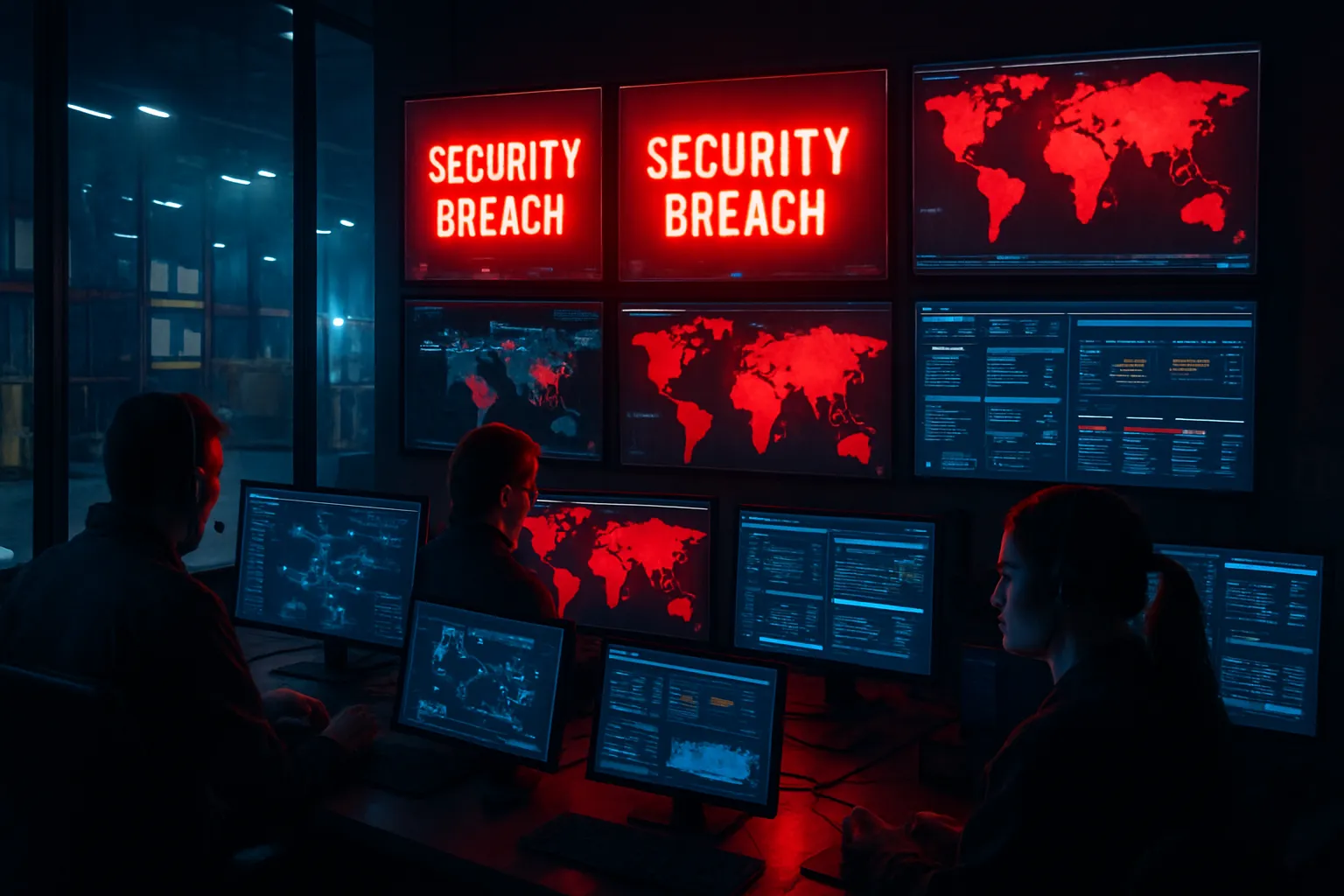
Cyberattacks on the logistics sector jumped 61% in 2025, climbing from 132 incidents to 213 as hackers increasingly target shared transportation networks where a single breach can cascade across entire supply chains. Now, with CISA finalizing the Cyber Incident Reporting for Critical Infrastructure Act (CIRCIA) rules by mid-2026, freight and logistics operators face a new compliance reality: report significant cyber incidents within 72 hours, and ransomware payments within 24 hours — or face enforcement action.
For an industry where operational continuity is everything and minutes of downtime translate to millions in disrupted freight, CIRCIA isn't just another regulatory checkbox. It's a fundamental shift in how logistics companies must detect, document, and disclose cyber events.
What CIRCIA Requires — And Why Logistics Qualifies
Signed into law in 2022 as part of broader critical infrastructure protection legislation, CIRCIA directed CISA to develop mandatory reporting rules for entities operating in the 16 critical infrastructure sectors designated by the federal government. Transportation systems — including freight rail, trucking, maritime, aviation cargo, and pipeline operations — sit squarely within that designation.
The NPRM (Notice of Proposed Rulemaking) published in April 2024 outlined the core requirements. After extensive public comment and a series of virtual town hall meetings announced in February 2026, CISA is expected to publish the final rule by May 2026, with compliance obligations taking effect shortly after.
The key mandates include:
- 72-hour incident reporting: Covered entities must notify CISA within 72 hours of reasonably believing a significant cyber incident has occurred
- 24-hour ransomware payment reporting: Any ransom payment made in response to a ransomware attack must be reported to CISA within 24 hours
- Supplemental reporting: Entities must submit updates when substantial new information becomes available
- Data preservation: Organizations must retain relevant data and records for at least two years following a report
The Logistics Threat Landscape Demands Action
The timing of CIRCIA's finalization couldn't be more urgent. According to Supply Chain Dive's 2026 risk outlook, cybersecurity remains one of the top operational threats facing supply chain leaders this year, and the data backs up the concern.
Ransomware dominates logistics cyber claims. Allianz Commercial's analysis found that ransomware accounts for 60% of the value of large cyber claims (those exceeding $1.18 million) during the first half of 2025. In the European Union's transport sector specifically, ransomware comprised 83.9% of cybercrime incidents, with data breaches making up the remaining 16.1%.
The attack vectors are evolving rapidly. PwC's Annual Threat Dynamics 2026 report revealed a decisive shift toward identity-centric attacks — adversaries are choosing to "log in rather than break in," exploiting stolen credentials, compromised service accounts, and session tokens rather than traditional exploit-based intrusions. For logistics companies managing hundreds of carrier portals, TMS integrations, and API connections, this identity-based threat model is particularly dangerous.
The top three ransomware strains targeting transportation in 2025 — Akira (12.9%), INC Ransom (9.7%), and Cl0p (9.7%) — all employ double-extortion tactics, encrypting systems while simultaneously exfiltrating sensitive freight data, customer information, and financial records.
Why 72 Hours Changes Everything for Freight Operations
Most logistics companies today operate with incident response plans designed around business continuity — getting systems back online as fast as possible. CIRCIA adds a parallel obligation: documentation and disclosure on a strict timeline, even while you're still fighting the fire.
Consider the operational reality. A ransomware attack hits a mid-size 3PL's TMS at 2 AM on a Monday. The IT team is scrambling to restore operations, reroute shipments, and communicate with customers. Under CIRCIA, that same team must simultaneously:
- Determine if the incident qualifies as a "covered cyber incident" under the rule's definitions
- Gather required reporting information — attack vectors, systems affected, estimated impact, indicators of compromise
- Submit a formal report to CISA within 72 hours of when the company "reasonably believes" the incident occurred
- Preserve all relevant data for potential follow-up investigation
For companies without pre-built reporting workflows, that 72-hour window will feel impossibly short while managing active incident response. The 24-hour ransomware payment window is even more compressed.
Five Practical Steps for Logistics Compliance
Logistics companies don't need to wait for the final rule to start preparing. The core requirements are well-established from the NPRM, and building readiness now creates operational advantage:
1. Map Your Critical Infrastructure Classification
Determine which parts of your operation fall under CIRCIA's transportation systems designation. This includes not just your own networks but third-party systems you operate or manage. Freight brokerages, 3PLs, drayage operators, intermodal providers, and warehouse operators connected to transportation networks all potentially qualify.
2. Build Parallel Response and Reporting Workflows
Your incident response plan needs a reporting track running alongside the technical recovery track. Designate specific team members responsible for CIRCIA reporting, separate from those managing containment and recovery. Pre-draft report templates with the required data fields so you're not building forms during a crisis.
3. Deploy Continuous Identity Monitoring
Given the shift toward identity-based attacks highlighted in PwC's 2026 research, logistics companies should prioritize:
- Multi-factor authentication across all carrier portals and partner integrations
- Privileged access management for TMS, WMS, and ERP administrative accounts
- Session monitoring for API connections and EDI integrations that connect to carrier and customer networks
4. Establish Vendor Cyber Requirements
Your CIRCIA exposure extends through your technology supply chain. Require TMS, WMS, and ERP vendors to maintain their own incident response capabilities and commit to notification timelines that support your 72-hour reporting obligation.
5. Conduct Tabletop Exercises with Reporting Requirements
Run quarterly incident simulations that include CIRCIA reporting as a core exercise objective — not just technical recovery. Time the reporting workflow to ensure your team can realistically meet the 72-hour and 24-hour deadlines under realistic operational pressure.
The Bigger Picture: Cybersecurity as Competitive Advantage
CIRCIA compliance is a regulatory mandate, but forward-thinking logistics providers are recognizing that robust cybersecurity posture is becoming a shipper selection criterion. As PwC's 2026 Cybersecurity Outlook notes, "identifying and managing risks from your suppliers, vendors, and service providers is increasingly essential, as their security measures directly impact your resilience."
Shippers evaluating 3PLs and carriers are increasingly asking about incident response capabilities, cyber insurance coverage, and compliance readiness. Companies that can demonstrate CIRCIA-ready security programs — with documented response plans, regular testing, and clear reporting workflows — will win business from security-conscious enterprise shippers.
How CXTMS Supports Cyber Compliance Documentation
CXTMS's platform architecture is designed with security-first principles that support logistics companies navigating CIRCIA compliance:
- Comprehensive audit logging tracks all system access, data modifications, and API interactions, providing the forensic trail required for incident reporting
- Role-based access controls enforce the principle of least privilege across carrier management, rate engines, and customer data — reducing the identity-attack surface that PwC identifies as the primary 2026 threat vector
- Integration monitoring dashboards provide real-time visibility into API health and anomalous connection patterns across your carrier and partner network
- Data retention architecture supports the two-year preservation requirements built into CIRCIA's reporting framework
The logistics industry can no longer treat cybersecurity as an IT problem managed in the background. CIRCIA makes it a compliance obligation with defined timelines, federal oversight, and real consequences for non-compliance. The companies that build reporting-ready security programs now won't just meet the mandate — they'll operate with greater resilience when the inevitable incident occurs.
Ready to strengthen your logistics cybersecurity posture? Request a CXTMS demo to see how our security-first platform architecture supports compliance documentation, access controls, and audit logging across your entire freight operation.