A $5.3 Million Panama Canal Slot: When Priority Transit Beats Delay Risk

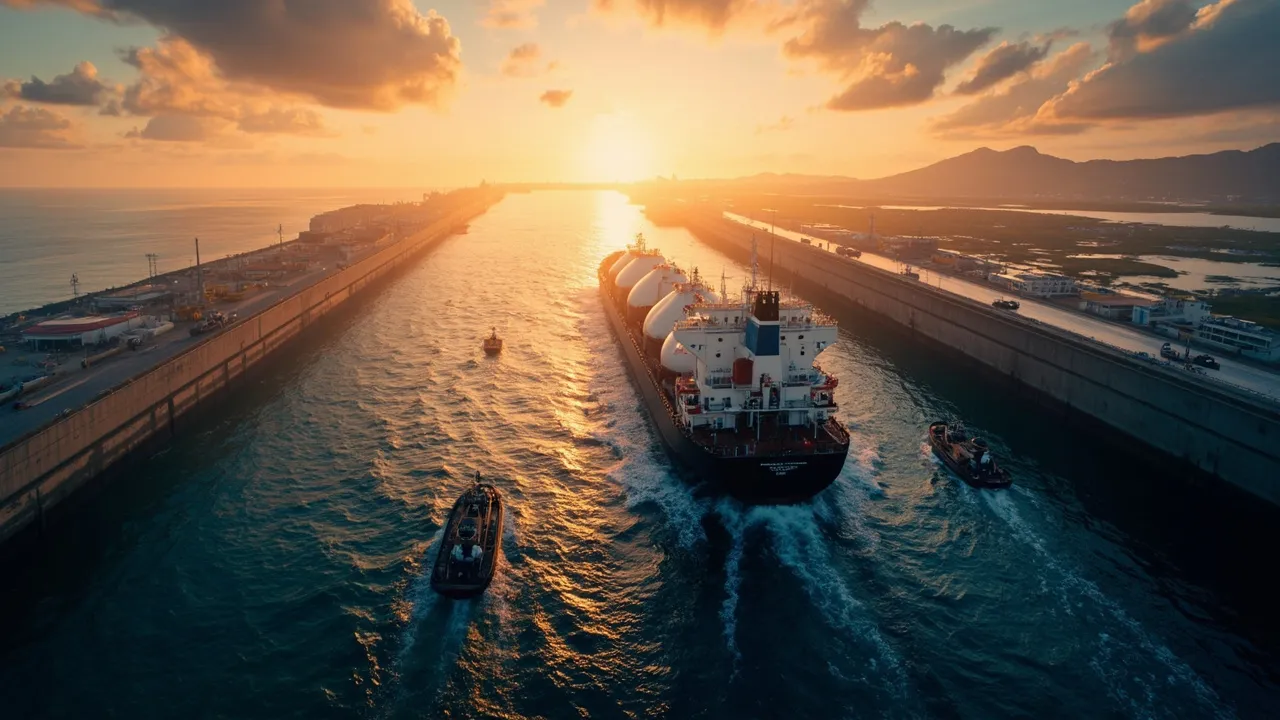
A South Korean gas shipper's record $5.3 million payment for a Panama Canal priority slot sounds irrational until the alternative is priced correctly. For time-sensitive energy cargo, waiting is not free: the vessel continues burning money, inventory remains trapped, downstream commitments move closer to failure, and the next voyage may be lost.
The winning bid reportedly surpassed the previous record of $4.6 million, also paid for an LPG carrier operated by SK Shipping. Yet the auction payment was only one component of the crossing cost. FreightWaves reported that the published Neopanamax LPG tariff also included a $300,000 fixed transit component, a capacity charge of $2.75 per cubic meter, and a $100,000 regular reservation fee. The priority bid sits on top of those charges.
That distinction matters. A slot auction is not merely an expensive toll; it is a market price for time under temporary scarcity. The right question is not whether $5.3 million is high. It is whether the bid costs less than the risk-adjusted consequence of waiting, rerouting, or breaking the commercial schedule.
Build the complete cost of waiting
The decision model should start with the incremental cost of each day without transit. At minimum, include five components.
Vessel and charter cost. Count daily charter hire, fuel for hotel load or maneuvering, crew, insurance, agency fees, and any other time-based operating expense. Also include the opportunity cost of delaying the vessel's next contracted voyage.
Inventory carrying cost. Multiply the cargo's landed value by the company's annual carrying-cost rate, then convert it to a daily amount. This component alone may be modest, but it understates the exposure when the cargo is already sold or supports a constrained production process.
Demurrage and terminal exposure. Waiting can create costs elsewhere in the chain: occupied storage, missed berth windows, delayed tank availability, railcar or truck detention, and penalties under terminal or customer agreements.
Customer and contract consequences. Add late-delivery penalties, replacement purchases, lost margin, and the probability-adjusted value of damaged customer relationships. A guaranteed energy delivery can carry a much steeper failure cost than ordinary replenishment freight.
Downstream production risk. Estimate the contribution margin or shutdown cost associated with a refinery, chemical plant, utility, or distribution network running short. This is often the decisive variable. A cargo worth tens of millions of dollars may protect a downstream process worth much more.
For example, suppose waiting costs $180,000 per day in vessel and operating expense, $35,000 in inventory and terminal charges, and $250,000 in expected customer or production exposure. The modeled total is $465,000 per day. A $5.3 million bid would require roughly 11.4 days of avoided delay to break even. If downstream exposure rises to $700,000 per day, the break-even period falls below six days.
These figures are illustrative, not estimates of the record-setting voyage. Their purpose is to force one consistent comparison before an auction begins.
Do not mistake queue data for certain delay
Waiting-time inputs need careful interpretation. In April, the Canal Authority said unusually high auction prices reflected a temporary surge in demand rather than a permanent operating condition. Reuters also reported that official wait-time data can include vessels arriving before their reserved transit windows, which can overstate the delay those ships actually experience.
Therefore, do not multiply a headline queue figure by a daily vessel cost and call the result a business case. Use a probability distribution: an optimistic transit date, the most likely date, and a severe-but-plausible date. Weight each scenario using current vessel class, direction, reservation status, arrival time, draft, canal advisories, and agent intelligence.
Conditions can also change quickly. During the 2023 drought, the canal planned to reduce booking slots to 25 per day, according to Reuters. That episode demonstrates how water constraints and operating rules can materially change capacity. It does not mean today's queue behaves the same way. Every bid needs current inputs and an expiration time.
Establish gates before bidding
Auction pressure is a terrible environment for inventing approval rules. Operators should create gates by cargo value, service criticality, and maximum authorized premium.
A practical policy can classify cargo into three tiers:
- Routine: Flexible delivery, substitutable inventory, and no material production consequence. Use normal booking or reroute when total voyage economics support it.
- Priority: Contractual delivery exposure, limited replacement supply, or a valuable onward schedule. Permit a bid when expected delay cost exceeds the auction premium by a defined margin.
- Critical: Human-safety, energy-security, plant-continuity, or exceptionally high contractual exposure. Escalate quickly to an executive approver and evaluate the tail-risk scenario, not only the average delay.
The bid ceiling should be lower than the calculated avoidance value. If the risk-adjusted cost of waiting is $6 million, bidding the full $6 million leaves no buffer for forecast error. A company might require expected benefit to exceed price by 20%, with finance and commercial leaders approving any exception.
Rerouting belongs in the same comparison. A voyage around the Cape or through another discharge strategy adds sailing time, fuel, emissions, port charges, and potential schedule disruption. But it may still outperform an auction when the queue outlook is highly uncertain or the slot premium rises beyond the protected cargo value.
Preserve the decision in the shipment record
The winning number is not enough for later analysis. Record the timestamp, queue estimate, expected transit dates, vessel cost per day, cargo value, carrying rate, customer penalties, production-risk assumption, reroute alternative, bid ceiling, approver, and final auction result alongside the shipment.
After delivery, compare each assumption with what occurred. How many days did the slot actually save? Did customer or production exposure materialize? Was the next voyage protected? A variance review turns an extraordinary payment into evidence for the next decision instead of an anecdote.
CXTMS gives freight teams one operational record for shipment milestones, cost assumptions, exceptions, approvals, and actual outcomes. Request a CXTMS demo to make high-stakes transit decisions traceable before the next bottleneck puts millions of dollars on the clock.