Warehouse Software Is Becoming the Exception Taxonomy for Automated Operations

Warehouse automation is creating a language problem before it creates a labor-free building.
Modern Materials Handling reported that its 2026 Software & Automation Outlook Survey finds warehouse software remains central to automation strategies, with companies continuing to invest in WMS, TMS, planning platforms, and cloud applications despite economic uncertainty. In related July coverage, MMH noted that software continues to sit at the center of warehouse operations, with more than half of respondents saying their use of materials handling software has remained steady while companies evaluate more connected systems, AI, and machine learning.
That is the right investment direction. It is also where many warehouse programs start to get messy.
The hard part is not the number of tools. It is the number of ways those tools describe a bad day. A WMS may call something a short pick. A robot fleet manager may call it a blocked path. A labor system may call it a missed standard. A dock scheduler may call it a late load. A TMS may call it a pickup risk. Customer service may call it a service failure.
All of those labels may point to the same operational event. If they are not connected through a shared exception taxonomy, the warehouse gets more software but not more control.
Connected Warehouses Need Shared Definitions
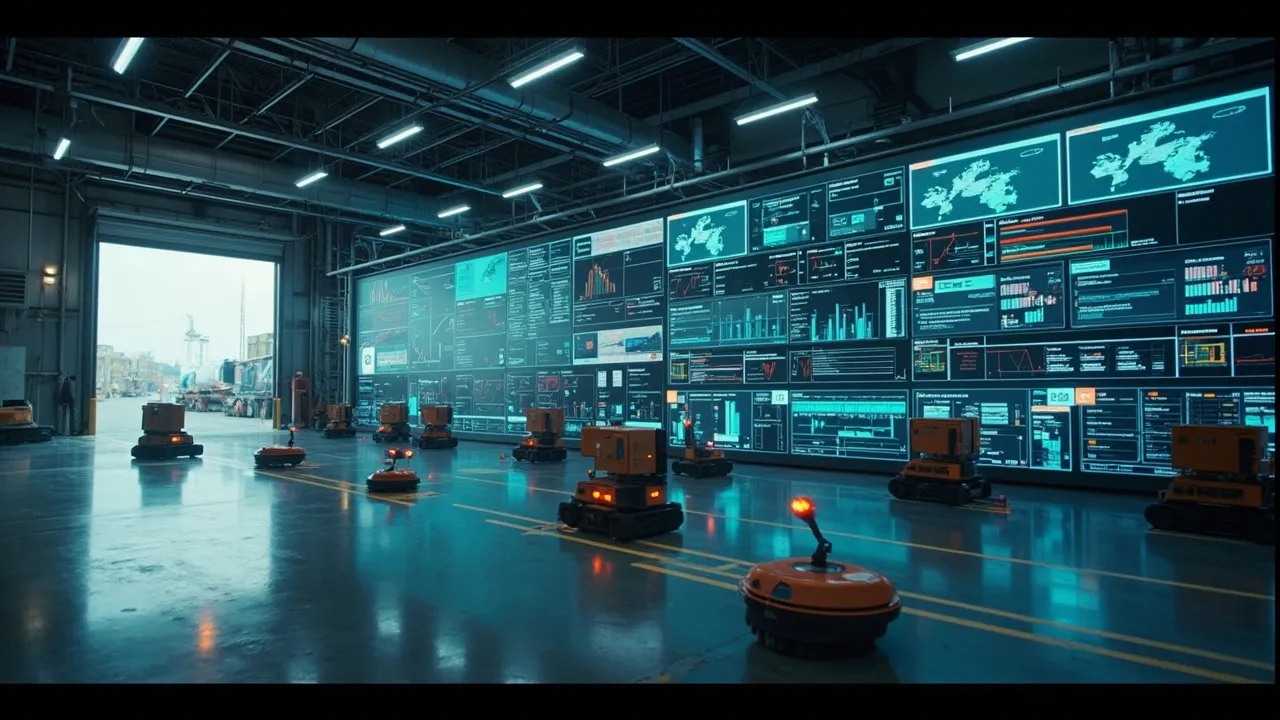
Inbound Logistics recently described why the definition problem is getting sharper. Its coverage of six technologies reshaping logistics execution noted that a single warehouse can include thousands of IoT sensors and robots, pushing decisions closer to the facility floor through edge computing, 5G, and hybrid cloud-edge connectivity. The article specifically tied that architecture to real-time coordination among robots, IoT sensors, yard activity, dock doors, and automation.
That is the new warehouse operating environment. It is faster, more instrumented, and less forgiving of vague exception notes.
If a picker cannot complete an order because inventory is missing, the warehouse needs more than "issue." The event record should show whether the problem is a receiving error, inventory adjustment lag, putaway miss, replenishment delay, damaged product, wrong slot, expired lot, system hold, or customer allocation conflict. Each cause has a different owner and a different recovery path.
If an automated zone slows down, the event needs to distinguish equipment downtime from congestion, safety intervention, battery charging, robot traffic imbalance, scanner failure, carton quality, tote shortage, or work-release sequencing. A generic automation delay does not help transportation decide whether to hold a carrier, reassign a dock door, split a shipment, or protect a customer appointment.
If outbound orders are at risk, the system needs to separate order priority from physical readiness. A high-priority order that is picked but not packed is different from a high-priority order waiting for replenishment. An order packed but missing paperwork is different from an order packed but blocked by carrier cutoff. Those differences matter to warehouse managers, transportation planners, finance teams, and customer service.
The Cost Context Is Too Big For Loose Language
The broader logistics environment makes this more than an internal operations detail. Logistics Management's 37th State of Logistics coverage reported that U.S. business logistics costs totaled $2.4 trillion, equal to 7.8% of GDP, compared with $2.6 trillion and 8.7% of GDP the prior year. The same coverage framed disruption, labor pressure, trade policy shifts, and rising operating costs as permanent features of the operating landscape.
In that environment, warehouse exceptions cannot remain local tribal knowledge.
Every unresolved warehouse exception has a transportation shadow. A late inbound receipt can delay order release. A missed replenishment can turn a full truckload into a partial. Equipment downtime can break carrier pickup plans. Labor shortages can move freight from planned consolidation to expensive expedited shipping. Inventory mismatches can trigger split shipments, customer chargebacks, rework, and avoidable accessorials.
The warehouse may see the event first, but transportation often pays for the recovery.
That is why automated operations need an exception taxonomy that travels across systems. The goal is not to force every warehouse platform into one screen. The goal is to make sure the same event carries the same meaning when it moves from facility execution to dock planning, carrier tendering, customer communication, and cost analysis.
Build The Warehouse Exception Taxonomy
A practical taxonomy starts with event type. Receiving error, inventory mismatch, equipment downtime, labor constraint, order priority conflict, carrier cutoff risk, dock congestion, quality hold, documentation issue, and customer change should not collapse into one generic exception field.
The second field is location. The record should identify whether the event is at receiving, reserve storage, pick face, automation zone, packing, staging, yard, dock door, cross-dock area, returns, or quality hold. Location tells managers which physical flow is broken.
The third field is SKU or item family. A missing seasonal SKU, regulated product, serialized component, food item, medical device, or high-margin product deserves different escalation than a low-value replenishment miss. Item context also helps teams identify whether the exception is isolated or systemic.
The fourth field is equipment. If the issue involves conveyors, sortation, AMRs, AS/RS, palletizers, scanners, scales, labelers, dock equipment, forklifts, or charging infrastructure, the record should say so. Automated operations need to know whether the constraint is people, product, process, or machine state.
The fifth field is order impact. The taxonomy should show whether the event affects one order, a wave, a customer, a route, a load, a dock appointment, or an entire shift plan.
The sixth field is shipment impact. That is where warehouse software connects to transportation. The event should identify whether the carrier pickup is safe, at risk, missed, rescheduled, split, expedited, or waiting on a decision.
The seventh field is owner. If everyone sees the exception but no one owns it, the software has only created a better-looking backlog. Ownership should map to warehouse operations, inventory control, maintenance, labor planning, transportation, customer service, quality, or finance.
The final field is recovery timestamp. A closed exception should show when the event was recovered, not merely when someone stopped looking at it. That distinction matters when teams review carrier detention, missed appointments, overtime, service failures, and chargebacks.
Where CXTMS Fits
CXTMS helps logistics teams connect warehouse events to transportation decisions before facility noise becomes customer-facing failure. A shipment record can carry warehouse exception type, dock readiness, order impact, carrier cutoff risk, owner, and recovery timestamp alongside the freight plan.
That shared record matters because automated warehouses do not fail in one clean system. They fail across WMS, WES, WCS, labor planning, maintenance, dock scheduling, yard operations, carrier communication, and customer commitments. CXTMS gives transportation teams the warehouse context they need to decide whether to hold, retender, split, expedite, reschedule, or escalate.
Warehouse software is becoming the operating language of automation. The teams that define that language clearly will get more from AI, robotics, and connected systems because exceptions will be diagnosable, owned, and measurable. The teams that keep using vague codes will still have automation, but they will manage it with meetings, screenshots, and after-the-fact explanations.
If warehouse exceptions still reach transportation as surprise delays, schedule a CXTMS demo. CXTMS helps logistics teams connect facility conditions, dock priorities, shipment decisions, and exception ownership in one execution record.