USPS Is Adding 14 Sorting and Delivery Centers: What the Network Overhaul Means for Parcel Planning

USPS is adding another wave of sorting and delivery centers, and parcel shippers should treat the news as more than a postal facilities update.
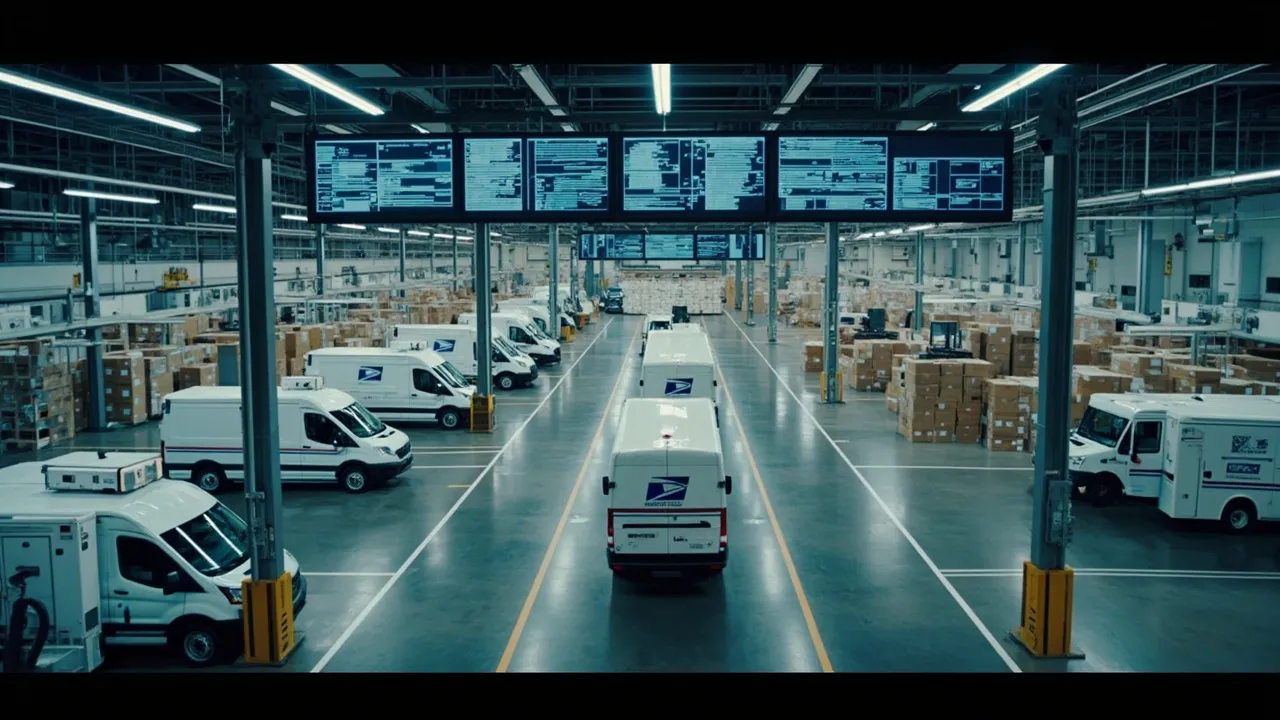
According to Supply Chain Dive, the Postal Service will open 14 new sorting and delivery centers between May and July 2026 across 12 states, including Miami, Phoenix, Boise, Worcester, Greenville, Frederick, Vancouver, and multiple Upper Midwest and Mountain West markets. The agency says the openings will not close Post Offices or change retail and PO Box delivery services, but commercial shippers are being directed to bring packages and flat bundles for drop shipment to the sorting and delivery center serving the destination ZIP Code.
That last sentence is the operational headline. The delivery experience may still look local to consumers, but the upstream planning logic is shifting. For parcel teams, USPS sorting and delivery centers 2026 should trigger a review of induction points, ZIP-level routing, promised delivery dates, and economy-service assumptions.
What USPS is actually changing
Sorting and delivery centers consolidate work previously handled by smaller delivery units. Supply Chain Dive notes that USPS has nearly 19,000 delivery units, which are the last stop for mail and packages before final-mile delivery. The new centers are intended to aggregate delivery work into fewer, larger, centrally located operations.
The network is already well past pilot scale. Postmaster General CEO David Steiner told a House subcommittee in March that USPS had launched more than 179 sorting and delivery centers, up from 96 reported in May 2025. He also described the facilities as using advanced package sortation equipment, electric-vehicle charging infrastructure, and optimized transportation to and from processing facilities.
For shippers, the lesson is simple: USPS is redesigning how volume moves between processing, sortation, and last-mile delivery. Any company using USPS directly, through consolidators, or as part of an economy parcel product needs to make sure its systems are not assuming yesterday's network.
The parcel market is not waiting for volume growth
The USPS rollout is happening in a broader parcel market where carriers are trying to protect margin, simplify networks, and get paid for complexity.
Logistics Management's 2026 Parcel Express Roundtable described a market shifting from volume growth to value, margin pressure, competition, and complexity. One cited ShipMatrix perspective said the pre-pandemic Big 3 handled 85% of domestic parcel volume, but by 2025 that share had fallen to 61% of 23.9 billion annual deliveries.
That fragmentation matters. Shippers now balance national parcel carriers, USPS products, regional carriers, gig-enabled delivery models, marketplace networks, and consolidator handoffs. The lowest-cost label is not always the lowest-risk shipment. A carrier's network redesign can change service reliability even when the rate card looks familiar.
Pricing pressure adds another layer. Logistics Management's coverage of the TD Cowen/AFS Freight Index said ground parcel rates reached 39.3% above the January 2018 baseline in Q1 2026, with the ground parcel index projected to hit a record 42.0% in Q2 2026. The same report noted express parcel index pressure and higher fuel surcharges as carriers adjusted to elevated fuel costs.
In that environment, network changes and pricing changes reinforce each other. Parcel planners cannot manage cost with annual bids alone. They need lane, ZIP, service, surcharge, and carrier-performance data moving together.
Why sorting and delivery centers change parcel planning
The most immediate effect is induction logic. If commercial shippers are supposed to drop packages and flats at the sorting and delivery center serving the destination ZIP Code, the shipper's system needs accurate ZIP-to-facility mapping. A stale routing table can send volume to the wrong node, create handoff delays, or undercut the economics of destination entry.
Second, promised delivery dates need fresh assumptions. Consolidation can improve reliability in some markets by adding sortation capacity and transportation discipline. It can also create temporary risk as work migrates from smaller units to larger facilities. Customer-facing delivery promises should not treat every converted ZIP Code the same during launch windows.
Third, economy services need tighter monitoring. Many ecommerce and business-to-consumer shippers use economy parcel products because the price is attractive and the delivery promise is flexible enough. But when economy service depends on multiple handoffs, the weak point is often visibility. A network redesign can change where exceptions appear and how quickly a shipper can explain them.
Fourth, returns flows deserve attention. Parcel teams often tune outbound routing and forget returns. If customer returns are injected through USPS, consolidators, or hybrid services, the same ZIP-level facility changes can affect scan timing, refund triggers, inspection appointments, and inventory availability.
The checklist for parcel TMS teams
Start with ZIP coverage. Identify every destination ZIP Code in the 14 launch markets and compare it with historical parcel volume, return volume, service commitments, and customer concentration. Miami, Phoenix, Boise, and Worcester should not be treated equally if one contains a high-value customer cluster.
Then update routing rules. Parcel TMS logic should know which shipments are eligible for USPS destination entry, which should move through a consolidator, and which should be held out because customer promise dates are too tight.
Next, measure launch-window performance. For at least the first several weeks after each opening, track scan latency, first delivery attempt, exception codes, return-cycle time, claims, customer contacts, and on-time delivery by ZIP and service. Do not wait for a monthly invoice audit to discover that a service assumption broke.
Also review surcharge exposure. Fuel, residential, delivery area, oversized, and peak-style fees can wipe out the savings from a routing decision. With ground parcel pricing indexes at record levels, a parcel plan that ignores accessorials is just wishful thinking with a label printer.
Finally, build exception ownership. If a parcel misses its promise because of a facility transition, the customer does not care whether the issue sits with USPS, a consolidator, a warehouse, or the shipper's order-management system. Someone needs the data and authority to act.
The CXTMS angle: parcel planning needs network-aware execution
CXTMS helps logistics teams connect carrier selection, service rules, shipment milestones, exception workflows, and customer commitments in one operating view. That matters when postal, regional, and national parcel networks are all changing at once.
The USPS sorting and delivery center rollout is a useful reminder: parcel strategy is no longer a static rate-shopping exercise. It is network-aware execution. Shippers need to know which ZIPs are changing, which facilities matter, which promises are at risk, and which routing rules should adjust before service problems become customer problems.
If your parcel planning still lives in spreadsheets, carrier portals, and tribal knowledge, the network is moving faster than your control tower. Request a CXTMS demo to see how connected transportation workflows can keep parcel routing, service promises, and exception management aligned as carrier networks evolve.
Sources
- USPS to launch 14 new sorting and delivery centers through July — Supply Chain Dive
- 2026 Parcel Express Roundtable: From volume to value, parcel carriers are rewriting the playbook — Logistics Management
- TD Cowen/AFS Index signals persistent price pressure across truckload, parcel, and LTL — Logistics Management