Amazon Supply Chain Services Opens the Network: What 200 Fulfillment Centers, 80,000 Trailers, and 100 Aircraft Mean for Shippers


Amazon just made its logistics network a product for everyone.
That is the real story behind Amazon Supply Chain Services. This is not simply another parcel service launch or a fulfillment add-on for marketplace sellers. Amazon is opening a bundled logistics stack — freight, storage, distribution, fulfillment, parcel delivery, and China-to-U.S. inbound shipping — to businesses that may never sell a single item on Amazon.com.
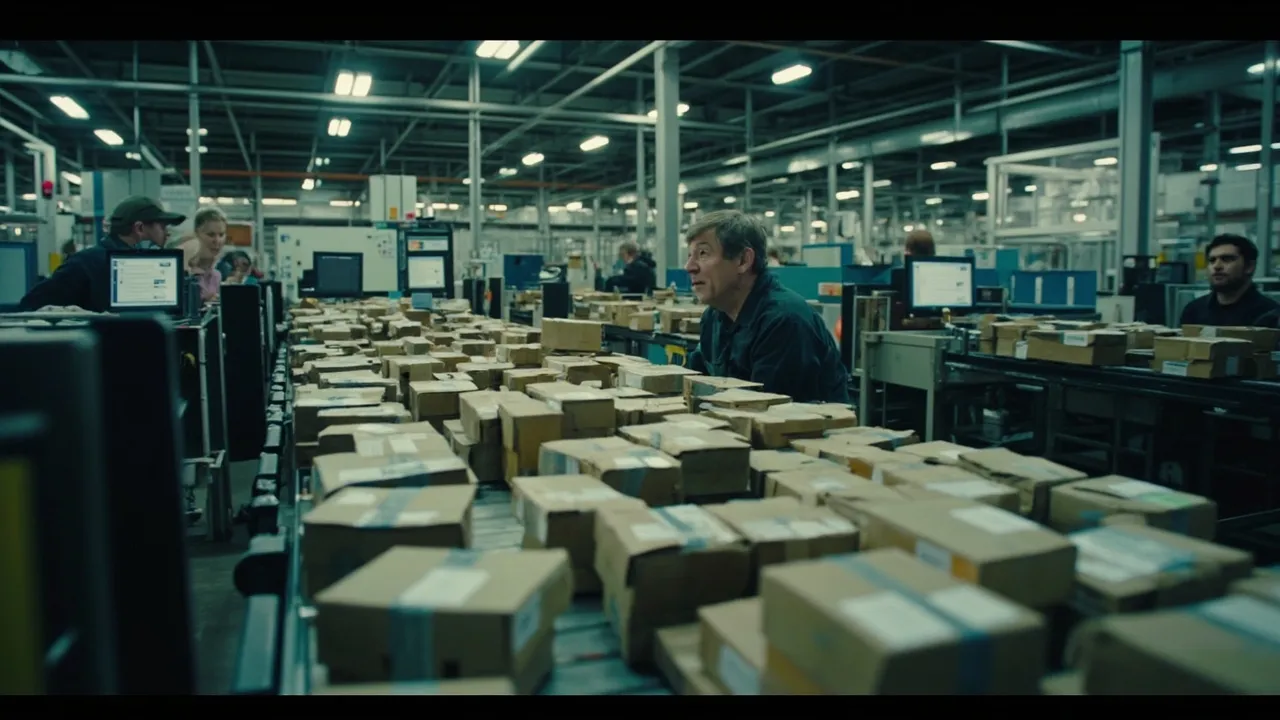
The scale is the uncomfortable part for the rest of the market. Supply Chain Dive reports that Amazon Supply Chain Services is built on more than 200 U.S. fulfillment centers, 80,000 trailers, 24,000 intermodal containers, and 100-plus aircraft. The service covers full truckload, LTL, intermodal, air freight, inbound shipping from China to the United States with customs clearance, bulk storage, distribution, fulfillment, and two-to-five-day parcel shipping.
For shippers, the question is not whether Amazon becomes a logistics provider. It already is one. The question is how much operational control shippers are willing to hand to a carrier-owned, marketplace-adjacent network in exchange for speed, density, and convenience.
Amazon Is Turning Internal Infrastructure Into an External Platform
The pattern is familiar: build infrastructure for internal use, refine it at enormous scale, then sell capacity and capability to outside customers. Amazon Web Services did that for computing. Amazon Supply Chain Services is trying to do it for logistics.
The customer list shows Amazon is not only chasing small ecommerce brands. Reuters reported that Amazon has signed customers including Procter & Gamble, 3M, and American Eagle Outfitters, and that the announcement sent UPS and FedEx shares down more than 9% on the day as investors assessed the competitive threat. Reuters also noted that the network spans ocean, road, rail, and air, with more than 100 cargo aircraft behind only the two largest integrated parcel carriers in U.S. scale.
That matters because the addressable market is broader than parcel. A manufacturer could use Amazon freight to move raw materials. An omnichannel retailer could use Amazon storage to position inventory closer to consumers. A direct-to-consumer brand could combine bulk distribution, fulfillment, and parcel delivery under one commercial relationship. A China-origin importer could use inbound ocean or air freight, customs clearance, replenishment, and final-mile delivery without stitching together a traditional forwarder, warehouse, and parcel carrier stack.
The value proposition is obvious: fewer handoffs, faster deployment, more predictable service levels, and the operational discipline of a network built for high-volume ecommerce.
The risk is equally obvious: dependency.
The 3PL Market Just Got a New Kind of Competitor
Traditional third-party logistics providers sell neutrality. They coordinate carriers, warehouses, forwarders, brokers, and technology partners on behalf of the shipper. Amazon is selling something different: access to a proprietary network with huge density and tightly integrated execution.
That is powerful for certain profiles. Fast-growing brands with lightweight parcel volume, variable demand, and limited logistics staff may find the one-stop-shop model compelling. Supply Chain Dive's follow-up analysis highlighted that Amazon Shipping's two-to-five-day parcel service could be especially disruptive for lower-value ecommerce shipments where pricing pressure is high and differentiation among alternative carriers is thin.
But Amazon's model is not universal. Complex B2B freight, specialized handling, temperature control, hazmat, white glove delivery, and multi-carrier bid management still require flexibility that a single proprietary network may not provide. LTL coverage, in particular, remains a harder market to replicate than parcel because density, terminal networks, pickup windows, claims handling, and accessorial rules vary sharply by lane and freight profile.
The practical takeaway: Amazon will not replace every 3PL, forwarder, or carrier. It will pressure the parts of the market where scale, standardization, and parcel density matter most.
Parcel Procurement Gets More Complicated, Not Simpler
Shippers should resist the lazy conclusion that another carrier option automatically creates leverage. It can — but only if the data is clean.
Amazon's two-to-five-day ground delivery option gives parcel teams another benchmark against FedEx, UPS, regional carriers, postal consolidators, and hybrid economy products. But comparing those services requires more than base rates. Procurement teams need to normalize:
- zone and weight breaks
- delivery-area surcharges
- residential fees
- dimensional weight rules
- claims limits
- pickup coverage
- delivery promise reliability
- tracking event quality
- peak season restrictions
Supply Chain Dive reported Amazon's own claim of more than 13 billion items delivered annually with a 96.4% average on-time delivery rate. That is a serious performance signal. Still, shippers should test Amazon lane by lane, not assume network averages apply to their order profile.
For high-volume ecommerce, the best strategy is not “replace incumbent carriers with Amazon.” It is “use Amazon as one more executable node in a governed routing guide.” That distinction matters. Procurement creates options; execution systems decide when each option is actually the right one.
China-to-U.S. Inbound Flows Are the Quiet Strategic Move
The inbound piece may be the most important part of the launch.
Amazon Supply Chain Services includes inbound shipping from China to the U.S. with customs clearance. That puts Amazon closer to the origin of inventory decisions, not just the destination. If a shipper can book China-to-U.S. freight, clear customs, position inventory in bulk storage, replenish channels, fulfill orders, and deliver parcels through one network, Amazon becomes less of a carrier and more of an operating system for physical commerce.
For mid-market importers, that is tempting. Traditional forwarding can feel fragmented: ocean booking in one system, customs documentation in another, drayage updates by email, warehouse receipts in a portal, parcel labels somewhere else. Amazon's pitch is integration by ownership.
But importers should be careful. Customs data, supplier relationships, inventory allocation, and channel strategy are strategic assets. A single-network workflow may reduce friction, but it can also reduce optionality when tariffs shift, port congestion spikes, or a customer requires a different fulfillment path.
The Control Layer Becomes the Shipper's Defense
Carrier-owned logistics networks are expanding. Amazon is the clearest example, but the broader direction is obvious: networks want more of the shipper workflow, from planning to execution to analytics.
That makes a neutral transportation control layer more important, not less. Shippers need one system of record that can compare Amazon against other carriers, manage exceptions, audit invoices, preserve customer commitments, and keep strategic data independent of any single network provider.
CXTMS is built around that principle. A modern TMS should not force shippers to choose between speed and control. It should let teams plug in Amazon where it performs well, keep incumbent carriers where they remain stronger, and orchestrate freight, parcel, customs, warehousing, and exceptions from a single operational view.
Amazon Supply Chain Services is a major logistics moment because it gives shippers access to infrastructure that was once mostly internal. The winners will not be the companies that blindly outsource everything to the biggest network. The winners will be the ones that treat every network — Amazon included — as a configurable option inside a disciplined, data-driven execution strategy.
Want to see how CXTMS helps logistics teams manage multi-carrier execution without losing control of cost, service, or visibility? Book a CXTMS demo and see what neutral freight orchestration looks like in practice.