Yang Ming’s LNG Bunkering Rollout Makes Alternative Maritime Fuel a Scheduling Problem

Alternative maritime fuel is usually discussed as a decarbonization story. That is fair, but it misses the operational headache sitting right in front of ocean freight teams: fuel choice changes the schedule.
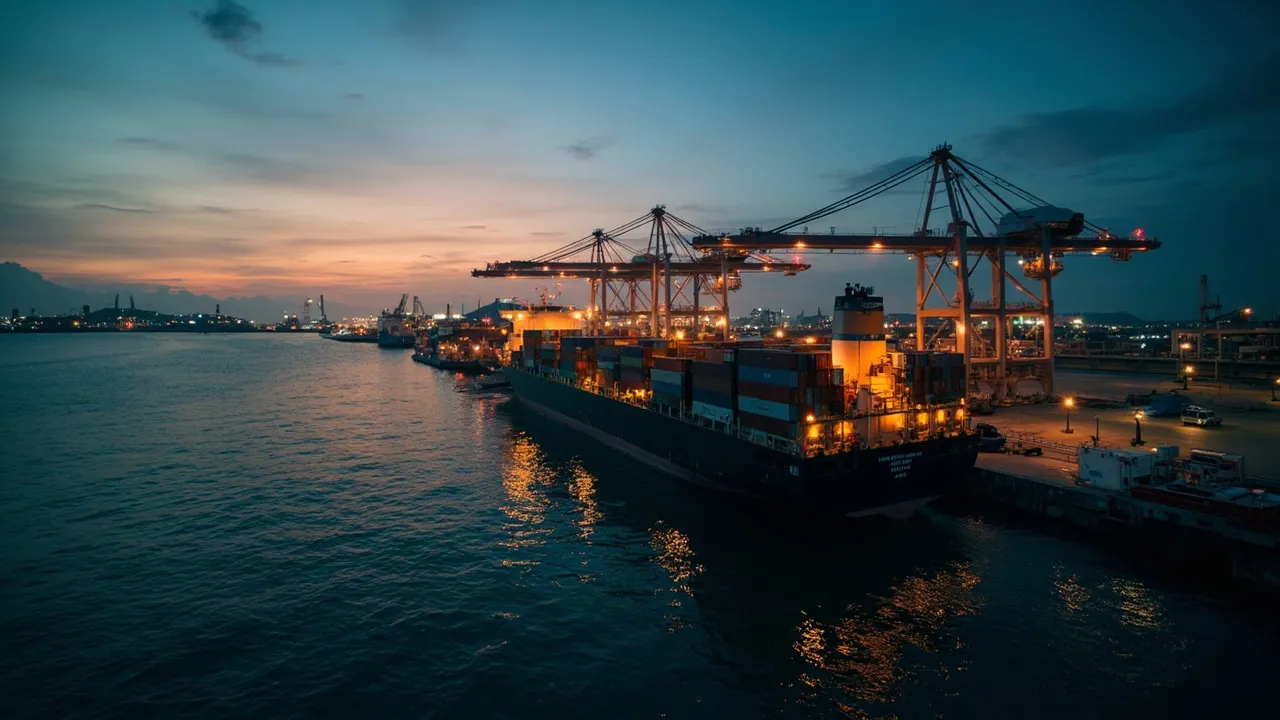
Inbound Logistics reports that Yang Ming’s YM Willpower completed its first liquefied natural gas (LNG) bunkering in Singapore. The vessel is now serving Yang Ming’s Far East–Mediterranean MD2 service and is the first ship in the carrier’s 2026 rollout of newly built 15,500-TEU class container vessels primarily fueled by LNG.
That is not just a fleet-renewal detail. A 15,500-TEU vessel entering a long-haul Asia-Europe service brings alternative fuel constraints directly into the operating cadence of shippers, forwarders, port planners, and service reliability teams. LNG adoption does not work if it is treated as a sustainability footnote pasted onto the voyage plan after the commercial schedule is already set.
Bunkering becomes part of the service design
Traditional bunker planning has never been simple, but conventional marine fuel networks are mature enough that most shippers never see the complexity. LNG is different. The vessel, port, bunker supplier, safety window, equipment, documentation, and voyage plan have to line up with less room for improvisation.
The market is scaling quickly. Mordor Intelligence projects global LNG bunkering nameplate capacity at 13.68 million metric tons in 2026, rising to 56.29 million metric tons by 2031. That implies a 32.70% CAGR from 2026 to 2031. The same report says container fleet operations led the LNG bunkering market with 39.7% share in 2025 and are forecast to expand at a 35.8% CAGR through 2031.
Those numbers explain why Yang Ming’s rollout matters. Container lines are not experimenting around the edges anymore. They are putting LNG-capable ships into core east-west services where schedule integrity affects thousands of bookings, downstream trucking appointments, customs filings, warehouse labor plans, and customer delivery promises.
For a freight forwarder, the important question is not whether LNG is “green enough” to win the maritime fuel debate. The important question is whether the service can absorb LNG bunkering without turning ETA management into guesswork.
Singapore’s role is strategic, not incidental
YM Willpower’s first LNG bunkering in Singapore is operationally logical. Mordor identifies Asia-Pacific as the fastest-growing LNG bunkering region, forecast to grow at a 40.5% CAGR through 2031, driven by Singapore’s second terminal, China’s Zhoushan expansion, and dedicated bunkering vessels in South Korea. The report also notes that Singapore’s bunkering capacity rose to 12 simultaneous operations in 2024.
That kind of hub capacity matters because LNG bunkering is not evenly distributed across global port networks. Major hubs can support predictable refueling windows, better supplier coordination, and more reliable safety procedures. Secondary ports may not have the same infrastructure, forcing carriers to concentrate fuel events around a smaller set of locations.
That concentration can shape the entire route. If the ship must bunker at specific ports, the schedule has to protect those calls. If congestion, weather, labor issues, or berth delays disrupt the bunker window, the impact can cascade into the next port pair. The cargo owner may only see an ETA slip, but the underlying cause may be a fuel-network constraint rather than ordinary terminal congestion.
This is where ocean freight planning needs better language. A port call is no longer just a load/discharge event. For LNG-capable vessels, it can also be a fuel, safety, compliance, and emissions-data event. Those requirements belong in the same planning model as cargo cutoffs and transshipment windows.
Emissions documentation is becoming shipment data
LNG also adds documentation pressure. Mordor notes that adoption is anchored partly in the International Maritime Organization’s 0.5% sulfur limit, while carbon-intensity targets are pushing operators toward lower-carbon fuels. It also flags methane slip and lifecycle greenhouse-gas scrutiny as constraints, including FuelEU Maritime penalties for methane slip in carbon-intensity calculations.
For shippers, that means fuel type is drifting from carrier engineering data into customer-facing logistics data. Retailers, manufacturers, and importers increasingly need emissions reporting that is tied to shipment activity, not generic averages. A carrier using LNG on one service and conventional fuel on another may create different emissions assumptions for cargo moving between the same origin and destination region.
That does not mean every freight team needs to become a naval architecture department. It does mean they need systems that can capture the operational facts: which service was used, which vessel carried the freight, what fuel profile applied, whether the voyage used an alternative-fuel corridor, and what documentation supports the emissions claim.
The days of treating sustainability reporting as a quarterly spreadsheet exercise are numbered. As alternative fuels scale, emissions documentation will ride alongside booking confirmations, bills of lading, customs documents, and exception records.
Reliability depends on connecting fuel and freight workflows
The wrong response to LNG adoption is to create another isolated sustainability dashboard. That may satisfy an executive update, but it will not help operations when a bunker window moves and a delivery promise is suddenly at risk.
Ocean freight teams need fuel constraints connected to freight execution. If a service has limited LNG bunkering flexibility, planners should know that before promising tight downstream appointments. If a voyage depends on a specific hub call, exception teams should treat missed connections differently from ordinary schedule drift. If emissions reporting depends on the actual vessel and service used, documentation teams should not reconstruct that data after the shipment closes.
This is the practical CXTMS angle. Forwarders need a transportation workflow where service schedules, vessel details, fuel and emissions attributes, customer commitments, documents, and exceptions live together. When alternative fuel changes the operating plan, the system should expose the risk early enough for teams to adjust drayage, warehouse receiving, customer updates, and compliance records.
Yang Ming’s YM Willpower is a useful signal because it makes the issue concrete. LNG is not an abstract future fuel sitting in a conference presentation. It is now tied to a 15,500-TEU vessel serving a major Far East–Mediterranean string. That puts alternative fuel directly inside the rhythm of ocean freight execution.
Decarbonization will keep driving the headlines. Scheduling will decide whether the transition works day to day.
Ready to manage ocean freight with fuel, emissions, and service-risk data in one operating workflow? Schedule a CXTMS demo and see how CXTMS helps forwarders turn complex maritime execution into visible, auditable shipment management.