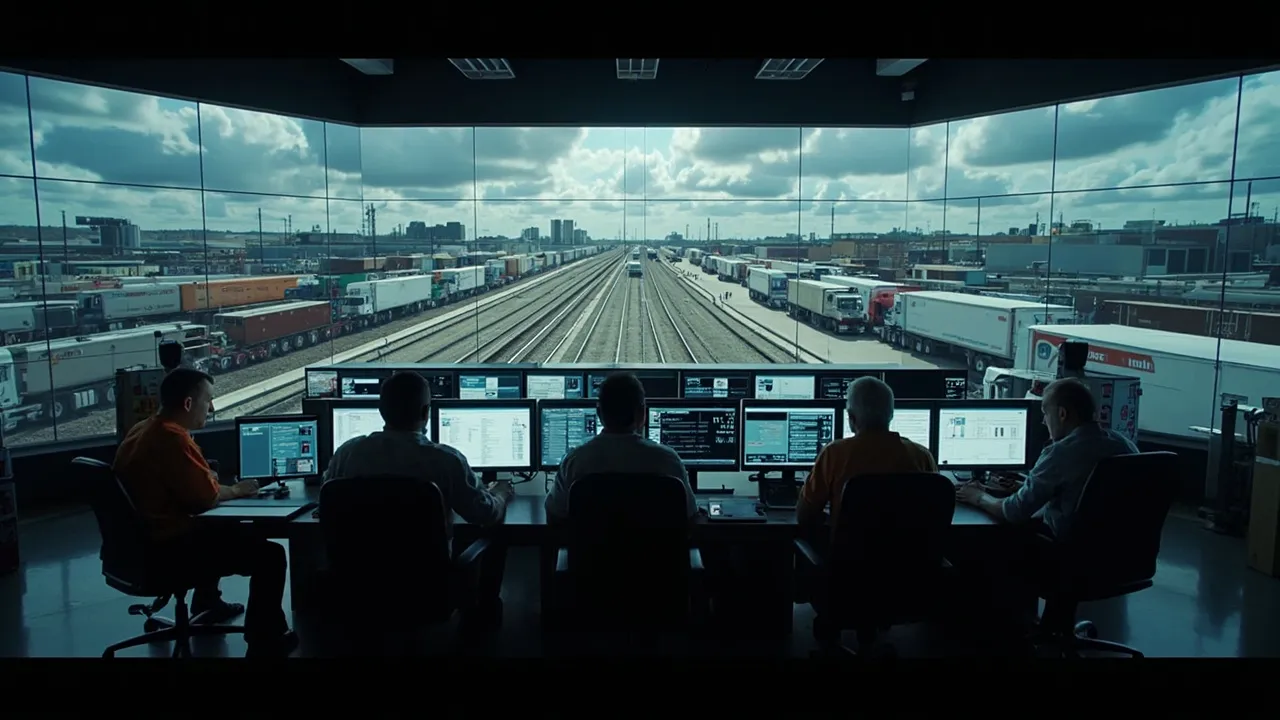
The Warehouse Automation Gap: Why 75% of Logistics Facilities Still Run Manual Processes Despite Proven 3-Year Payback


The numbers tell a paradoxical story. According to McKinsey's warehouse automation research, companies plan to increase automation investment to 25% of capital spending on average over the next five years—with logistics and fulfillment operations expecting automation to exceed a third of total CapEx. A Mecalux and MIT Intelligent Logistics Systems Lab survey found that the typical payback period for warehouse automation is just two to three years, with over 90% of respondents already using some form of AI or advanced automation.
Yet walk into the vast majority of distribution centers across America, and you'll find paper clipboards, manual picks, and human-powered forklifts running the show. The automation adoption gap is one of the most confounding puzzles in modern logistics.
Spending Does Not Equal Adoption
The distinction between automation investment and automation adoption is critical. MHI's 2026 supply chain trends analysis, reported by Modern Materials Handling, identified workforce and talent gaps as the number one challenge facing supply chains—ahead of AI, geopolitics, and cybersecurity. Companies are writing checks for automation technology, but deploying it at scale is another story entirely.
McKinsey's research underscores this point: a survey of 65 top logistics and supply chain executives found that 70% plan to invest approximately $100 million in automation over the next five years. Yet the industry continues to struggle with translating those commitments into operational reality.
The gap between intention and implementation isn't accidental. Five systemic barriers keep most warehouses locked in manual mode.
Barrier 1: Upfront Capital Shock
Warehouse automation systems don't come cheap. A full goods-to-person system can cost $5–15 million depending on scale, while even entry-level AMR deployments run $500,000 to $2 million. For mid-market distributors operating on thin margins, these numbers trigger immediate sticker shock—even when the three-year payback math checks out.
The problem isn't that automation doesn't pay for itself. It's that capital allocation committees evaluate automation against competing investments—facility expansion, fleet upgrades, ERP modernization—where the perceived risk is lower. Nearly half of companies surveyed identified high upfront costs as a major barrier to adoption, according to a Supply Chain 24/7 report on U.S. manufacturers' automation plans.
Barrier 2: Integration Complexity
Modern warehouses don't operate in isolation. They're connected to WMS platforms, ERP systems, order management software, transportation management systems, and customer portals. Every automation deployment must integrate cleanly with this existing technology stack—and that's where projects stall.
The Mecalux-MIT survey flagged technical expertise, system integration, data quality, and implementation costs as the most prominent barriers. When a robotic picking system can't communicate reliably with a legacy WMS, or when sensor data doesn't flow cleanly into planning algorithms, the entire value proposition collapses.
Integration complexity is particularly acute for companies running older systems. A warehouse built around a 15-year-old WMS wasn't designed for real-time robot fleet orchestration. Retrofitting these environments requires middleware, custom APIs, and months of testing—costs that rarely appear in vendor sales pitches.
Barrier 3: Workforce Displacement Anxiety
MHI named workforce and talent gaps as the top supply chain challenge for 2026, and it cuts both ways. Companies can't find enough workers to run manual operations—62% of supply chain leaders say finding and keeping qualified workers is their biggest challenge. But proposing automation to replace existing workers triggers organizational resistance from frontline managers, unions, and community stakeholders.
The irony is that automation doesn't eliminate jobs—it changes them. The Mecalux-MIT research found that more than half of logistics leaders actually grew their warehouse workforce after implementing AI tools, while over 75% reported increases in employee productivity and job satisfaction. The shift is from manual picking and packing to roles like machine learning engineers, automation specialists, and robot fleet coordinators.
But communicating that transformation story requires change management skills that most logistics operations lack. Without a clear workforce transition plan, automation proposals die in committee.
Barrier 4: Pilot Purgatory
Perhaps the most insidious barrier is what the industry calls "pilot purgatory"—the tendency for automation projects to succeed in controlled trials but never scale to full production. According to an MIT Media Lab report, 95% of AI pilots fail due to high costs, complexity, and lack of expertise.
Pilot purgatory happens for predictable reasons. A company deploys five AMRs in a single aisle, proves they work, and then discovers that scaling to 50 robots across the entire facility requires fundamentally different infrastructure—wider aisles, charging stations, network upgrades, safety systems, and operator training. The pilot budget was $200,000. The production deployment costs $3 million.
Without a deliberate scale-up roadmap that accounts for these exponential infrastructure requirements, pilots become permanent proof-of-concepts that executives point to as "innovation" while the rest of the warehouse stays manual.
Barrier 5: Vendor Lock-In Fear
The warehouse automation market is fragmented, with dozens of vendors offering proprietary systems that don't interoperate. Shippers who invest millions in one vendor's platform worry about being locked into that ecosystem for a decade or more—unable to swap components, add competitors' robots, or migrate to next-generation technology without ripping out the entire installation.
This fear isn't unfounded. Early adopters of automated storage and retrieval systems (AS/RS) in the 2010s found themselves stuck with aging platforms that couldn't accommodate the SKU proliferation and order profile changes driven by e-commerce. The lesson reverberated through the industry: commit to the wrong vendor and you're worse off than staying manual.
Breaking Through: A Phased Adoption Playbook
The automation gap won't close with a single moonshot deployment. The companies successfully scaling automation follow a phased approach:
Phase 1: Automate data before hardware. Start with warehouse execution systems, real-time inventory visibility, and digital workflow management. These software investments cost a fraction of robotic systems and build the data infrastructure that physical automation requires.
Phase 2: Target the highest-pain processes. Identify the three to five workflows where manual labor is most expensive, error-prone, or dangerous—typically picking, sortation, and palletizing. Deploy automation surgically in these areas first.
Phase 3: Demand interoperability. Choose vendors that support open standards and API-first architectures. The trend toward software-defined automation and standardized interfaces—as covered in recent industry developments—makes vendor lock-in increasingly avoidable.
Phase 4: Build the workforce bridge. Create explicit reskilling programs that transition manual workers into automation oversight, maintenance, and coordination roles. The data shows this increases job satisfaction and retention while reducing organizational resistance.
Phase 5: Scale with integrated visibility. Connect automated systems to your TMS and broader supply chain platform so that warehouse automation decisions flow from—and inform—transportation planning, inventory positioning, and demand signals.
Closing the Gap with Connected Technology
The warehouse automation gap persists not because the technology doesn't work, but because organizations struggle with the organizational, financial, and technical complexity of deployment at scale. Closing this gap requires more than better robots—it demands integrated platforms that connect warehouse operations to the broader supply chain.
CXTMS warehouse integration tools help logistics teams bridge the automation gap by providing a unified visibility layer that connects automated and manual operations within the same planning framework. Whether you're running a fully automated facility or taking your first steps toward AMR deployment, having transportation and warehouse data flowing through a single platform eliminates the integration complexity that kills most automation initiatives.
Ready to close the automation gap? Request a CXTMS demo to see how connected supply chain technology accelerates your warehouse automation journey—without the pilot purgatory.