Ulta’s 400,000-Square-Foot Utah DC Shows Beauty Logistics Is Regionalizing Fast

Beauty logistics is high-SKU, promotion-heavy, damage-sensitive, expiration-aware omnichannel fulfillment with little tolerance for inventory errors. Ulta Beauty’s next distribution move makes that point clearly.
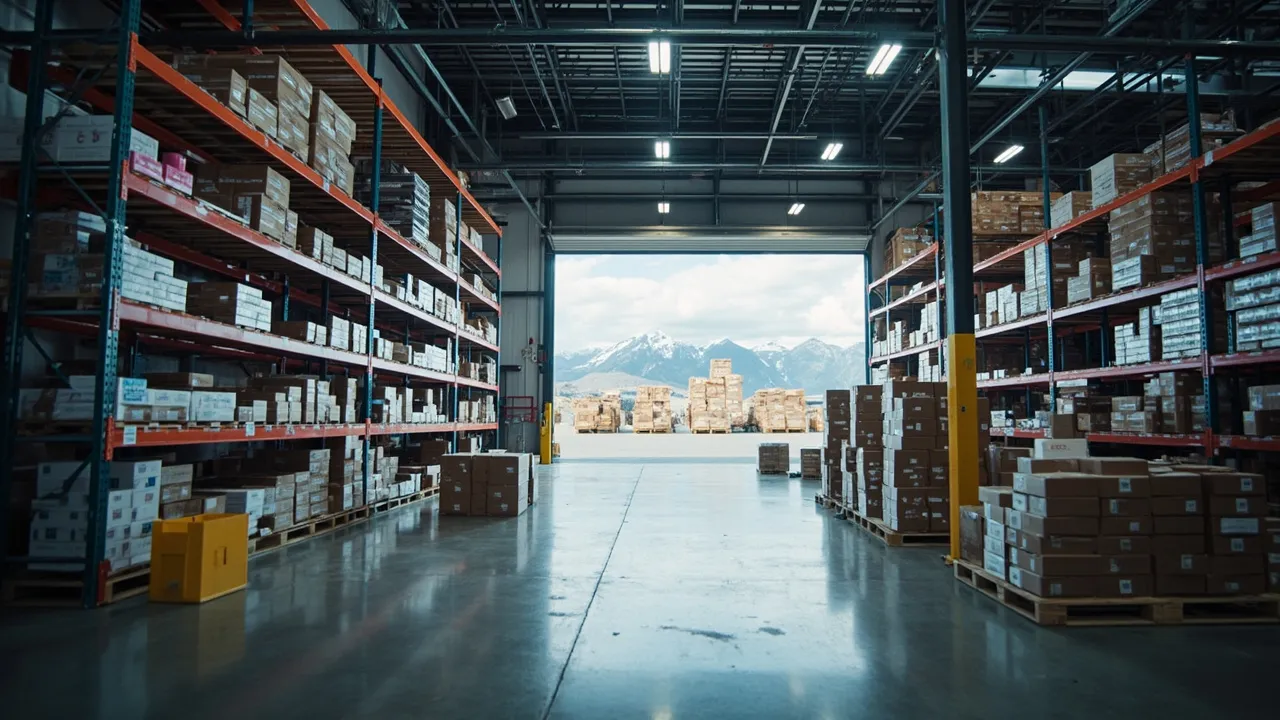
Supply Chain Dive reported that Ulta plans to open a 395,000-square-foot regional distribution center in Salt Lake City in 2027. The site is expected to serve up to 180 stores across the Pacific Northwest and Mountain Plains, support e-commerce demand, create more than 400 jobs, and become the retailer’s eighth distribution center. Chief Supply Chain Officer Erik Lopez said the facility will help close a Northwest network gap, support the Fresno, California distribution center, and improve delivery speed for supported stores and e-commerce orders by up to one full day.
That is the real headline. A regional DC is not just more square footage. It is a promise that inventory will sit closer to demand and stop asking distant buildings to cover every service problem.
Beauty is a brutal category for centralized distribution
A beauty network looks deceptively simple from the outside: small items, attractive margins, steady consumer demand. Inside the operation, it is a different animal.
A single store can carry thousands of small units across cosmetics, fragrance, skin care, tools, seasonal kits, promotional bundles, and brand-specific assortments. Many SKUs are easy to mis-pick but valuable enough to make accuracy matter. Some are fragile or temperature-sensitive. Many move in bursts when influencer demand, holiday promotions, launches, and loyalty offers create short demand spikes.
That makes distance expensive. If a replenishment order has to move too far, the retailer pays in transit time, safety stock, expedited freight, and worse shelf availability. If e-commerce demand is served from the wrong node, the cost of a small parcel can quickly eat into margin. If returns are not routed cleanly, sellable inventory gets trapped in the wrong building while stores are short.
Regionalization is the practical response: put inventory closer to demand, then use transportation planning to balance speed and cost.
Automation is becoming part of the regional DC thesis
Ulta’s Utah facility is expected to use AutoStore warehouse technology. Lopez said the system is intended to reduce cost per unit, simplify product flow and fulfillment, and improve productivity.
That matters because regional buildings cannot simply be smaller copies of old national DCs. They need to handle fragmented demand efficiently: store replenishment, e-commerce picks, promotional waves, returns processing, and network balancing. Automation helps when the problem is not only volume, but also order complexity.
For beauty retailers, cube-based automated storage and retrieval can be especially useful because many items are small, high velocity varies by launch cycle, and accuracy is critical. The point is to make a regional node productive enough that the network can put inventory closer to customers without creating a labor and cost problem at every location.
The Salt Lake City site also shows a broader shift: distribution strategy and automation strategy are becoming one conversation. If a retailer wants one-day faster delivery in a region, the question is not just where to lease space. It is what process design, storage technology, labor model, transportation schedule, and inventory policy make that speed sustainable.
Regional DCs are not the opposite of same-day delivery
The industry sometimes frames regional distribution, ship-from-store, microfulfillment, and same-day delivery as competing models. That is the wrong framing. They are layers.
Another Supply Chain Dive analysis noted that same-day options are expanding in 2026, with FedEx SameDay Local, Amazon one-hour and three-hour deliveries, Sam’s Club one-hour delivery, Dollar General rural same-day delivery, and DoorDash retail partnerships all adding pressure to the speed race. Sam’s Club said it fulfilled nearly 65,000 one-hour deliveries in less than three weeks after launch. Amazon delivered nearly 70% more items the same day they were ordered in 2025 than the year before.
But the same article also highlights the constraint: stores cannot carry everything, and store labor can become the bottleneck. Operational consultant John McClymont put it plainly: most retailers do not have Walmart-like retail infrastructure close to every customer. Roadie’s Dennis Moon raised the same inventory-positioning issue by asking what happens when a retailer wants same-day delivery across 30,000 SKUs that are not all sitting in one store.
That is where regional DCs matter. A regional building does not replace store fulfillment; it makes store fulfillment less desperate. It can replenish the right stores, support e-commerce from better origins, feed microfulfillment or cross-dock models, and reduce duplicated inventory.
For beauty, that balance is crucial. Stores are powerful experience centers and quick-delivery nodes, but they are not infinite warehouses. A regional DC gives the retailer a disciplined upstream layer behind the fast last-mile promise.
What forwarders and 3PLs should learn from Ulta’s move
Ulta’s Salt Lake City plan is not just a retail real estate story. It is a signal to logistics providers serving beauty, personal care, apparel, and other high-SKU retail categories.
First, transportation providers need more precise replenishment cadences. A regional DC serving up to 180 stores cannot run on vague appointment windows and spreadsheet tendering. Store replenishment needs route planning, delivery confirmation, exception handling, and late-inbound visibility.
Second, inbound control matters more when automation is involved. Automated systems perform best when inbound data, carton labeling, ASN quality, carrier arrival timing, and receiving workflows are clean. Sloppy inbound turns automation into a waiting room.
Third, returns need to be designed into the network, not bolted on later. Beauty returns can involve damaged packaging, hygiene rules, liquidation paths, vendor credits, and restock decisions. Regional nodes can improve recovery speed, but only if reverse logistics routing is built into the same transportation workflow as outbound fulfillment.
Fourth, promotion planning has to connect merchandising to freight. New launches and seasonal campaigns ignore static routing guides. Providers that translate promotion calendars into capacity plans, inbound milestones, and store delivery waves will beat providers that only quote lanes.
The network lesson: speed comes from structure
Ulta’s planned Utah DC combines 395,000 square feet of regional capacity, service for up to 180 stores, e-commerce support, AutoStore automation, more than 400 jobs, and a one-day service improvement goal. That is network design, not just a facility announcement.
Retailers chasing speed often start at the customer promise and work backward. That is understandable, but dangerous. Same-day and next-day commitments are only profitable when the upstream network can feed them reliably. Otherwise, the brand buys speed through premium freight and margin leakage.
Regionalization gives logistics teams a better foundation. It shortens the replenishment loop. It gives e-commerce more origin options. It reduces pressure on overextended stores. It lets automation target repeatable flows. It gives planners a clearer way to decide which inventory belongs in a national DC, regional DC, store, cross-dock, or fast-delivery partner location.
For beauty and other high-SKU retailers, that is where the market is heading. Faster fulfillment comes from a network that knows where inventory should sit before demand hits.
CXTMS helps logistics teams run that network with inbound visibility, store replenishment planning, carrier execution, exception workflows, parcel and freight analytics, and control-tower reporting. If your retail logistics strategy is still held together by disconnected DC plans and last-mile promises, schedule a CXTMS demo and build the regional execution layer before speed gets expensive.