Dollar Tree’s Arizona DC Shows Retail Resilience Is Becoming a Transit-Time Problem

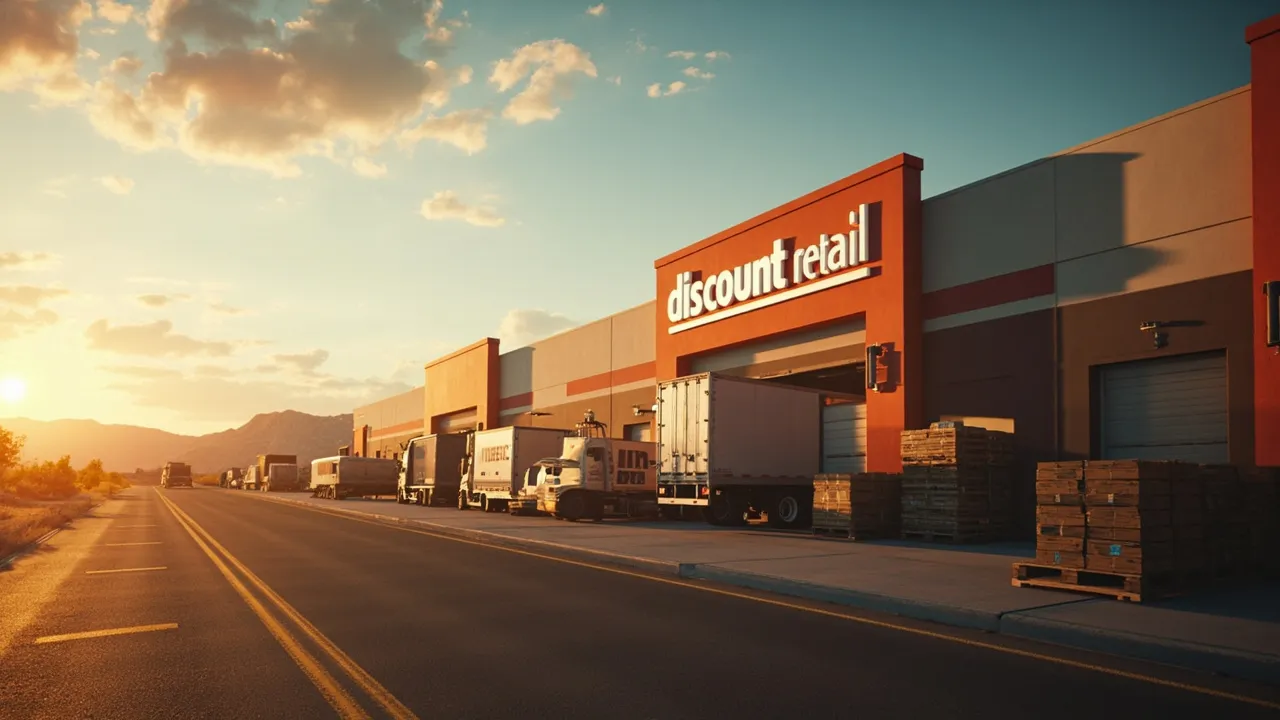
Retail resilience used to be discussed mostly as a sourcing problem: diversify suppliers, carry more buffer stock, find another port, add another carrier. Those still matter. But Dollar Tree’s new Arizona distribution center points to a more operational truth for 2026: for store-based retailers, resilience is increasingly a transit-time problem.
According to Supply Chain Dive, Dollar Tree opened a 1 million-square-foot distribution center in Litchfield Park, Arizona that is expected to begin outbound deliveries next month and serve about 700 stores across the West and Southwest. The facility will support stores in Arizona, Colorado, Nevada, New Mexico, Utah and nearby markets, giving the retailer more regional capacity and a shorter path to shelves.
That sounds like a real estate announcement. It is really a transportation strategy.
Why the DC location matters more than the square footage
The obvious headline is the building size. One million square feet is meaningful capacity. But the more important detail is what Dollar Tree said the building is designed to do: position infrastructure closer to stores, reduce transit times and create more consistent service and inventory flow.
That is the right way to read the project. A regional DC is not resilient because it is large. It is resilient when it reduces the number of miles, handoffs, late trailers, labor peaks and recovery decisions required to keep stores stocked.
For discount retail, that is especially important. Low-price retail depends on high inventory discipline. A store does not have infinite backroom space, customers are price-sensitive, assortments turn quickly and transportation cost leaks directly into margin. If a network is stretched too far from its stores, the retailer can end up paying for resilience twice: once through extra inventory and again through longer transportation loops.
Dollar Tree’s Arizona move suggests a better model. Put the replenishment node closer to the demand cluster. Shorten average store delivery distance. Improve cadence. Reduce the chance that one weather event, facility outage or long-haul carrier disruption cascades into empty shelves across an entire region.
Retail demand is still strong enough to punish weak networks
The timing matters because retail sales are not collapsing. Logistics Management reported that U.S. April retail sales reached $757.2 billion, up 0.5% from March and 4.9% year over year, according to Commerce Department data. April also marked the seventh consecutive month of retail sales gains.
The same report noted that retail trade sales rose 5.2% annually, non-store retailers increased 11.1% year over year and general merchandise stores rose 6.19% year over year in the CNBC/NRF Retail Monitor category detail.
That demand profile creates a nasty logistics challenge. Consumers may be cautious, but they are still buying. Retailers cannot assume softer sentiment will protect them from service failures. If stores do not have the right goods at the right time, the miss is visible immediately: lost basket, substitution, markdown pressure, store labor disruption or emergency freight.
For discount chains, the operational burden is even sharper. Value shoppers are sensitive to availability and price. A late replenishment cycle can force the retailer to choose between stockouts and transportation premiums. Neither is attractive.
Resilience now starts with store-density math
A regional DC decision should start with three questions.
First: where is the store density? A distribution center serving 700 stores can create powerful route density if those stores are clustered in a way that supports reliable multi-stop deliveries, balanced backhauls and predictable driver utilization. If the density is weak, the building becomes expensive storage with long outbound lanes attached.
Second: what replenishment cadence does the assortment require? Slow-moving seasonal goods, fast-turn consumables, bulky items and promotional merchandise do not create the same transportation rhythm. A resilient network understands which SKUs need frequent store replenishment and which can tolerate slower flow.
Third: how much inbound consolidation can the network support? Dollar Tree told Supply Chain Dive it is also better aligning inbound and outbound flows and balancing import volume across carriers and ports. That is where many retail networks get messy. A DC can be close to stores and still underperform if inbound freight arrives in poor waves, appointments are unreliable or port and carrier choices create uneven trailer availability.
The real test is not whether a retailer can open a building. The test is whether transportation, warehouse and inventory teams can coordinate the building into the network.
The Oklahoma replacement shows the cost of missing redundancy
The Arizona facility is not Dollar Tree’s only network move. Supply Chain Dive also reported that the company plans to open a new Marietta, Oklahoma, distribution center in 2027 to replace a building destroyed by a tornado in 2024. The loss of that site increased transportation costs because reduced distribution capacity strained the network and added transport miles.
That is the resilience lesson in plain English: when a node disappears, miles come back. If the remaining DCs have to cover too much geography, transportation becomes the shock absorber. Carriers run longer lanes. Store service becomes harder to sequence. Inventory is less precisely positioned. Cost per location rises.
This is why DC placement should be evaluated as a service-risk control, not just a capex decision. The best network designs create enough overlap to recover from disruption without turning every exception into premium freight.
What transportation teams should model before adding capacity
Retailers considering similar moves should model more than facility cost. They should pressure-test the network at lane level:
- average and 95th-percentile transit time from DC to store clusters;
- store delivery frequency by region and product category;
- inbound carrier, port and supplier concentration;
- trailer dwell and appointment reliability at the DC;
- backup sourcing and alternate DC coverage for each market;
- cost-to-serve by store, not just by region;
- exception workflows for late inbound freight, missed store windows and inventory imbalance.
The last point matters most. A network model is only useful if the execution system can act on it. When a trailer misses an appointment or a port delay threatens a promotion, the team needs more than a dashboard. It needs recommended recovery options, owner assignment, customer or store communication and financial visibility into the decision.
That is where CXTMS fits. Modern transportation teams need lane-level service targets, live exception workflows, carrier performance evidence and cost-to-serve visibility in one operating layer. Regional DCs can reduce transit-time risk, but only if planners can see how each lane is performing and intervene before a late shipment becomes a shelf problem.
The practical takeaway
Dollar Tree’s Arizona DC is a useful signal because it frames resilience in concrete operating terms. The goal is not simply more capacity. The goal is infrastructure close enough to demand that the retailer can move faster, recover cleaner and spend less money fighting its own network geometry.
In 2026, retail logistics resilience is not just about having options. It is about having the right options close enough to matter.
Ready to model transit-time risk, carrier performance and cost-to-serve across your retail network? Schedule a CXTMS demo and see how transportation execution data can turn resilience planning into daily operating control.