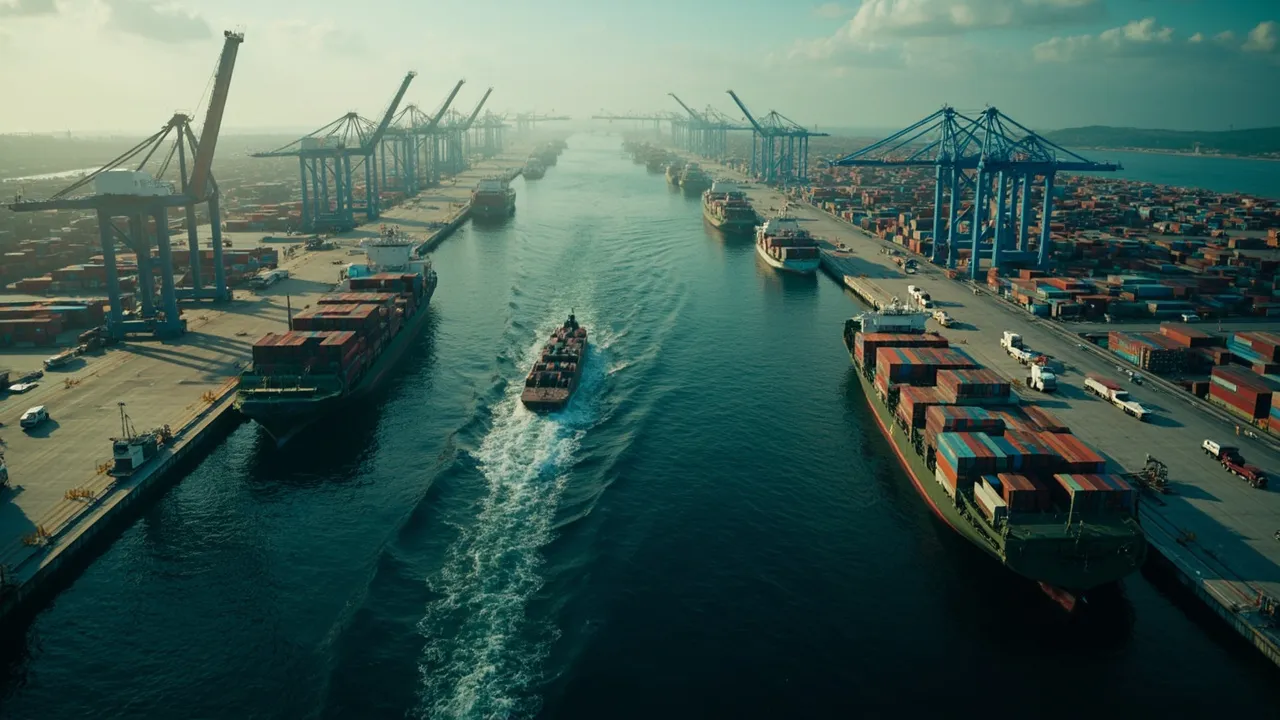
Toyota Slashes 40,000 Middle East-Bound Vehicles Over Iran Conflict: What OEM Production Cuts Reveal About Geopolitical Freight Fragility

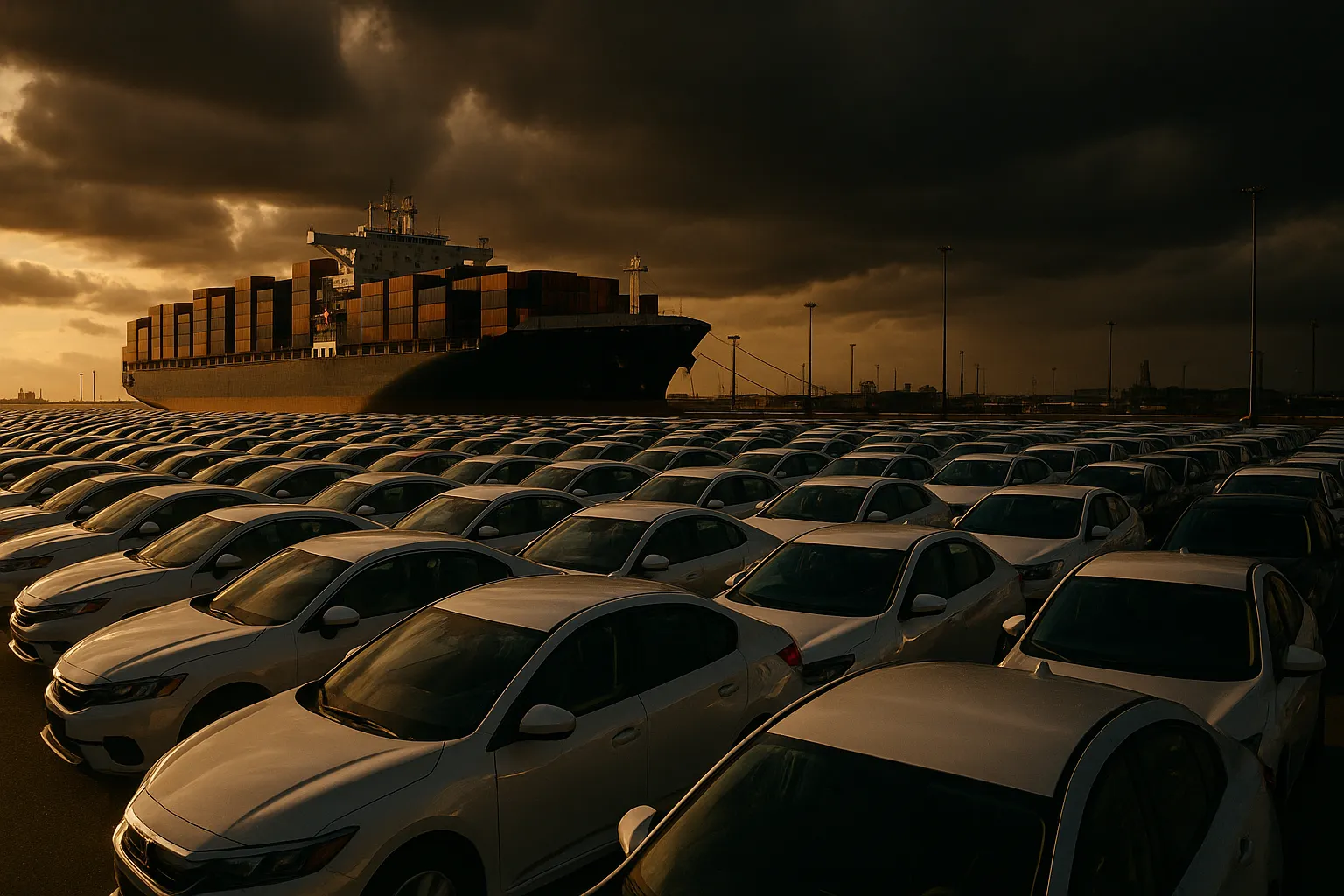
When Toyota Motor announced it would produce nearly 40,000 fewer vehicles bound for Middle Eastern markets in March and April 2026, it wasn't just an automotive headline — it was a logistics warning shot. The decision, driven by the escalating U.S.-Israeli campaign against Iran and the near-total disruption of shipping through the Strait of Hormuz, reveals how quickly geopolitical conflict can cascade from shipping lanes to factory floors, wiping out months of production planning in days.
For supply chain leaders across every industry, Toyota's move is a case study in geopolitical freight fragility — and a signal that traditional route-dependent logistics strategies are no longer sufficient.
The Breaking Event: 40,000 Vehicles and a 65% Monthly Export Cut
According to Reuters, Toyota notified parts suppliers of revised production plans for March and April after the Strait of Hormuz — the narrow chokepoint between Iran and Oman — became effectively impassable for commercial shipping. The cut primarily affects popular models including the Land Cruiser SUV, sedans, and commercial vans.
The numbers are stark. Toyota's normal monthly exports to the Middle East run approximately 30,000 vehicles, making this cut equivalent to roughly 60–70% of typical volume. This isn't a minor adjustment — it's a fundamental production shutdown for an entire regional market.
Why This Happened: The Strait of Hormuz Closure
The U.S.-Israeli strikes on Iran that began February 28 triggered an immediate maritime crisis. Iranian forces retaliated against ports and merchant vessels in the Persian Gulf, effectively closing the Strait of Hormuz to most global shipping traffic.
The impact on ocean carriers has been swift and severe. FreightWaves reported that Maersk, CMA CGM, and Mediterranean Shipping Co. all suspended or diverted vessel services to the region. CMA CGM imposed an Emergency Conflict Surcharge of $2,000 per 20-foot container, $3,000 per 40-foot, and $4,000 per refrigerated unit — covering all Red Sea and Persian Gulf destinations.
For automotive logistics specifically, the disruption hits RoRo (Roll-on/Roll-off) shipping hardest. Major RoRo operators including Höegh Autoliners, Wallenius Wilhelmsen, and K-Line are all actively managing rerouting decisions, with schedules that were firm two weeks ago now subject to daily changes.
The Cascade Effect: From Shipping Lane to Factory Floor
What makes Toyota's decision so instructive for logistics professionals is the speed of the cascade:
Day 1–3: Shipping lane disruption. Iranian attacks on vessels and ports make the Strait of Hormuz effectively closed to commercial traffic. Marine insurance premiums spike.
Day 4–7: Carrier suspensions. Major ocean lines suspend Persian Gulf services. Emergency surcharges are imposed. Alternative routing through the Cape of Good Hope adds 10–14 days to transit times.
Day 7–14: OEM production adjustment. Toyota recognizes that even with alternative routing, the cost and timeline make continued production for Middle Eastern markets uneconomical. Parts suppliers are notified. Factory lines are reconfigured.
Day 14–30: Downstream effects. Dealership inventories in the UAE, Saudi Arabia, and other Gulf states begin depleting. Aftermarket parts shipments face the same routing constraints. Regional economic activity around automotive sales and servicing declines.
This entire cascade — from missile strike to factory shutdown — unfolded in less than two weeks. It demonstrates how tightly coupled modern automotive supply chains are to specific maritime corridors.
Broader OEM Exposure: Toyota Isn't Alone
While Toyota was the first major OEM to publicly announce production cuts, the exposure extends across the industry. S&P Global's rapid impact analysis warns that global production impacts will stem from both supply disruptions and shipping constraints, with cost inflation becoming more entrenched as the conflict continues.
The Middle East represents a significant automotive market. GlobalData has already cut its regional auto sales outlook for 2026, noting that OEMs and dealers face higher logistics costs, elevated insurance premiums, and greater difficulty forecasting demand and managing inventory.
Japanese automakers are particularly exposed because of their heavy reliance on exports from domestic factories rather than regional production. European manufacturers with assembly operations in Turkey or North Africa may have more flexibility to serve Gulf markets through overland routes — but at considerably higher per-unit logistics costs.
What This Means for Shippers Beyond Automotive
Toyota's 40,000-vehicle cut is dramatic, but the underlying lesson applies to any shipper with route-dependent supply chains:
Single-corridor risk is real. The Strait of Hormuz carries roughly 20% of the world's crude oil and serves as the gateway for all Persian Gulf container and RoRo traffic. Any shipper relying on a single maritime corridor — whether Hormuz, Suez, Malacca, or Panama — carries concentration risk that can materialize overnight.
Insurance and surcharges compound fast. CMA CGM's emergency surcharges added $2,000–$4,000 per container within days. War risk insurance premiums for vessels transiting conflict zones can spike 100x in hours. These costs don't wait for quarterly budget reviews.
Production and demand signals decouple. Toyota's cuts weren't driven by falling demand — Middle Eastern consumers still want Land Cruisers. The disconnect between actual demand and deliverable supply creates inventory distortions that take quarters to unwind.
Building Geopolitical Resilience Into Freight Strategy
The shippers who weather these disruptions best share common traits: multi-modal flexibility, real-time visibility into carrier status, pre-negotiated alternative routing agreements, and scenario-planning tools that can model the cost impact of corridor closures before they happen.
CXTMS provides the geopolitical risk monitoring and alternative routing intelligence that modern shippers need. Our platform continuously tracks maritime security developments, carrier service status, and surcharge changes across every major trade lane — giving logistics teams the lead time to shift routing before disruptions cascade into production shutdowns.
When the next Strait of Hormuz — or Suez, or Panama — closure happens, will your supply chain respond in hours or weeks?
Request a CXTMS demo → See how real-time geopolitical risk monitoring and dynamic route optimization protect your freight from the next disruption.