The Tariff Front-Loading Hangover: How Pre-Tariff Inventory Stockpiling Is Distorting Q1 2026 Freight Demand and Creating a Mid-Year Cliff


The numbers tell a jarring story. U.S. container imports in February 2026 hit 2.09 million TEUs—down 6.5% from the prior year but still the fourth-highest February on record, according to Descartes Systems Group data reported by Reuters. January volumes told a similar tale, falling 6.8% year-over-year. The culprit behind the decline isn't weakening demand. It's the hangover from one of the most aggressive inventory front-loading campaigns in modern supply chain history.
Throughout 2025, U.S. importers raced to beat a cascade of tariff deadlines—Section 301 escalations on Chinese goods, Section 232 expansions to steel, aluminum, copper, and wood products, and the sweeping IEEPA "Liberation Day" tariffs that introduced a 10% global baseline duty. The result was a massive pull-forward of inventory that inflated freight volumes, filled warehouses to capacity, and created an artificial demand signal that is now unwinding with consequences shippers can't afford to ignore.
The Front-Loading Frenzy: What Happened in 2025
The pattern is well-documented. When tariff announcements accelerated in early 2025, importers didn't wait. They stockpiled. Chinese exports surged as American buyers rushed containers through ports before duty rates climbed higher. FreightWaves data showed importers held 4% more inventory year-over-year across their facilities in the first half of 2025, consolidating shipments to optimize freight costs while maximizing pre-tariff purchasing power.
The National Retail Federation's Global Port Tracker captured the scale: first-half 2025 container volumes totaled 12.53 million TEUs, up 3.7% year-over-year, even as underlying consumer demand remained moderate. The import surge wasn't driven by consumers buying more—it was driven by procurement teams buying earlier.
Tariff rates on Chinese goods now range from 7.5% to 100% depending on the product category. Section 232 duties on steel and aluminum hit 50% in 2025. The math was simple: every dollar of inventory purchased before a rate increase represented direct margin protection. Companies from Stanley Black & Decker to mid-market distributors executed the same playbook—buy now, store it, and sort out the carrying costs later.
The Demand Distortion: Artificially Inflated Then Artificially Deflated
What goes up must come down. The front-loading that boosted 2025 freight volumes is now creating a mirror-image depression in early 2026. January 2026 container imports dropped 6.8% compared to the tariff-inflated January 2025 baseline. February fell 6.5%. The NRF forecasts March volumes at just 1.79 million TEUs—a staggering 16.8% year-over-year decline.
But here's the critical distinction for freight planners: this isn't a demand recession. It's a timing distortion. Imports from China totaled 728,562 TEUs in February 2026, down 16.5% year-over-year, yet China's share of total U.S. imports actually increased marginally to 34.8%. The absolute volumes remain above the six-year average. What's changed is the comparison baseline, which was artificially elevated by panic buying.
Ben Hackett of Hackett Associates, who manages the NRF Port Tracker, put it bluntly: "We are seeing the results of the tariffs in weakening cargo demand going forward from the fourth quarter of this year and likely into the first half of next year." Container shipping rates are already declining on both coasts as carriers compete for shrinking volumes.
The Warehouse Squeeze: Inventory With Nowhere to Go
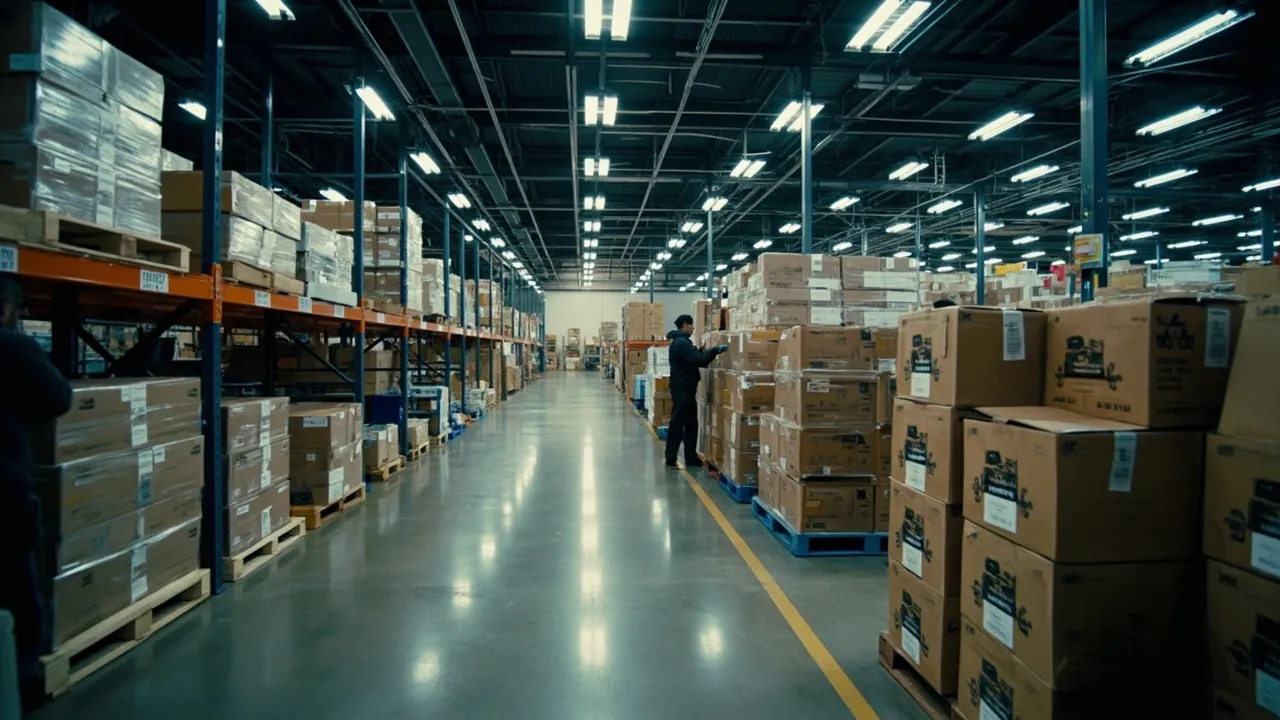
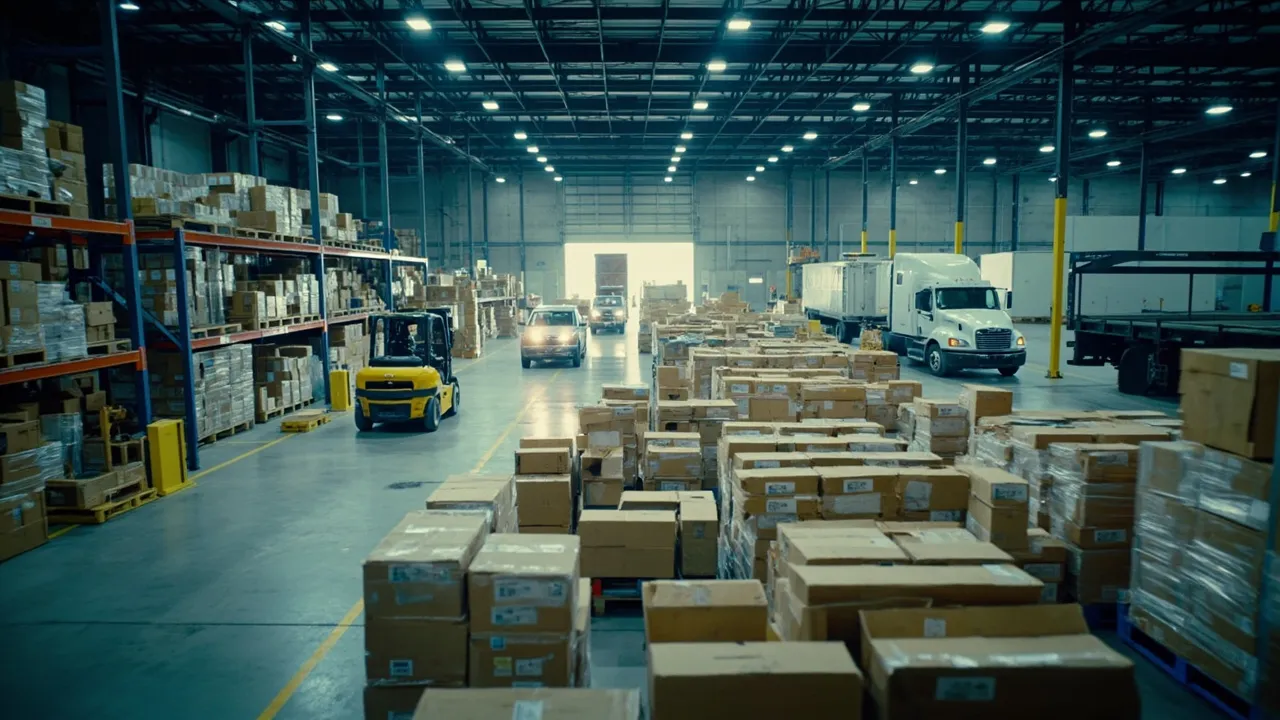
The front-loading didn't just distort freight demand—it created a warehousing crisis that persists into 2026. Companies that rushed inventory into the U.S. ahead of tariff deadlines now face a dual problem: they're sitting on months of excess stock while simultaneously dealing with an industrial real estate market that hasn't fully adjusted.
A Phocas Software survey of over 100 distribution professionals found that 63% of distributors believe they're losing sales because they don't have the right stock available—even as their warehouses are full. The issue isn't capacity. It's assortment. Companies stockpiled what was tariff-exposed, not necessarily what customers need right now.
This mismatch is expensive. Carrying costs on pre-tariff inventory include not just warehousing fees but insurance, depreciation, obsolescence risk, and the opportunity cost of capital tied up in goods that may take months to sell through. For seasonal products, the calculus is even worse—inventory purchased in Q3 2025 to beat a tariff deadline may not align with Q1 2026 selling seasons at all.
The Mid-Year Cliff: What Comes Next
The most dangerous phase of the front-loading cycle hasn't arrived yet. As stockpiled inventory depletes through Q1 and Q2, importers face a decision: reorder at the new, higher tariff rates, or reduce purchasing volumes and accept thinner assortments. Most will choose a middle path—ordering less, more selectively, and later than their traditional procurement cycles dictate.
This creates the mid-year freight demand cliff that logistics planners should be preparing for now. The NRF projects April volumes at 1.97 million TEUs, down 10.9% year-over-year, with no clear catalyst for recovery until fall restocking begins. Meanwhile, KPMG's 2026 Trade Outlook warns that stockpiled inventories have largely been liquidated, meaning the tariff cost buffer is gone and inflation from higher duties will begin flowing through to consumer prices.
For carriers, this means overcapacity and rate pressure through the summer. For shippers, it means a brief window of favorable freight pricing—but also the risk of carrier exits and service reductions that tighten capacity just as fall demand ramps up.
Compounding Factors: The Supreme Court and Iran
Two wildcards add further volatility. The U.S. Supreme Court's February 20 ruling that Trump's IEEPA tariffs exceeded presidential authority forced a rapid policy pivot—a new 10% global tariff with plans to increase to 15% within 150 days. This legal uncertainty makes forward purchasing decisions nearly impossible, as Logistics Management reports that overlapping duties, shifting rate expectations, and frequent legal reversals have created "tariff whiplash" that paralyzes procurement teams.
Simultaneously, the U.S.-Israeli military campaign against Iran has disrupted Strait of Hormuz shipping, sending fuel prices higher and prompting carriers like MSC to implement emergency fuel surcharges. These cost spikes hit just as shippers are trying to restart import programs after the front-loading pause.
How CXTMS Helps Shippers Navigate Demand Distortion
The tariff front-loading hangover exposes a fundamental weakness in traditional supply chain planning: most systems can't distinguish between organic demand signals and policy-driven distortions. When your Q1 2025 freight volumes were inflated by 10-15% due to panic buying, using that as a baseline for 2026 planning guarantees forecasting errors.
CXTMS addresses this challenge through intelligent freight demand analytics that separate tariff-driven volume spikes from underlying demand trends. Our platform helps shippers:
- Model tariff scenarios against procurement timelines to optimize order timing across duty rate changes
- Track carrier capacity indicators in real time, identifying the best moment to lock in favorable rates during the mid-year soft market
- Balance inventory carrying costs against tariff exposure through integrated landed-cost analysis
- Monitor lane-level rate trends to capitalize on the overcapacity window before fall tightening begins
The companies that thrive through this distortion won't be the ones who front-loaded the most inventory—they'll be the ones who planned the smoothest recovery.
Ready to build tariff-resilient freight strategies? Request a CXTMS demo and see how real-time demand intelligence helps you navigate policy-driven disruptions without the hangover.