A $4 Million Panama Canal Line-Jump Fee Tells You Congestion Pricing Has Gone Completely Ferocious

When a ship pays $4 million just to skip the line, the market is telling you something ugly.
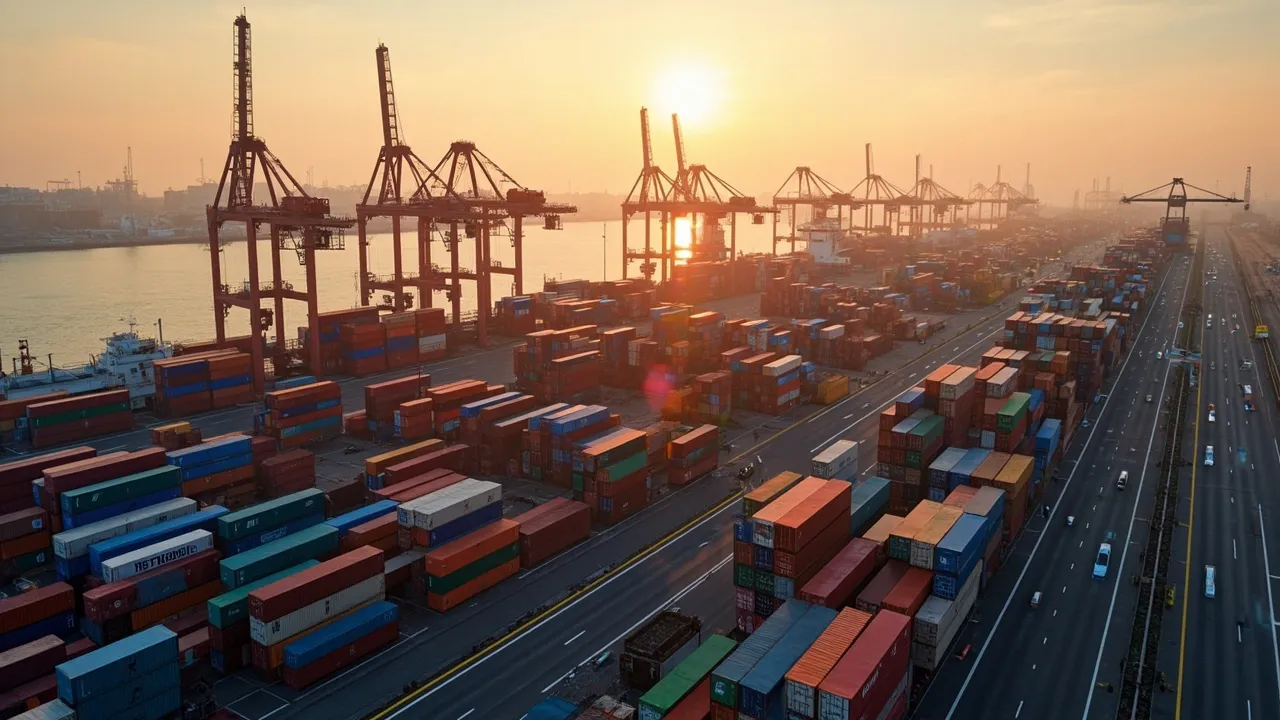
According to Supply Chain Brain, a liquefied petroleum gas tanker recently agreed to pay an extra $4 million in a Panama Canal auction to speed up its transit. That fee sat on top of the normal canal toll, which already runs into the hundreds of thousands of dollars depending on vessel and cargo. The same report said commercial cargo ships were facing median delays of three and a half days to enter the canal, the worst congestion since the 2023-2024 drought disrupted traffic through the 50-mile (82-kilometer) waterway.
That is not a colorful shipping anecdote. It is a blunt lesson in what happens when global trade lanes get stressed and scarce capacity turns into a bidding war.
The Panama Canal is pricing urgency in real time
The most important detail in the story is not just the $4 million number. It is how fast the premium escalated. Supply Chain Brain reported that some vessels were paying less than $1 million as recently as early March to cut the line. In other words, the market did not simply become expensive. It became ferocious in a matter of weeks.
That kind of jump destroys lazy planning assumptions.
Many shippers still budget ocean transport as if disruptions show up mainly through late arrivals, minor surcharges, or a frustrating but manageable swing in spot rates. The Panama example shows something harsher. When a chokepoint tightens, costs stop moving in straight lines. They gap upward because urgency itself becomes the product being sold.
Canal access is no longer just infrastructure. In moments like this, it becomes a marketplace for priority.
Why this matters beyond one canal transit
It would be a mistake to treat this as a weird one-off tied to one tanker. The broader context is what makes it serious.
Supply Chain Brain linked the congestion to traffic shifting as turmoil around the Strait of Hormuz disrupted normal energy and chemical flows. In a separate report, the publication noted that trade participants remained cautious even as questions about Hormuz access evolved, with retailers and shippers still weighing the risk of renewed disruption before fully normalizing flows. That caution matters because congestion pricing does not need a route to be fully closed. It only needs enough uncertainty for buyers, traders, and carriers to start hedging with alternate lanes all at once.
That is when chokepoints become pressure valves. The Panama Canal is one of the first places that pressure shows up in dollars.
For importers and forwarders, the practical lesson is simple: maritime disruption pricing in 2026 is behaving less like a surcharge table and more like surge pricing in an emergency. If too many participants need the same path at the same moment, the premium can get absurd fast.
Landed cost models are probably too polite
A lot of landed cost models still assume disruption as a percentage adjustment. Add some buffer for fuel, add some buffer for detention, maybe widen the transit-time range, and call it a day. That is not enough anymore.
A $4 million line-jump payment should force a more aggressive question: what is the cost of not moving?
For some cargoes, especially energy, chemicals, or time-sensitive industrial inputs, paying a grotesque transit premium can still be economically rational if the alternative is a plant slowdown, a missed contract, or a downstream stockout. Once that logic enters the system, pricing behavior gets weird. Premiums are no longer anchored to the canal's operating cost. They are anchored to the commercial pain buyers are trying to avoid.
That changes how procurement and logistics teams should model risk.
Instead of assuming one baseline route and one backup route, companies should model at least three scenarios:
- normal transit economics
- disrupted transit with moderate delay and surcharge pressure
- extreme urgency pricing where route access itself becomes auction-like
If your planning model cannot absorb the third case, it is too optimistic for current maritime conditions.
Inventory buffers are suddenly cheaper than panic
Here is the unfashionable truth: some inventory is cheaper than heroics.
The industry spent years learning to hate buffers. Lean sounded smarter. Low inventory looked cleaner on dashboards. But when routing optionality collapses and transit priority gets auctioned, strategic inventory starts looking less like waste and more like insurance.
That does not mean everyone should pile on stock. It means companies moving through canal-dependent or disruption-prone lanes need a more deliberate segmentation strategy. Critical SKUs, fragile supplier flows, and products tied to high-margin commitments deserve different buffer logic than steady, low-risk replenishment freight.
The shippers that suffer most in these moments are usually the ones with no time cushion and no routing flexibility. They end up buying speed at the worst possible time, which is exactly how you get bullied by congestion pricing.
Contracts need to cover behavior, not just rates
There is also a contract lesson here, and it is a big one.
Ocean contracts often focus on price, allotment, and service language, but disruption exposes the clauses that really matter: rerouting rights, priority access mechanisms, surcharge transparency, booking protection, and escalation rules. If your partners can pass through chaos pricing without much structure, you are not buying resilience. You are renting uncertainty.
Forwarders and beneficial cargo owners should be asking harder questions now:
- What happens when a strategic chokepoint becomes capacity-constrained overnight?
- Who decides whether cargo reroutes, waits, or pays for priority?
- Which premiums require approval, and how fast can that approval happen?
- What visibility do planners get into booking status, queue conditions, and alternate routing options?
The wrong time to answer those questions is when a vessel is already sitting outside a canal burning cash.
Execution discipline is the real differentiator
The companies that handle episodes like this best are not necessarily the ones with the biggest transportation budgets. They are the ones that can see exposure early, compare scenarios fast, and make decisions before everyone else piles onto the same workaround.
That is execution discipline.
It means having shipment visibility good enough to identify cargo at risk. It means understanding customer and product priority well enough to know what deserves premium treatment and what can wait. It means connecting procurement, transportation, and inventory planning tightly enough that a routing shock does not trigger three days of internal confusion before anyone acts.
The Panama Canal story is dramatic, sure. But the bigger warning is quieter: disruption pricing is getting more aggressive, more nonlinear, and more detached from old planning norms.
If shippers keep treating chokepoint risk as an occasional nuisance instead of a core planning variable, they will keep paying emergency prices for predictable problems.
That is a dumb way to run a network.
If your team needs better visibility into route risk, shipment priorities, and contingency execution when maritime conditions go sideways, book a CXTMS demo and see how modern logistics orchestration helps you react before congestion gets expensive.