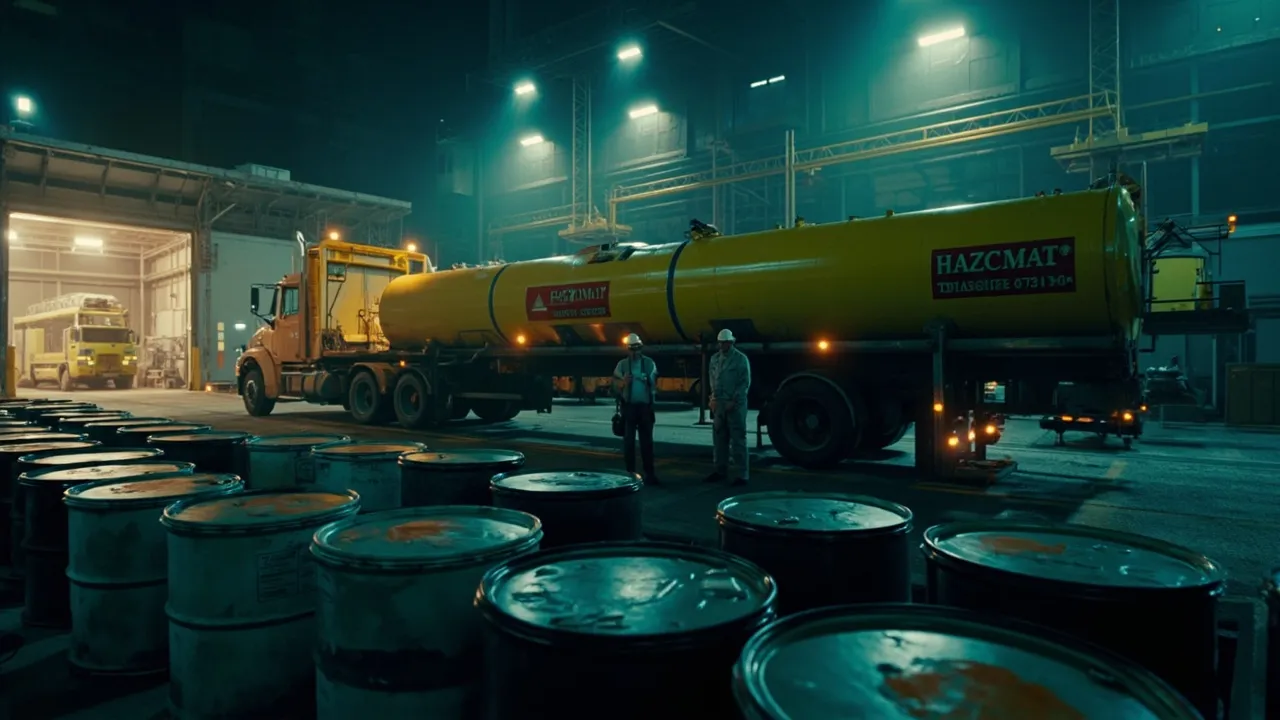
OXEA's Global Managed Transportation Deal: A Control Model for Chemical Logistics


Chemical logistics is unforgiving of fragmented execution. A missed truck appointment may stop a production line; an incorrect hazardous-material classification can stop the shipment; and a rail or ocean disruption can ripple across borders before a regional team sees the full impact.
That is the operating problem behind OXEA's decision to consolidate transportation management across the United States, Canada, Mexico, and Europe. The chemical manufacturer selected a single managed transportation provider to coordinate truckload, rail, and ocean moves. The strategic lesson is not simply that outsourcing can create scale. It is that a shipper needs a deliberate control model before one provider begins operating a network this broad.
One execution layer across two continents
FreightWaves reports that OXEA is replacing a regionally segmented approach with an integrated network connecting plants, carriers, and customers. Day-to-day execution will cover three modes and four countries. OXEA employs more than 1,200 people, sells into more than 60 countries, and produces chemicals used in coatings, lubricants, cosmetics, pharmaceuticals, flavors, fragrances, inks, and plastics.
That footprint makes standardization valuable, but it also raises the cost of a bad standard. A centralized operation should establish one shipment record and one exception language while preserving local rules for documents, dangerous-goods handling, carrier eligibility, and border processes.
The right division of responsibility is clear. The managed transportation provider can source capacity, tender loads, book appointments, track milestones, resolve routine exceptions, and audit freight bills. The shipper should retain policy ownership: approved products and lanes, service priorities, risk limits, compliance standards, escalation authority, and customer commitments. Execution can be delegated; accountability cannot.
Chemical freight needs controls before optimization
Hazardous-material transportation is not a niche edge case. FreightWaves estimates that more than 3 billion tons of hazardous materials move on U.S. highways each year. The same source notes nine federal hazard classes, specialized driver endorsements, detailed documentation and placarding requirements, and liability coverage of at least $5 million for certain carriers. Those requirements narrow the eligible carrier pool and make a cheap routing decision potentially expensive.
Every chemical shipment should therefore pass four gates before cost optimization begins:
- Product and equipment eligibility. Match the material classification, packaging, tank or trailer specification, cleaning history, temperature constraints, and incompatibility rules to the load.
- Carrier and driver qualification. Verify authority, insurance, permits, safety status, training, endorsements, equipment availability, and any customer-specific approval.
- Document completeness. Confirm shipping papers, safety data, emergency contacts, labels, customs records, and mode-specific dangerous-goods declarations before dispatch.
- Route and handoff approval. Check restricted routes, border responsibilities, terminal capabilities, custody transfers, and emergency-response coverage.
These controls belong in the workflow, not in a spreadsheet reviewed after tendering. A TMS should block a noncompliant assignment, record the reason, and route the exception to a named owner. Manual overrides should require an approver, timestamp, evidence, and expiration.
Govern service failures by severity
A global control tower can create noise if every late milestone generates the same alarm. Chemical shippers need tiered exception logic tied to operational consequences.
A late empty-trailer arrival may be a service issue. A missing document, temperature excursion, seal discrepancy, unplanned custody transfer, or hazmat-qualified driver failure is a control event. The latter group requires immediate containment: prevent departure when possible, identify the responsible party, preserve the record, notify the correct safety or trade-compliance owner, and decide whether the load can proceed.
Cross-border handoffs deserve special attention. The shipment record should identify the carrier, driver, equipment, broker, customs status, planned transfer point, and actual custody time on both sides of the border. If one party changes, the system should revalidate all eligibility and documentation rather than inheriting the prior approval.
Keep a shipper-owned data layer
Technology consolidation does not automatically create data control. SupplyChainBrain describes transportation networks as ecosystems of disconnected systems and warns that fragmented data undermines decisions. A managed transportation contract should therefore define the shipper's data rights as precisely as its rates and service levels.
OXEA's internal record should retain every order, tender, carrier response, milestone, document, exception, override, invoice adjustment, and emissions calculation in an exportable format. Master data identifiers for products, plants, customers, carriers, equipment, and lanes must remain stable even if the provider's platform changes.
The KPI layer should also be owned by the shipper. A practical scorecard includes:
- on-time pickup and delivery by mode, region, lane, and customer;
- tender acceptance and time to secure qualified capacity;
- compliant-first-tender rate and blocked-assignment count;
- document accuracy before departure;
- border and terminal dwell;
- critical exceptions by cause, severity, and recovery time;
- freight cost per shipment, ton, and lane against an agreed baseline;
- invoice accuracy and accessorial causes; and
- emissions calculated with a documented, consistent methodology.
Measure provider performance with source events, not only monthly presentation slides. Both parties should reconcile definitions during implementation and preserve raw events for audit. Contract exit terms should require complete data exports, integration documentation, open-exception transfer, and continued access through transition.
Centralize visibility, preserve decision rights
OXEA's move illustrates the promise of global managed transportation: one operating picture, earlier disruption detection, consistent communication, and coordinated improvement across modes and regions. But the model works only when centralization strengthens controls instead of obscuring them.
The durable design is a provider-operated execution layer inside a shipper-owned governance framework. Safety and compliance gates come first. Exceptions are prioritized by consequence. Cross-border custody is explicit. Performance definitions and operational data remain portable. That structure lets a chemical shipper change carriers, providers, or technology without losing the institutional memory needed to run the network safely.
Ready to build a controlled, data-driven transportation operation? Request a CXTMS demo to see how one platform can connect multimodal planning, execution, compliance evidence, and exception management.