PFAS Enforcement Turns Chemical Logistics Into a Chain-of-Custody Problem

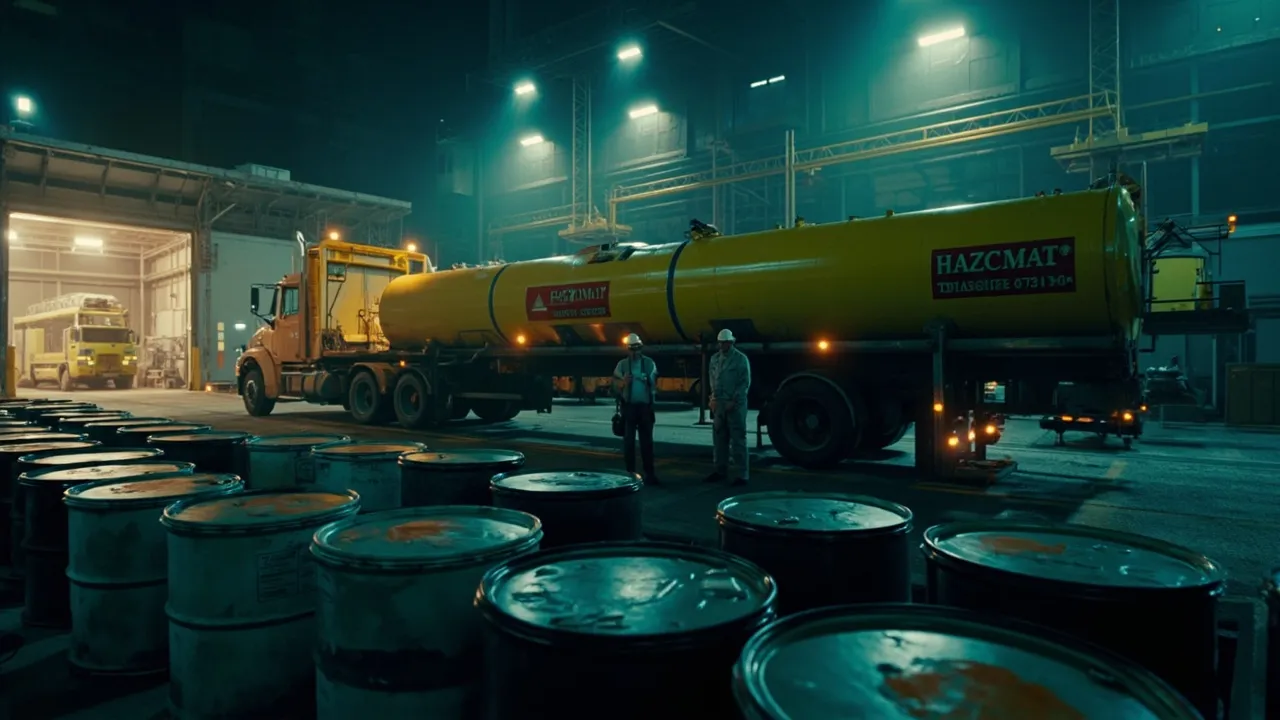
PFAS enforcement is no longer only a legal, environmental, or plant-operations issue. For chemical manufacturers, distributors, waste handlers, and logistics partners, it is becoming a chain-of-custody problem.
That distinction matters. Environmental liability often starts at the production site, but it rarely stays there. Chemicals move through tanks, drums, totes, warehouses, transload points, waste streams, carriers, terminals, treatment facilities, and customer locations. When regulators ask what happened, companies need to reconstruct the path with evidence, not memory.
The latest PFAS settlement makes that painfully clear.
Supply Chain Brain reported that Chemours agreed to a $450 million federal settlement tied to PFAS discharges in West Virginia, North Carolina, and New Jersey. The settlement includes a $22.5 million civil penalty, $90 million over 15 years to manage PFAS discharges, $60 million for pollution controls at a West Virginia facility, and $280 million to provide clean drinking water to affected communities.
The case is plant-centered, but logistics leaders should not read it as someone else's problem. PFAS risk follows material movement. If the company cannot prove where regulated material was produced, stored, transferred, transported, sampled, treated, or disposed, the compliance conversation gets harder fast.
Chain of custody now includes environmental context
Chemical logistics has always required disciplined documentation. Hazmat classification, safety data sheets, placards, bills of lading, tank wash records, temperature requirements, carrier qualifications, and emergency response information are not new.
PFAS enforcement adds another layer: environmental traceability.
The key question is not only whether a shipment moved safely from origin to destination. It is whether the company can show how the movement related to a controlled site, a permitted discharge point, a waste profile, a treatment process, or a remediation obligation.
That requires a broader record than a transportation team may be used to maintaining. A strong PFAS-ready chain of custody should connect:
- Production site and batch or lot identifiers
- Material classification and PFAS relevance
- Container, tank, tote, or drum identity
- Storage location and dwell time
- Carrier, driver, equipment, and route
- Transfer points and custody changes
- Waste stream profile and disposal destination
- Sampling, testing, treatment, and discharge records
- Exceptions, spills, delays, rejected loads, and corrective actions
None of those records can live in isolation if the organization expects to answer an audit quickly.
Chemical logistics is already operating under pressure
This is not happening in a quiet market. Chemical logistics teams are already dealing with capacity constraints, specialized equipment requirements, hazmat driver limits, volatile rates, and fragmented carrier networks.
Inbound Logistics notes that chemical shipments support essential industries including agriculture, healthcare, and manufacturing, and that many "cannot be delayed." The same article highlights how the pool of drivers licensed to carry hazardous materials is smaller than the general driver market, and cites industry comments that rates for hazardous material or tanker-endorsed shipments rose 60% to 70% during much of 2021 and early 2022.
Those numbers explain why compliance design has to be practical. Chemical shippers cannot simply add paperwork and hope operations absorb it. They need systems that make the right record the natural byproduct of moving the load.
Inbound Logistics also points to technology as a central lever, noting that capacity management and visibility solutions are critical and that chemical providers increasingly need tools to monitor shipments across the order lifecycle. That is exactly where PFAS traceability should live: inside the operational workflow, not in a compliance folder assembled after the fact.
The weak point is usually the handoff
PFAS risk becomes harder to manage when custody changes.
A shipment may leave a production site with clean paperwork, then move to a bulk terminal, transload into a different container, sit at a warehouse, shift to rail, return to truck, or go to a treatment or disposal facility. Each handoff can introduce a record gap.
Who accepted custody? Was the container sealed? Was the equipment compatible? Did dwell time exceed internal rules? Did routing change? Was the load rejected, sampled, cleaned, or reclassified? Did the waste profile match what the receiving facility expected?
For ordinary freight, those details may be operational noise. For regulated chemical movements, they can become the evidence that separates a controlled process from an unmanaged exposure.
That is why chemical logistics teams should treat custody events as structured data. A signature alone is not enough. The event should include timestamp, location, role, equipment, document set, condition, exception status, and next responsible party. If a load is delayed or diverted, the system should preserve the reason and the approval path.
Practical controls for PFAS-sensitive networks
The goal is not to turn every chemical logistics process into legal theater. The goal is to give operations teams enough structure to prove control when the stakes are high.
Start with material segmentation. Not every chemical movement carries the same environmental risk, so the TMS should distinguish PFAS-relevant materials, contaminated waste streams, remediation shipments, ordinary finished goods, samples, returns, and empty containers that still require cleaning or disposal controls.
Next, tighten location data. Production sites, permitted discharge points, warehouses, third-party terminals, transload facilities, cleaning stations, and disposal sites should be modeled as controlled locations, not just address strings. If a shipment touches a location with regulatory significance, that should be visible in the shipment record.
Carrier qualification also needs more precision. Hazmat authority, insurance, safety performance, equipment type, driver endorsements, emergency response capability, and prior exception history should be tied to the lanes and commodities a carrier is allowed to handle.
Finally, exception workflows should be explicit. Delays, rejected deliveries, leaks, missing documents, broken seals, temperature excursions, route deviations, and unplanned storage should trigger escalation, documentation, and closure. A quiet exception is a future audit problem.
PFAS compliance needs transportation data
Environmental teams may own the regulatory relationship, but they cannot reconstruct logistics history without transportation data. Compliance needs to know what moved, when it moved, who touched it, where it paused, and what changed along the way.
That makes TMS data part of the evidence file.
CXTMS helps chemical and hazmat operators connect shipments, carriers, milestones, documents, exceptions, costs, and approvals in one operating view. For PFAS-sensitive freight, that means teams can preserve custody events, surface compliance gaps, and respond faster when a movement needs review.
The Chemours settlement shows the scale of exposure when environmental controls fail: $450 million in penalties, controls, discharge management, and drinking-water obligations. Logistics systems cannot solve the entire PFAS problem. But they can close one of its most dangerous gaps: the space between what physically happened and what the company can prove.
Ready to make chemical logistics records audit-ready? Schedule a CXTMS demo and see how CXTMS helps teams turn shipment execution into reliable chain-of-custody evidence.