Microsoft Dynamics 365 Wave 1 2026: How AI-Powered Picking, Inventory Rebalancing, and Hands-Free Scanning Transform Warehouse Operations


On March 18, 2026, Microsoft unveiled its 2026 Release Wave 1 plans for Dynamics 365 Supply Chain Management — and the warehouse management capabilities alone signal a fundamental shift in how ERP platforms approach distribution operations. The release introduces AI-powered spatial picking intelligence, autonomous inventory rebalancing across warehouses, hands-free wrist-mounted scanning, and price-demand correlation tools that bring machine learning directly into the supply chain execution layer.
For the estimated tens of thousands of organizations running Dynamics 365 Supply Chain Management globally — part of a Microsoft Dynamics ecosystem projected to reach $18.9 billion by 2030 growing at 10.5% CAGR — these aren't incremental updates. They represent ERP-embedded AI capabilities that previously required separate, standalone warehouse management or optimization software.
Why ERP-Embedded Warehouse AI Matters Now
Order picking remains the single most labor-intensive and costly activity in warehouse operations. Industry data consistently shows that picking accounts for over 55% of total warehouse operational costs, while labor broadly represents 50–70% of a distribution center's total operating expenses. Even modest efficiency improvements in pick path optimization or inventory placement compound into significant savings at scale.
Historically, organizations seeking AI-driven warehouse optimization had to bolt on third-party warehouse management systems (WMS) or invest in standalone optimization engines that often struggled with ERP integration. Microsoft's Wave 1 2026 release challenges that model by embedding these capabilities natively within Dynamics 365, eliminating the middleware layer and delivering AI insights directly within the workflows warehouse teams already use.
AI-Powered Spatial Picking Intelligence
The headline feature for warehouse operations is "Enhance picking speed using spatial location intelligence" — scheduled for general availability in June 2026. This capability uses machine learning to analyze warehouse spatial data, historical pick patterns, and real-time order composition to optimize pick paths dynamically.
Rather than following static pick routes defined during warehouse setup, the system continuously learns from actual warehouse movement patterns. It factors in bin locations, product velocity, order clustering, and even physical proximity between storage locations to generate optimized pick sequences that reduce travel time — the largest non-value-added component of any manual or semi-automated picking operation.
Paired with this is "Enhance warehouse efficiency with dynamic item placement", also arriving in June 2026. This feature goes beyond traditional slotting by using AI to recommend where products should be stored based on demand patterns, pick frequency, and seasonal trends. Together, these two capabilities create a closed-loop system: items are placed intelligently, and picks are routed intelligently — all within the ERP platform.
Autonomous Inventory Rebalancing
Perhaps the most strategically significant feature is the AI-driven inventory rebalancing capability. For organizations operating multiple warehouses or distribution centers, maintaining optimal stock levels across locations has traditionally been a manual, spreadsheet-heavy process driven by planners making educated guesses about where demand will materialize.
The Wave 1 2026 release introduces algorithms that analyze demand signals, lead times, transportation costs, and current inventory positions across all locations to autonomously recommend — and in some configurations execute — stock transfers between warehouses. This means that if a facility in the Southeast is trending above forecast while a Midwest location shows softening demand, the system proactively suggests rebalancing inventory before stockouts or overstock situations develop.
This capability connects directly to the release's "Protect confirmed CTP dates with Planning Optimization" feature (public preview April 2026, GA September 2026), which ensures that capable-to-promise delivery dates aren't compromised during planning runs — a critical requirement for organizations that guarantee delivery windows to customers.
Hands-Free Scanning: Wrist-Mounted Hardware Integration
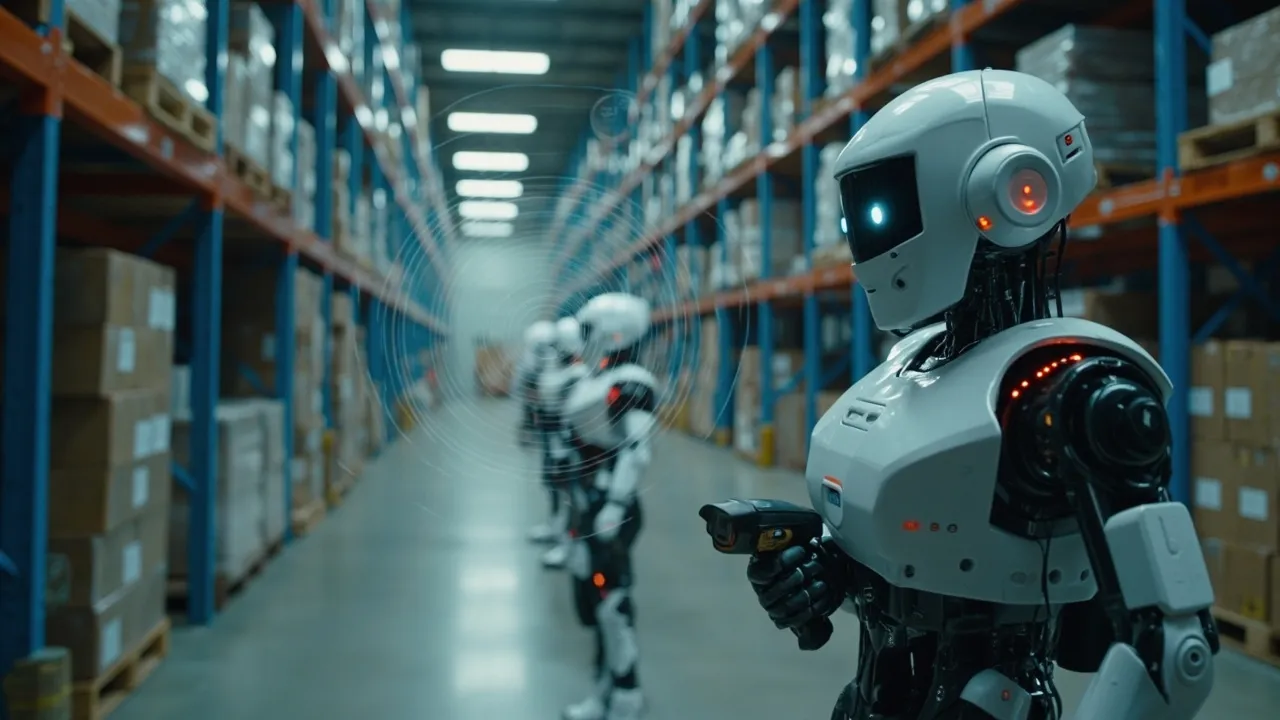
On the hardware side, Dynamics 365 Supply Chain Management now supports wrist-mounted scanning devices from manufacturers like ProGlove, enabling completely hands-free warehouse operations. According to Walker Scott's analysis of the March 2026 release, early trials of the hands-free scanning integration have demonstrated a 27% improvement in picking accuracy — a significant leap that directly impacts fulfillment quality and return rates.
The integration leverages the existing Warehouse Management mobile app infrastructure, meaning organizations can deploy wrist-mounted devices without rebuilding their mobile workflows. Beyond speed and accuracy, the shift to wearable scanning hardware addresses a growing operational concern: repetitive strain injuries from handheld scanner use, which contribute to warehouse worker turnover in an industry already struggling with labor shortages.
Price-Demand Correlation and Supplier Collaboration
Beyond the warehouse floor, Wave 1 2026 delivers two features that connect pricing and procurement to supply chain execution:
Link pricing decisions to demand forecasts (public preview July 2026, GA September 2026) enables organizations to correlate pricing adjustments with anticipated demand changes — effectively letting the system model how a price increase or promotion will ripple through inventory requirements, warehouse capacity, and fulfillment operations.
Manage supplier relationships with Supplier Engagement (public preview May 2026) introduces the Copilot-powered supplier communications agent that automates procure-to-pay tasks. First previewed in April 2025, this capability uses generative AI to handle routine supplier interactions — from purchase order confirmations to delivery schedule updates — freeing procurement teams to focus on strategic supplier management.
What This Means for Multi-Platform Supply Chains
Microsoft's move to embed warehouse AI directly within Dynamics 365 raises an important question for logistics operations: does an ERP-native WMS replace the need for standalone transportation management systems?
The answer, for most mid-market and enterprise supply chains, is no — but the relationship is evolving. ERP-embedded warehouse capabilities excel at intra-facility optimization: pick path efficiency, inventory placement, labor allocation, and order fulfillment accuracy. Transportation management — carrier selection, rate optimization, multi-modal routing, shipment visibility, and freight audit — operates at a different layer of the supply chain stack.
The real opportunity is integration between ERP warehouse intelligence and standalone TMS platforms. When Dynamics 365 knows that inventory is being rebalanced from Dallas to Atlanta, a connected TMS can automatically source the optimal carrier, route the transfer shipment, and provide end-to-end visibility — creating a seamless flow from inventory decision to physical execution.
The Competitive Landscape: ERP Giants Converge on Warehouse AI
Microsoft isn't operating in isolation. SAP's recent supply chain updates have introduced similar AI-driven planning capabilities, and Oracle's Fusion Cloud SCM continues to expand its warehouse management intelligence. The convergence is clear: every major ERP vendor now views AI-embedded warehouse operations as a core differentiator rather than a feature left to third-party specialists.
For logistics leaders evaluating their technology stack, the Wave 1 2026 release reinforces a key principle: the organizations that generate the most value from warehouse AI will be those that integrate it across their full supply chain — from ERP-driven inventory decisions through transportation execution to last-mile delivery.
How CXTMS Complements ERP Warehouse Intelligence
CXTMS operates at the transportation management layer that sits between ERP warehouse decisions and physical freight execution. When Dynamics 365's AI recommends an inventory rebalancing transfer or generates optimized fulfillment plans, CXTMS translates those decisions into executed shipments — selecting the right carriers, optimizing rates, consolidating loads, and providing real-time visibility from warehouse dock to customer delivery.
For organizations running Dynamics 365 Supply Chain Management, CXTMS integrates via API to ensure that warehouse-level intelligence flows seamlessly into transportation planning. The result is a connected supply chain where AI-driven warehouse decisions automatically trigger optimized transportation execution.
Ready to connect your ERP warehouse intelligence with best-in-class transportation management? Request a CXTMS demo to see how integrated TMS capabilities amplify the value of your Dynamics 365 investment.