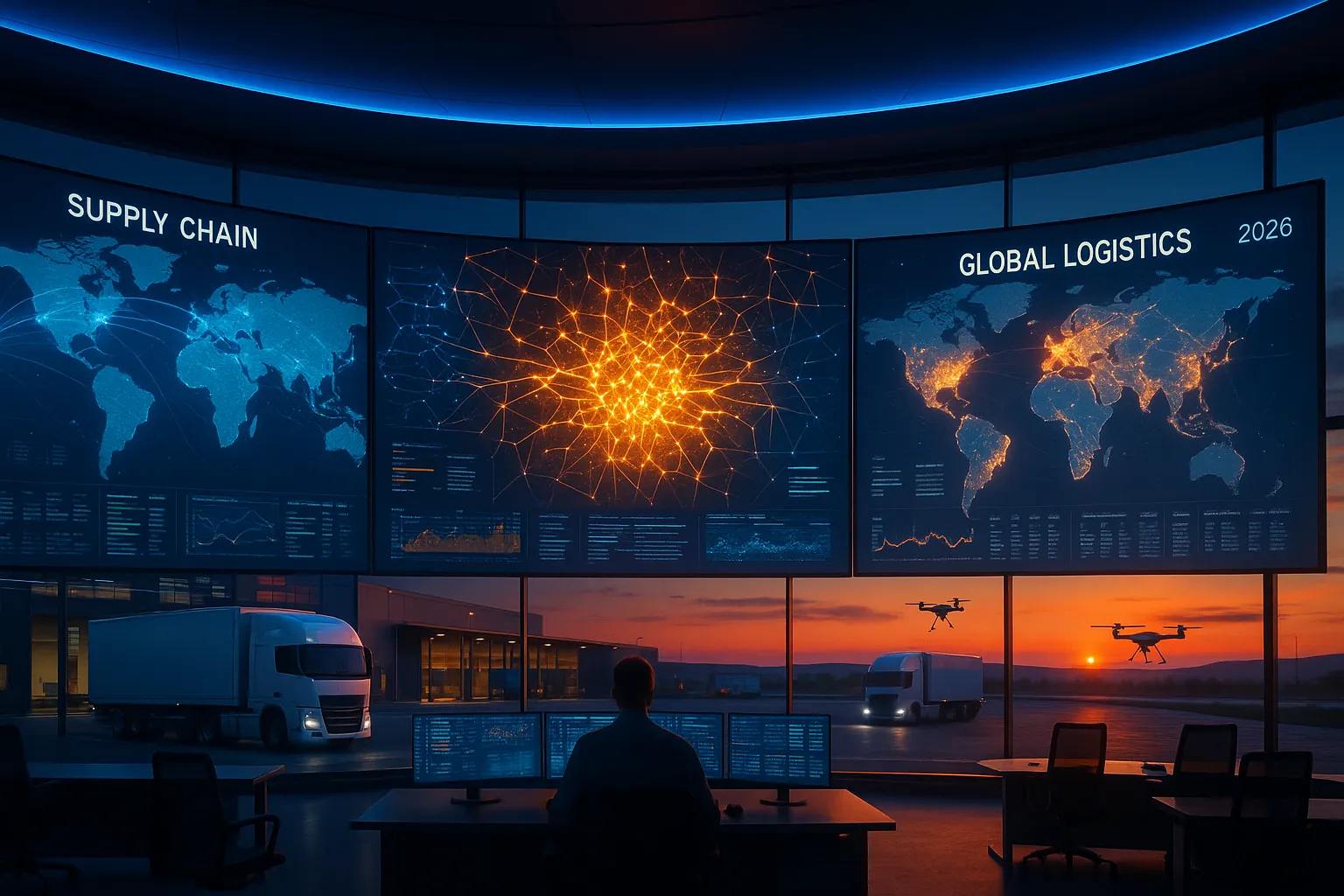
Connected Worker Platforms at $20 Billion: How IIoT Is Finally Reaching the Logistics Frontline

The logistics industry has spent years talking about digital transformation. For frontline workers—warehouse operators, dock hands, dispatch coordinators—that transformation often felt like it happened somewhere else. Not anymore.
Connected worker platforms, once the domain of pilot programs and enterprise-only deployments, are going mainstream. The global market is expected to reach $8.62 billion in 2025 and scale to $20.18 billion by 2030, growing at an 18.5% compound annual growth rate, according to MarketsandMarkets. That's not a niche technology trend. That's a category becoming infrastructure.
Why Now: The Technology Finally Caught Up
For years, the promise of connected worker technology outpaced its reality. Wearables were clunky. IIoT sensors were expensive to deploy at scale. Integration with existing warehouse management systems was painful. The "connected" part worked in demos; it struggled in 100,000-square-foot facilities with spotty Wi-Fi and a workforce that changed by the shift.
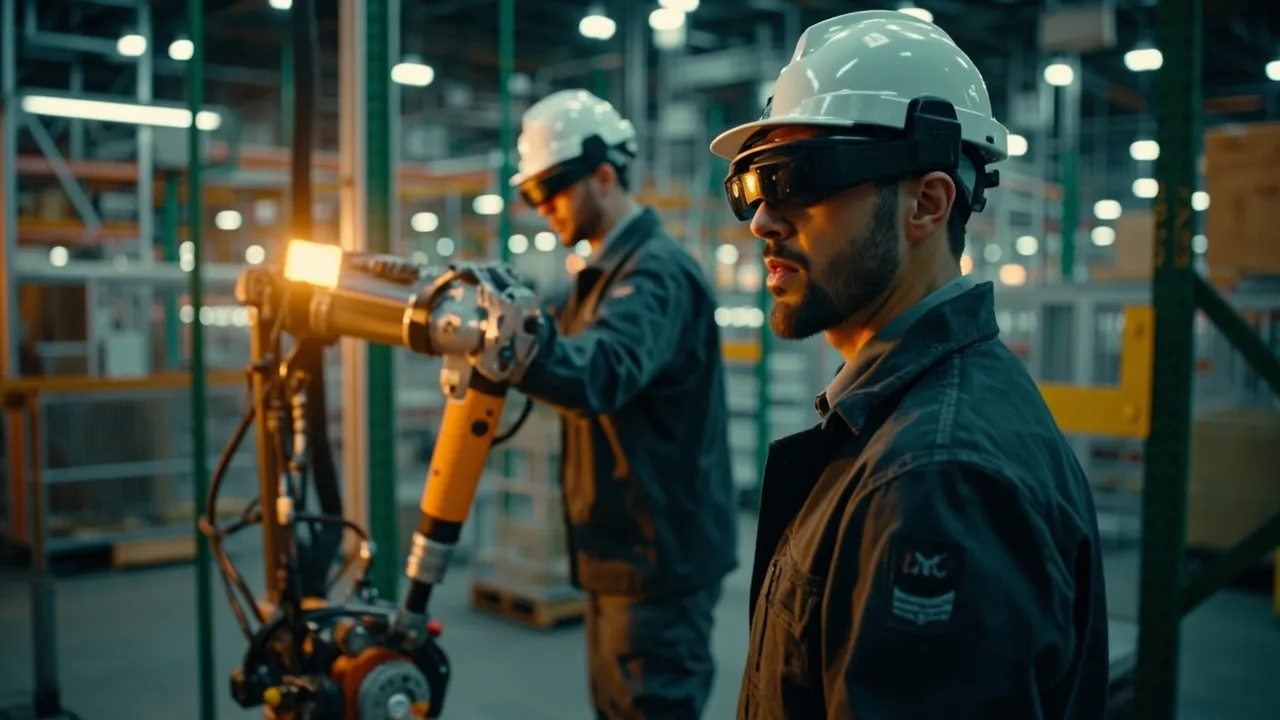
That friction is dissolving. Hardware costs have dropped. Device form factors have improved—think ring scanners and lightweight augmented reality headsets instead of bulky wrist-mounted terminals. More importantly, the software layer has matured. Modern connected worker platforms now sit on top of existing WMS and TMS environments rather than demanding rip-and-replace overhauls, making mid-market adoption far more realistic than it was five years ago.
The result: IIoT is moving beyond its original identity as a "visibility layer" and into actionable operational intelligence. It's not just knowing that a forklift is in aisle seven. It's correlating forklift movement patterns with picking rates, identifying fatigue-risk behaviors before incidents occur, and feeding that data into labor management systems that shippers and 3PLs are already running.
What Connected Worker Platforms Actually Do in Logistics
The applications span safety, productivity, and compliance—three areas where logistics operations have historically struggled to get consistent, real-time data.
Wearables and physiological monitoring are probably the most visible component. Smart devices can track worker movement, detect prolonged static postures that correlate with injury risk, and send alerts when unsafe conditions develop. In cold chain environments, where worker fatigue is a documented safety risk, this is particularly relevant. The ROI case isn't abstract: reduced workers' comp claims, lower turnover, fewer stoppages from ergonomic incidents.
Real-time task guidance through AR overlays or mobile devices helps workers execute complex workflows—cross-docking sequences, hazmat handling procedures, multi-stop pick paths—without relying on paper instructions or memory. When a new seasonal worker can execute a 12-step receiving process with tablet guidance rather than a two-week onboarding cycle, the productivity math changes quickly.
Compliance capture is the unsexy-but-critical use case. Connected worker platforms can automatically log task completion, equipment checks, and safety confirmations with timestamps and geolocation. For shippers operating under FDA serialization requirements or customs bond protocols, that audit trail is operationally essential and manually intensive to produce.
The Mid-Market Adoption Gap Is Closing
Early adoption concentrated among large 3PLs and retail distribution networks with the capital and IT bandwidth to deploy customized solutions. The market is now seeing meaningful expansion into mid-market logistics operations—facilities with 50 to 500 workers, regional 3PLs, and freight forwarders managing client-facing warehouse operations.
This shift is being driven by platform vendors offering pre-configured templates for common logistics workflows, faster implementation timelines, and subscription pricing that spreads cost rather than requiring large upfront capital部署. For a mid-market 3PL evaluating whether to deploy connected worker technology, the question is no longer "can we afford to do this?" It's "can we afford not to, given what our competitors are doing?"
According to the 2025 MHI Annual Industry Report, more than half of supply chain leaders plan to increase investments in supply chain technologies to enable end-to-end orchestration of equipment, workforce, and goods. Connected worker platforms are increasingly part of that investment thesis—not as standalone tools, but as the frontline data layer that feeds into broader supply chain visibility and planning systems.
Gartner reinforced this trajectory in April 2026, predicting that half of all new warehouses built in developed markets will be designed as "human-optional" facilities by 2030—facilities where automation and human workers operate in tightly integrated workflows, with connected systems orchestrating handoffs between robotic and human tasks.
What Shippers and 3PLs Should Be Doing Right Now
If you're evaluating connected worker technology, the window to move before the category becomes table stakes is narrowing. Here's the practical sequence:
-
Start with one workflow. Don't try to connect every worker, every process, and every system at once. Pick the highest-friction operation—receiving, pick-and-pack, or outbound load verification—and deploy there first.
-
Prioritize integration with your existing WMS. The value compounds when connected worker data flows into your labor management and visibility systems. A standalone wearable deployment generates reports; an integrated deployment generates actions.
-
Treat safety data as a leading indicator, not a lagging one. Most operations track incidents after they happen. Connected worker platforms let you spot behavioral patterns that precede incidents and intervene before something breaks.
-
Evaluate vendor lock-in. Some platforms are hardware-dependent; others are hardware-agnostic. Given how fast the device market is evolving, the latter is the better bet for operations that don't want to find themselves locked into a specific wearable roadmap three years from now.
The connected worker wave isn't coming. It's here. The question is whether your operations are riding it or watching it from the dock.
See how CXTMS integrates with connected worker ecosystems to give logistics teams unified visibility across warehouse operations, transportation, and workforce data. Request a demo to explore what's possible.